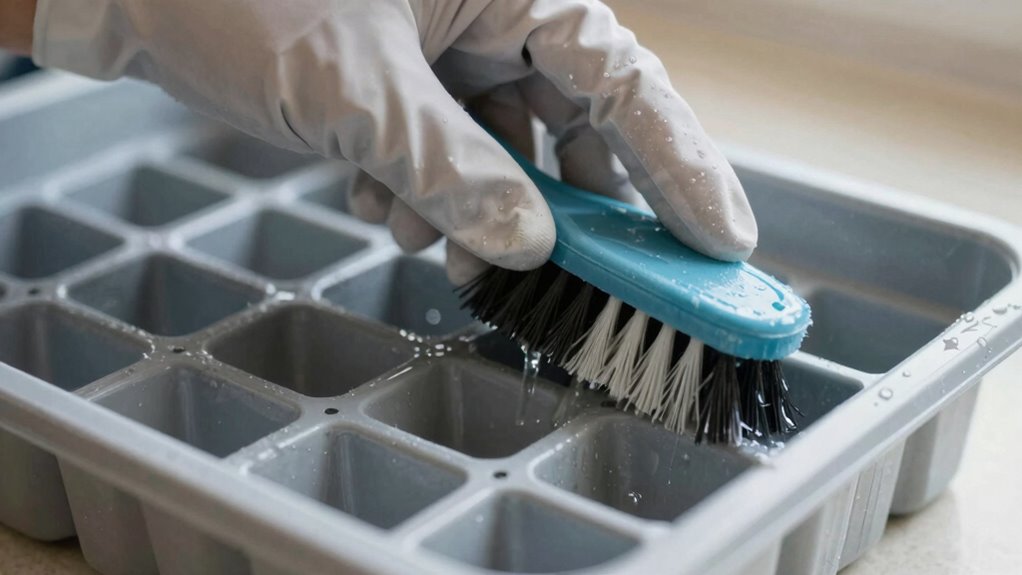
To clean seed trays without damaging them, gently scrub all surfaces with soft brushes or sponges, avoiding harsh abrasives. Rinse thoroughly with clean water to remove dirt and residues. Use natural disinfectants like diluted vinegar or hydrogen peroxide, and if you use bleach, dilute it properly and rinse well afterward. Store trays in a dry, well-ventilated area and inspect regularly for damage. Follow these tips to keep your trays in great shape; more detailed methods await.

Get garden gear delivered free with Prime
- Fast, free delivery on millions of items
- Prime Video, Amazon Music and more included
- Member-only deals all year
Key Takeaways
- Use soft brushes or sponges to gently scrub trays, avoiding abrasive materials that can cause damage.
- Rinse trays thoroughly with clean water to remove residue without harming the surface.
- Opt for natural disinfectants like diluted vinegar or hydrogen peroxide, avoiding harsh chemicals.
- Air dry trays completely before storage to prevent moisture buildup and deterioration.
- Inspect trays regularly for cracks or damage and handle them carefully during cleaning to preserve their integrity.
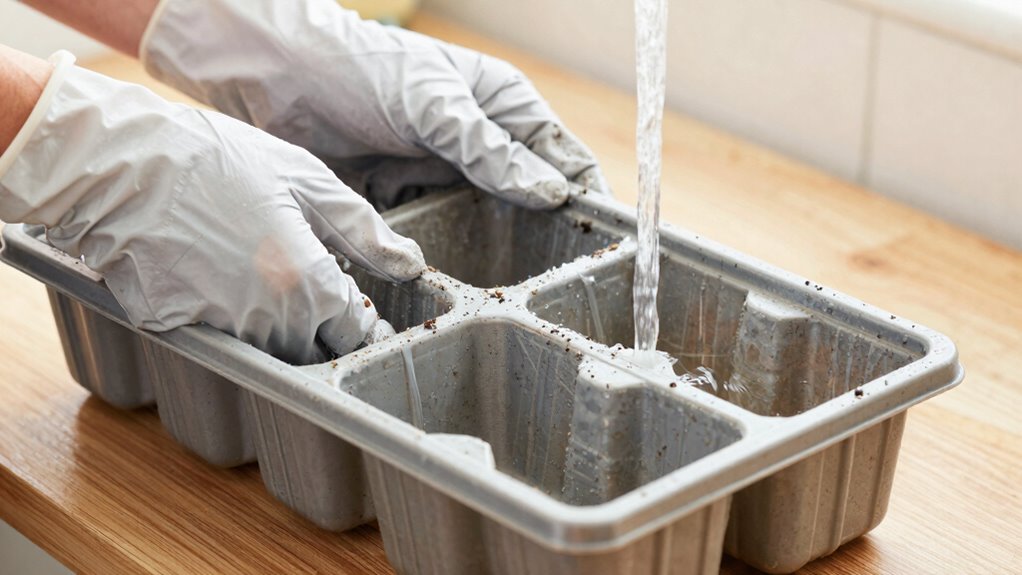
Keeping your seed trays clean is essential for healthy plant growth, but it’s equally important to do so without damaging them. Proper cleaning helps prevent the spread of diseases and keeps pests at bay, ensuring your seedlings have the best start possible. One effective way to do this is by incorporating soil sterilization into your routine. Soil sterilization kills off harmful bacteria, fungi, and pests that may be lurking in the tray’s crevices or residual soil. You can do this by carefully applying heat or using appropriate sterilizing agents, but always ensure you follow the manufacturer’s instructions to avoid warping or degrading the material. Sterilizing your trays not only prevents soil-borne diseases but also reduces the likelihood of pest infestation, giving your plants a healthier environment to grow in. Additionally, maintaining proper sanitation practices can help prevent contamination from transferring between batches of seedlings. Regular sterilization also extends the lifespan of your trays, making your gardening efforts more sustainable over time. To further enhance your sanitation routine, consider using proper cleaning tools like soft brushes and sponges that won’t scratch or damage the surface of your trays.
Incorporating proper sanitation practices, such as regular cleaning, can significantly reduce the risk of introducing pests or diseases to your seedlings. Additionally, maintaining a clean storage area and avoiding moisture buildup can further protect your trays from deterioration. When cleaning your seed trays, avoid harsh chemicals that can damage the material or leave residues harmful to your seedlings. Instead, opt for natural disinfectants like a mixture of water and white vinegar or a diluted hydrogen peroxide solution. These substances are effective at killing pathogens and pests while being gentle enough not to harm the trays. To clean, use a soft brush or sponge to scrub all surfaces thoroughly, paying close attention to corners and seams where dirt and pests tend to hide. After scrubbing, rinse the trays with clean water to remove any remaining residues, then allow them to air dry completely before reusing. This process maintains the integrity of your trays, prolonging their lifespan and ensuring they remain a safe environment for your seedlings. Regularly inspecting your trays for signs of damage or deterioration can also help catch issues early, preventing potential problems later on. Proper storage practices further protect your trays from environmental damage and pest intrusion.
If you notice stubborn mold or fungal growth, a diluted bleach solution can be used sparingly. Be sure to rinse thoroughly afterward to eliminate any bleach traces that could harm your plants. Regularly inspecting your trays after each use and cleaning them promptly prevents the buildup of pests and diseases, reducing the need for harsher treatments later. Additionally, consider elevating your trays or storing them in a dry, well-ventilated area to discourage pest activity. Remember, the key to effective seed tray maintenance is consistency—cleaning and sterilizing on schedule keeps pests and pathogens at bay while preserving the trays’ condition. When done correctly, your seed trays will serve you well season after season, providing a safe and healthy environment for your seedlings to thrive.
As an affiliate, we earn on qualifying purchases.
Frequently Asked Questions
Can I Use Bleach to Disinfect Seed Trays?
Yes, you can use bleach to disinfect seed trays, but you should do so carefully. Bleach is a strong chemical disinfectant that kills bacteria and fungi effectively. However, for natural cleaning, consider alternatives like vinegar or hydrogen peroxide. Always dilute bleach properly—mix one part bleach with nine parts water—and rinse thoroughly afterward. This prevents damage to the trays and guarantees they’re safe for future use.
How Often Should I Clean My Seed Trays?
Imagine your seed tray resting quietly in storage, waiting for its next use, its surface gleaming softly. You should clean your seed trays after each planting cycle to prevent disease buildup. The frequency depends on your seed tray material—plastic trays need more regular cleaning than biodegradable options. Regular cleaning keeps your trays in top condition, ensuring healthy seedlings and extending their lifespan during storage and future planting seasons.
Are There Eco-Friendly Cleaning Options for Seed Trays?
Yes, you can use natural cleaning methods for your seed trays, supporting sustainable practices. Mix white vinegar with water or use baking soda as gentle, eco-friendly solutions. These options effectively remove dirt and bacteria without harsh chemicals, protecting your trays and the environment. Regularly cleaning with natural substances helps maintain your trays’ longevity while reducing your ecological footprint, making your gardening more sustainable and safe for future plantings.
What Should I Do if Trays Are Moldy?
Think of your seed trays as precious gardens—mold is like invasive weeds threatening their health. To remove mold and preserve your trays, wear gloves and scrub with a mixture of water and white vinegar or hydrogen peroxide. Rinse thoroughly and let them dry in sunlight. This method guarantees mold removal while maintaining tray preservation, so your trays can continue nurturing future plants without damage or harm.
Can I Reuse Seed Trays Immediately After Cleaning?
Yes, you can reuse seed trays immediately after cleaning if you’ve used the right cleaning method. The key is to take into account the seed tray material—plastic, metal, or biodegradable—and clean thoroughly after each use, especially when cleaning frequency increases. Use warm water and mild soap or a vinegar solution to eliminate mold and bacteria. Make sure trays are completely dry before reusing to prevent mold growth and prolong their lifespan.
natural disinfectant for seed trays
As an affiliate, we earn on qualifying purchases.
As an affiliate, we earn on qualifying purchases.
Conclusion
Keeping your seed trays clean is essential for healthy plant growth, and doing so without damage is easier than you think. Regular cleaning prevents disease and guarantees better seed germination. Did you know that using proper cleaning techniques can extend the life of your trays by up to 50%? By following these simple steps, you’re investing in the longevity of your gardening tools and the success of your garden. Happy planting!
As an affiliate, we earn on qualifying purchases.
As an affiliate, we earn on qualifying purchases.
Fall yard work Picks
leaf blowers
As an affiliate, we earn on qualifying purchases.