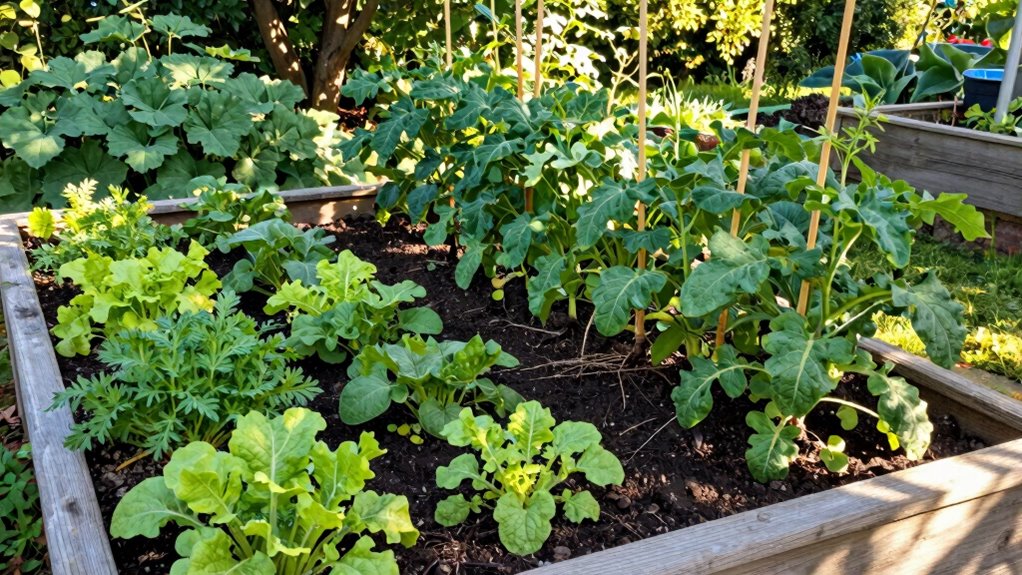

You’ll get the best results by matching your raised bed height to your crops’ root depths. Shallow beds of 12-18 inches work well for vegetables like lettuce, radishes, and herbs, while deeper beds suit crops like carrots and potatoes with extensive roots. This approach helps you use resources efficiently and keeps plants healthy. If you want to discover how to optimize your garden setup further, there’s more to contemplate that can boost your success.

Get garden gear delivered free with Prime
- Fast, free delivery on millions of items
- Prime Video, Amazon Music and more included
- Member-only deals all year
Key Takeaways
- Match bed height to crop root depth to optimize resource use and plant health.
- Shallow beds suit shallow-rooted vegetables like lettuce and herbs, reducing effort.
- Deep beds benefit crops with extensive roots, such as carrots or potatoes, for better growth.
- Proper bed height improves soil aeration, water management, and pest control.
- Adjusting bed depth enhances garden efficiency and crop productivity based on specific needs.
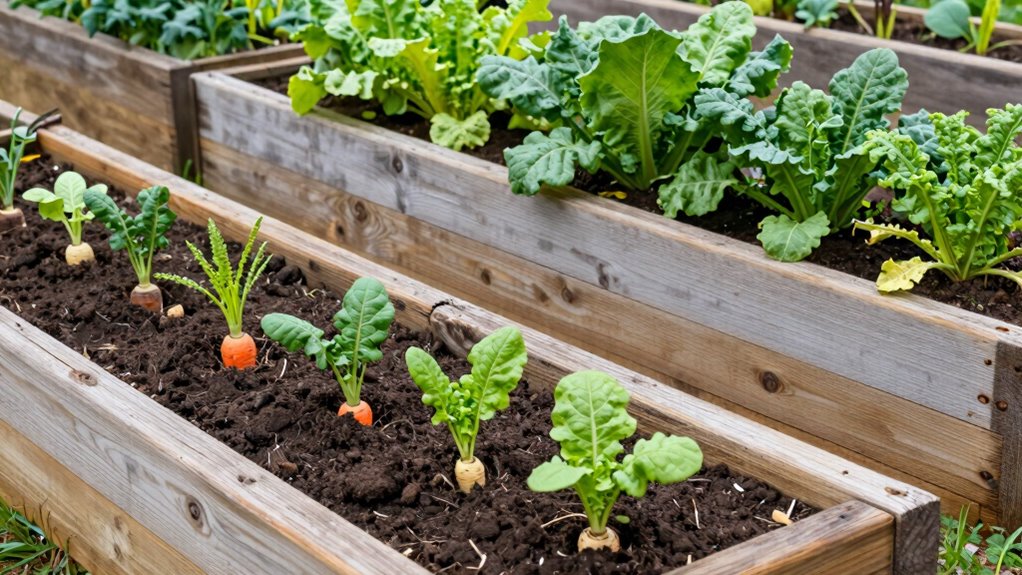
When designing your garden, matching the height of your raised beds to the root depth of your crops can markedly boost growth and yield. Instead of automatically opting for deep beds, consider the specific needs of your plants. Shallow beds, around 12 to 18 inches, often suffice for many vegetables like lettuce, radishes, and herbs. Deeper beds are beneficial for crops with extensive root systems, such as carrots or potatoes, but they aren’t always necessary and can lead to unnecessary effort and resource use. By aligning bed height with root depth, you guarantee your plants access nutrients and water efficiently, reducing waste and promoting healthier growth. Proper soil aeration in shallower beds can also improve root health and reduce disease risk. Additionally, understanding soil composition can help optimize water retention and drainage suited to your bed height. Adjusting your soil amendments based on bed depth ensures your soil remains fertile and well-structured for your chosen crops.
Choosing the right bed height also impacts your irrigation techniques. Deeper beds might hold more water, which can be advantageous in dry climates but risky if overwatering occurs. Shallow beds drain faster and are easier to keep consistently moist, allowing you to better control watering schedules. This control helps prevent over-saturation that could cause root rot or pest issues. Proper drainage, especially in shallow beds, minimizes standing water and discourages pests like mosquitoes, while consistent moisture reduces plant stress, making them less attractive to pests and diseases. Understanding watering practices can help you tailor your irrigation to match your bed height and crop needs. Your irrigation methods should adapt to bed height—drip irrigation works well in deep beds for slow, deep watering, while soaker hoses or hand watering are often enough for shallow beds. Monitoring soil moisture levels regularly can further refine your watering approach and support healthy plant development. Moreover, selecting appropriate soil drainage techniques is essential to prevent waterlogging in different bed depths and maintain optimal root health.
Pest management is also influenced by bed depth. Deep beds can sometimes create an environment for pests to hide, especially if the soil remains damp and is poorly aerated. Shallow beds tend to dry out faster, discouraging pests that prefer moist conditions. Furthermore, when your beds are appropriately matched to crop root depth, you reduce the need for heavy soil amendments or pesticides, promoting a healthier garden ecosystem. When pests are less likely to thrive, you minimize reliance on chemical controls, which benefits your plants and the environment.
raised garden bed kits 12 inches
As an affiliate, we earn on qualifying purchases.
As an affiliate, we earn on qualifying purchases.
Frequently Asked Questions
How Do I Determine the Ideal Bed Height for My Specific Crops?
You determine the ideal bed height by considering your crop’s root penetration depth and pest control needs. For root-heavy crops, build taller beds to accommodate deep roots comfortably. Shorter beds work for shallow-rooted plants and help reduce pest issues by limiting hiding spots. Observe your plants’ growth patterns, research their root depths, and adjust bed height accordingly to promote healthy growth and minimize pest problems.
Are There Crops That Thrive Better in Shallow Beds?
If you grow lettuce, shallow beds work better because their root depth is minimal, and they need good soil aeration. In a case study, a gardener found that shallow beds encouraged faster growth and healthier plants for leafy greens. Shallow beds improve soil aeration, which benefits crops with shallow root systems. For such crops, keeping the bed height low guarantees they access nutrients easily without compacted soil hindering their growth.
What Materials Are Best for Building Different Bed Heights?
For building different bed heights, choose materials like untreated wood, bricks, or cinder blocks for durability and aesthetic appeal. Use high-quality compost to fill your beds, ensuring good nutrients and soil health. Consider bed color; darker materials absorb more heat, benefiting warm-season crops. For shallow beds, lightweight materials like cedar are easy to manage, while taller beds may need sturdier options like stone or concrete to support deeper roots and maintain structure.
How Does Bed Height Affect Soil Moisture Retention?
Did you know that taller beds can retain moisture 20% longer? When you adjust bed height, it impacts water infiltration and soil aeration—key for healthy roots. Higher beds often drain faster, reducing excess water and preventing soggy soil. Conversely, lower beds may hold moisture better, supporting crops needing consistent watering. Matching bed height to crop roots ensures ideal moisture retention, promoting vigorous growth and better soil health.
Can Adjusting Bed Height Improve Crop Yield Significantly?
Adjusting bed height can substantially improve your crop yield if you consider compost quality and pest management. Taller beds improve drainage and aeration, promoting healthy roots, but only if you use high-quality compost. Proper bed height also makes pest control easier, reducing damage and boosting productivity. By tailoring bed height to your specific crops and maintaining good compost, you create ideal conditions that lead to better yields.
deep raised beds for carrots and potatoes
As an affiliate, we earn on qualifying purchases.
As an affiliate, we earn on qualifying purchases.
Conclusion
While deep raised beds might seem like the ultimate solution, they aren’t always the best fit. Sometimes, a perfectly matched height can make all the difference, fostering healthier roots and easier maintenance. Imagine the satisfaction of watching your crops thrive because you chose the right bed height—no unnecessary effort, just vibrant growth. Don’t let assumptions dictate your garden’s success; instead, listen to your plants’ needs and let thoughtful decisions bring your garden to life.
garden bed soil amendments for raised beds
As an affiliate, we earn on qualifying purchases.
As an affiliate, we earn on qualifying purchases.
irrigation systems for raised garden beds
As an affiliate, we earn on qualifying purchases.
As an affiliate, we earn on qualifying purchases.
Columbus Day / Indigenous Peoples' Day Picks
long weekend sales
As an affiliate, we earn on qualifying purchases.