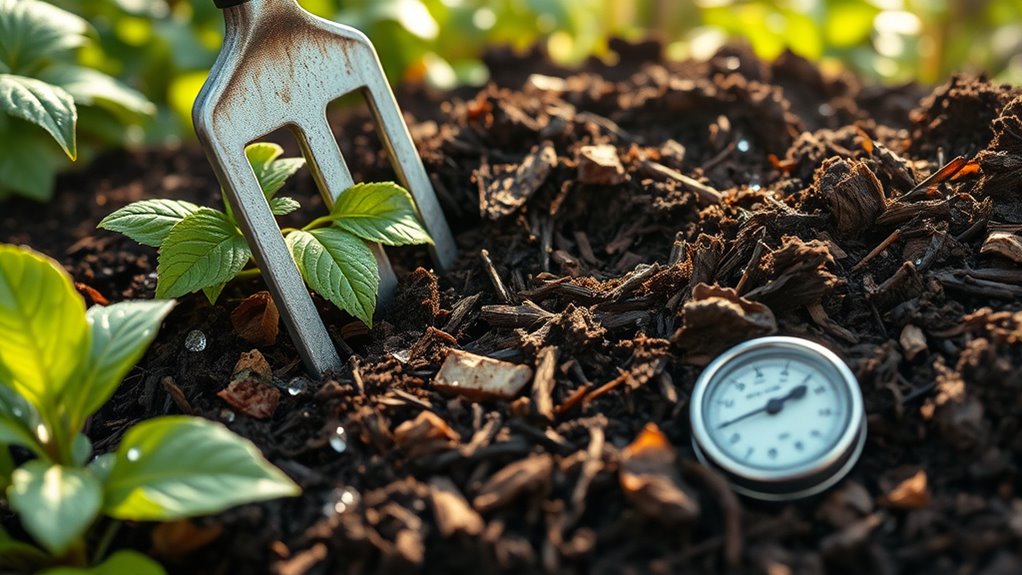

To turn your compost safely, use a pitchfork or compost turner to gently flip from the outer edges to the center, ensuring all layers get enough oxygen without disrupting the process. Keep moisture like a damp sponge—add dry materials if too wet or water if it’s dry, and mix thoroughly. Regular turning and moisture checks prevent odors and promote fast decomposition. Continue exploring these tips to master healthy composting habits.
Key Takeaways
- Turn compost regularly with a pitchfork to introduce oxygen and prevent odors, ensuring all layers are aerated.
- Maintain compost moisture like a damp sponge; add dry materials or water as needed to keep it balanced.
- Use small holes or aeration tubes to enhance airflow and moisture control within the compost bin.
- Avoid over-turning to prevent disrupting the microbial process, turning only as necessary for aeration.
- Monitor weather conditions and adjust turning and watering routines to sustain optimal aerobic decomposition.

Have you ever wondered how to turn your compost effectively and keep it moist enough to break down efficiently? Achieving the right moisture balance is essential for healthy composting, and proper aeration techniques play a key role. When you turn your compost, you’re not just mixing materials; you’re introducing oxygen that speeds up decomposition and prevents unpleasant odors. To do this safely, use a pitchfork or compost turner to lift and flip the pile from the outer edges to the center, ensuring that all layers are exposed to air. This process helps break up compacted zones, encourages aerobic bacteria activity, and promotes faster breakdown of organic matter. Be careful not to turn too aggressively or too often, as excessive disturbance can disrupt the composting process. Regular turning also helps prevent the buildup of anaerobic conditions, which can hinder compost quality and cause foul smells.
Maintaining the moisture balance is equally important. Your compost should feel like a damp sponge—not soaking wet, but moist enough to hold together when squeezed gently. If it’s too dry, decomposition slows down, and the pile can become compacted, limiting airflow. Conversely, if it’s too wet, it can become waterlogged, leading to anaerobic conditions that produce foul smells and slow microbial activity. To check moisture levels, grab a handful, squeeze gently, and observe the drip. If water drips out, add dry materials like straw or shredded leaves to absorb excess moisture. If it feels dry and crumbly, sprinkle water evenly over the pile and mix thoroughly.
Incorporating aeration techniques helps you control these moisture levels. For example, you can drill small holes in the sides of your compost bin or use aeration tubes to increase airflow throughout the pile. Turning the compost regularly not only introduces oxygen but also redistributes moisture evenly, preventing dry or overly wet spots. Remember, the goal is a steady, aerobic decomposition process, which requires a balanced combination of oxygen and moisture. Keep an eye on weather conditions, especially after heavy rain or drought, and adjust your turning and watering routines accordingly. With consistent effort, you’ll create a compost pile that stays moist enough to decompose efficiently and is properly aerated to facilitate microbial activity. Mastering these techniques will lead to rich, nutrient-dense compost in less time, making your gardening efforts more productive and sustainable.
Frequently Asked Questions
How Often Should I Turn My Compost Pile for Safety?
You should turn your compost pile every 1 to 2 weeks to guarantee proper compost aeration and maintain a safe, healthy environment. Following a consistent turning schedule helps regulate moisture levels and speeds up decomposition. If the pile becomes too wet or compacted, increase turning frequency. Regular turning prevents odors and promotes even breakdown of materials, keeping your compost safe and efficient for use.
What Signs Indicate My Compost Has Too Much Moisture?
Your compost might be drowning in moisture if it’s so wet, it feels like a swamp! Look for signs like persistent sogginess, a foul smell, or slimy textures—those are clear moisture indicators. If your compost is too moist, it’ll be overly wet and clumpy, making it hard for air to circulate. To fix this, add dry materials and turn the pile to restore proper compost dryness and balance moisture levels.
Can Improper Turning Cause Health Hazards?
Improper turning can cause health hazards because it may lead to pathogen spread and poor odor control. When you don’t turn your compost regularly, it becomes anaerobic, creating harmful bacteria and unpleasant smells. This increases the risk of pathogens spreading, which can be dangerous if you handle the compost without proper precautions. To stay safe, turn your compost properly and guarantee it stays balanced in moisture and aeration.
How Do I Safely Add Water to Dry Compost?
They say, “A little water goes a long way.” To safely add water to dry compost, start by checking the moisture levels—your compost should be as damp as a wrung-out sponge. Use watering techniques like a gentle spray or slow pour to evenly distribute moisture without oversaturating. This helps maintain the right balance, promotes healthy decomposition, and prevents potential health hazards from overly dry or wet compost.
What Personal Protective Equipment Is Recommended During Turning?
When turning compost, you should wear protective gloves to prevent contact with bacteria and odors, and a face mask to avoid inhaling dust or mold spores. These precautions help keep you safe from potential skin irritations and respiratory issues. Always choose sturdy gloves and a comfortable mask, especially if you’re working with large quantities or sensitive materials. Prioritize your safety to make composting a healthy, enjoyable activity.
Conclusion
Remember, turning your compost and managing moisture isn’t just about speed—it’s about creating a healthy environment for beneficial microbes. Some believe that less turning speeds up composting, but evidence shows regular turning actually improves aeration and decomposition. So, don’t skip this step. Keep moisture balanced, turn consistently, and trust the science: active management leads to richer, faster compost. Your efforts pay off with nutrient-rich soil ready to nourish your garden.