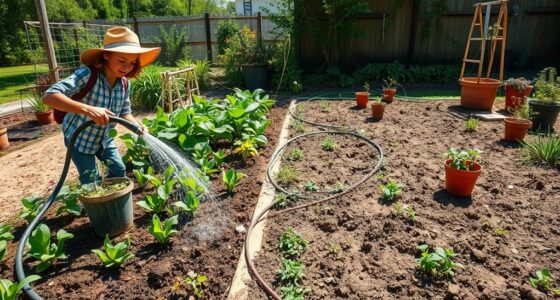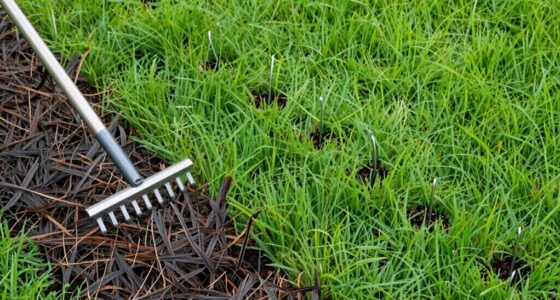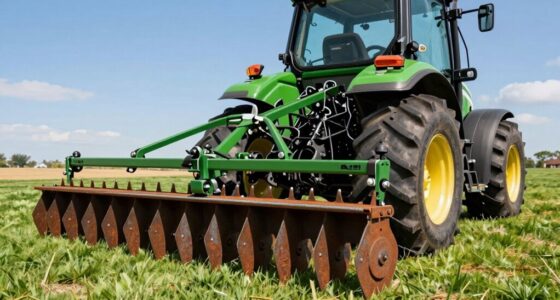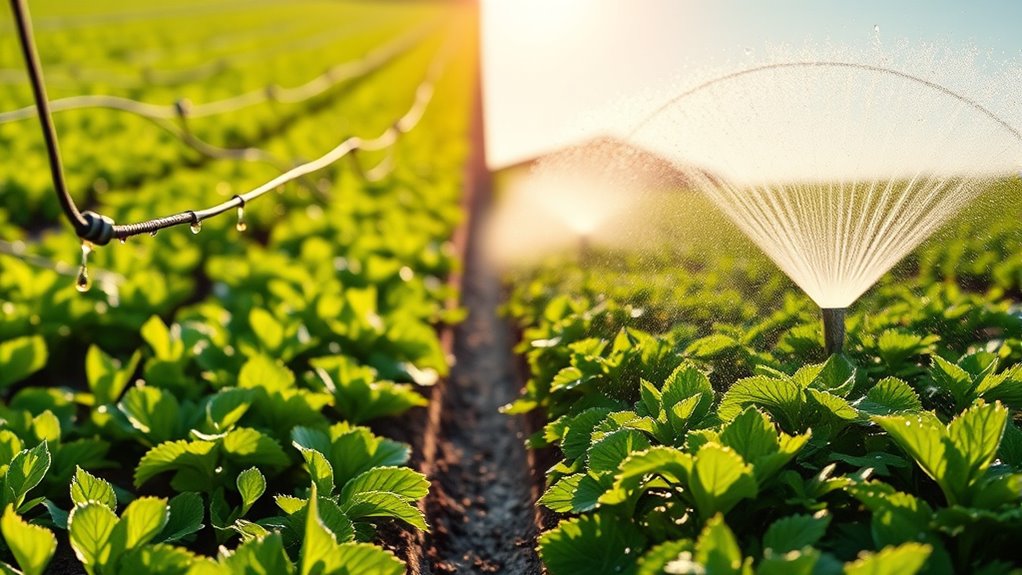

When choosing between drip and sprinkler irrigation, you’ll find drip systems deliver water directly to plant roots, minimizing waste and saving money, especially during droughts, but require regular maintenance to prevent clogging. Sprinklers are easier to install and cover large areas quickly, though they tend to lose water to evaporation and runoff. Understanding these differences will help you select the best system for your needs and keep it running efficiently. Keep exploring to learn more about optimizing your irrigation methods.
Key Takeaways
- Drip irrigation delivers water directly to plant roots, reducing waste, while sprinklers spray over broad areas, increasing evaporation.
- Sprinklers are easier to install and suitable for large, uniform areas, whereas drip systems target specific plants for precision.
- Regular maintenance of emitters and nozzles is essential for both systems to prevent clogging and ensure efficiency.
- Drip irrigation generally uses less water and lowers costs, making it more water-efficient than sprinklers.
- Proper upkeep extends system lifespan and maximizes water conservation benefits for both irrigation types.
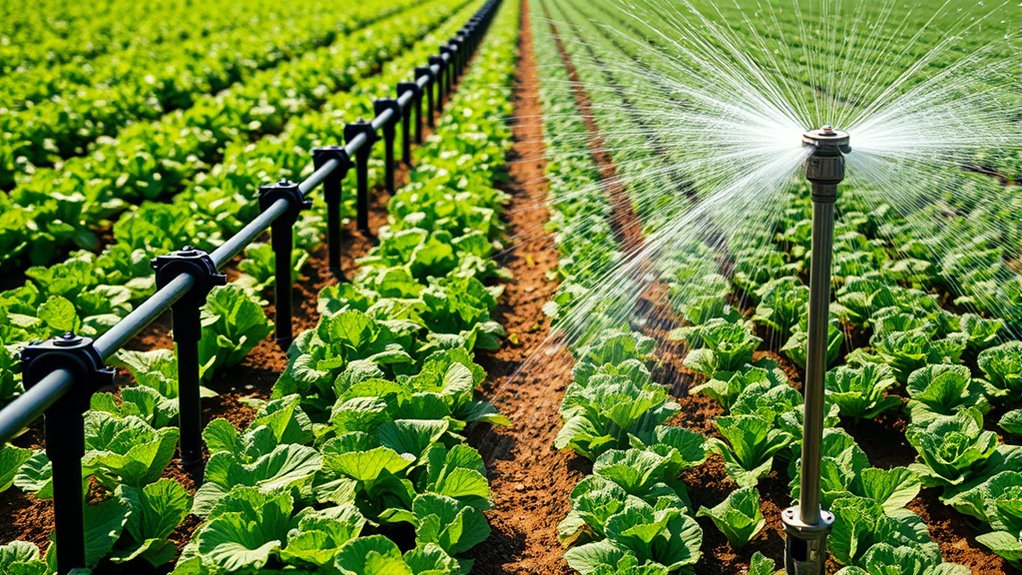
Have you ever wondered how farmers keep their crops healthy and productive even during dry spells? It all comes down to effective irrigation techniques. When choosing between drip and sprinkler systems, understanding their impact on water conservation and equipment maintenance is essential. Both systems serve the purpose of delivering water to plants, but they do so differently, affecting how efficiently you use water and how much upkeep each system requires.
Drip irrigation is renowned for its water efficiency. It delivers water directly to the plant roots through a network of tubing and emitters, reducing evaporation and runoff. This precision means you use less water overall, which is especially important during drought conditions. Proper water conservation isn’t just good for the environment; it also lowers your water bills. However, to keep a drip system functioning critically, regular equipment maintenance is vital. You need to check emitters for clogging, ensure tubing remains intact, and replace worn-out parts promptly. Neglecting these tasks can lead to uneven watering, plant stress, or even system failure. But when maintained well, drip irrigation offers long-term savings and healthier crops. Additionally, the buildup of mineral deposits can clog emitters over time, so flushing the system periodically is recommended.
On the other hand, sprinkler systems mimic natural rainfall by spraying water over a broad area. They are easier to install and adjust, making them ideal for large fields or lawns. Sprinklers can cover a wide space quickly, which is advantageous if you need to irrigate many plants simultaneously. Still, they tend to lose more water to evaporation and wind drift, leading to less water conservation compared to drip systems. Additionally, sprinkler equipment requires regular maintenance to prevent nozzle clogging, leaks, or broken heads. Clogged nozzles can cause uneven watering, affecting crop growth. Regular inspection and cleaning are necessary to keep the system operating efficiently.
Both systems demand ongoing equipment maintenance, but the effort and cost can vary. Drip systems often require more careful monitoring of emitters and tubing, while sprinklers need frequent checks of nozzles and moving parts. Whichever system you choose, maintaining your equipment is crucial for maximizing water use and ensuring plants receive the right amount of water. Proper maintenance also prolongs the lifespan of your irrigation setup, saving you money in the long run. Understanding vape juice shelf life and proper storage techniques can help prevent system contamination and ensure optimal performance.
In essence, your choice between drip and sprinkler irrigation hinges on your specific needs, crop type, and resources. Prioritizing water conservation and consistent equipment upkeep will help you achieve healthy, thriving plants, even during dry periods. By investing in proper maintenance and understanding each system’s strengths, you guarantee your irrigation system remains efficient and reliable season after season.

Kekangerly 100-Foot Drip Irrigation System – 16 Copper Nozzles + T-Connectors for Gardens, Lawns, Plants, and Hydroponics – Quick-Connect Watering Kit
UPGRADED PREMIUM COPPER NOZZLES:Built with 16 heavy-duty 360° rotating copper nozzles that resist corrosion 3X longer than standard…
As an affiliate, we earn on qualifying purchases.
As an affiliate, we earn on qualifying purchases.
Frequently Asked Questions
Which Irrigation System Is More Eco-Friendly?
You’ll find drip irrigation more eco-friendly because it promotes water conservation by delivering water directly to plant roots, reducing waste. It also helps maintain soil health by avoiding overwatering and soil erosion. Sprinklers tend to lose water through evaporation and runoff, making them less efficient. By choosing drip, you’re supporting sustainable practices, conserving water, and protecting your soil, which benefits your garden and the environment in the long run.
How Much Maintenance Do Drip and Sprinkler Systems Require?
Some believe drip systems are low-maintenance, but you’ll find that both require regular upkeep. Drip systems generally have lower maintenance costs and are quite durable, needing occasional filter cleaning and emitter checks. Sprinklers demand more frequent inspections for nozzle blockages and system leaks. Overall, your choice impacts long-term maintenance, but with proper care, both systems can serve you well for years.
Can Both Systems Be Automated Easily?
Yes, both drip and sprinkler systems can be automated easily, but you might face some automation challenges. Make certain your controller is compatible with your system, whether it’s drip or sprinkler. You’ll need to check system compatibility with smart timers or controllers, and some setups may require additional adapters or wiring. With proper planning, automation becomes straightforward, giving you convenient, hands-free watering while reducing water waste.
What Is the Typical Lifespan of Each System?
Think of your irrigation system like a trusty steed; drip systems typically last 10-15 years, while sprinklers often need replacing every 8-12 years. Their durability depends on quality, maintenance, and weather. Regular checks prolong your system’s life, much like tending a noble steed. Keep an eye out for leaks or clogs, and you’ll ensure your irrigation system remains a reliable partner in your garden’s growth.
Are There Specific Crops Better Suited for One System?
You’ll find that crop compatibility and soil type considerations influence whether drip or sprinkler systems work best. Drip irrigation suits row crops, vegetables, and high-value plants, especially in sandy or uneven soils, because it delivers water directly to roots. Sprinklers are better for broad lawns, grains, or crops needing uniform watering, particularly in clay soils. Match your crop type and soil conditions to optimize water efficiency and crop health.

Rain Bird 32ETI DIY Self Install In-Ground Automatic Sprinkler System Kit
Waters your lawn automatically the whole season
As an affiliate, we earn on qualifying purchases.
As an affiliate, we earn on qualifying purchases.
Conclusion
Just as Daedalus crafted wings to navigate the skies, choosing between drip and sprinkler irrigation lets you master your garden’s growth. Each method offers a path to nurturing your plants, but understanding their strengths and limitations guarantees your efforts don’t falter like Icarus’s flight. With careful selection, you’ll cultivate a thriving landscape, balancing efficiency and conservation. Remember, your decision shapes not just your garden’s future, but also your own mastery over nature’s delicate dance.

Drip Irrigation Emitters with Adjustable 360 Degree Water Flow Drippers Sprayer for 1/4 inch Tubing, Garden Drippers Sprayer Perfect for House Garden Watering System. (25pcs-Blue 360 Degree Sprayer)
You Will Get Set of 25 Drip Emitters for 1/4" Drip Irrigation Tubing, featuring Adjustable 360 Degree Water…
As an affiliate, we earn on qualifying purchases.
As an affiliate, we earn on qualifying purchases.

Rain Bird 1804 Spray Head with 15van Nozzle; 0° to 360° Adjustable; 15' Radius (Pack of 5)
5 Rainbird 1804 spray heads
As an affiliate, we earn on qualifying purchases.
As an affiliate, we earn on qualifying purchases.