
To fix a muddy path and make garden access easier all year, improve drainage by adding a compost layer and mixing it into the soil. Installing small trenches or creating a slight slope helps water drain away efficiently. Using permeable materials like crushed stone or permeable pavers reduces mud and promotes water runoff. Regularly topping up compost and aerating soil keeps it healthy and drainage active. Keep exploring for more effective tips to create a reliable, dry pathway all seasons.

Get garden gear delivered free with Prime
- Fast, free delivery on millions of items
- Prime Video, Amazon Music and more included
- Member-only deals all year
Key Takeaways
- Improve soil drainage by adding organic compost and mixing thoroughly to prevent water retention and mud.
- Install small trenches and lay gravel to direct water away from the path, enhancing runoff.
- Create a slight slope away from structures to facilitate water drainage and reduce muddy patches.
- Use permeable materials like permeable pavers or crushed stone for the path surface to improve water flow.
- Regularly top up compost, aerate soil, and apply mulch to maintain soil health and prevent erosion year-round.
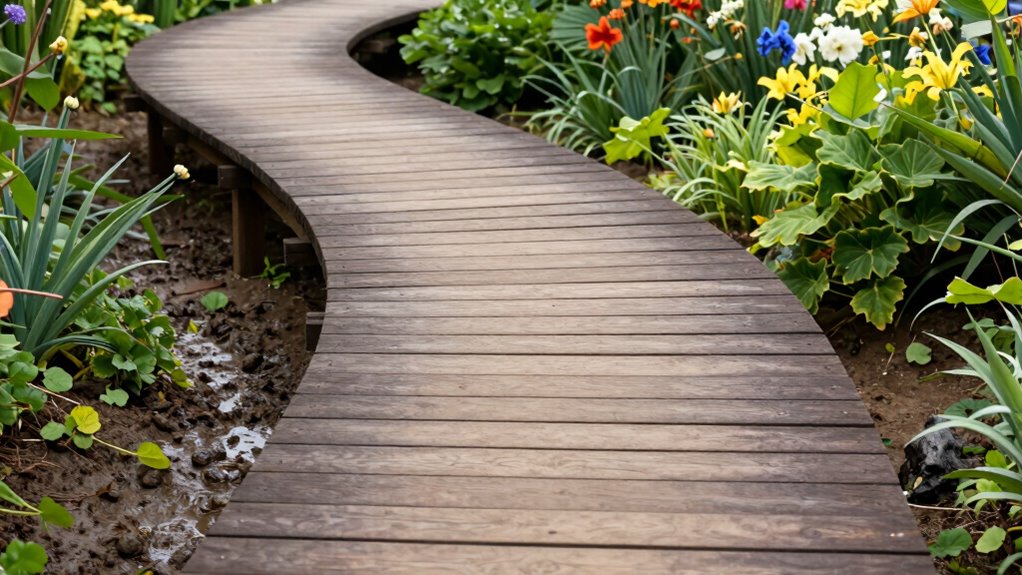
If your garden path becomes muddy and slippery during rainy months, it can make accessing your outdoor space frustrating and even unsafe. The key to solving this issue lies in improving soil drainage and properly managing compost layering. When the soil beneath your path retains too much water, it becomes soft and unstable, leading to muddy puddles and uneven footing. To tackle this, start by evaluating the current drainage situation. If water tends to pool or linger, you may need to enhance how the soil releases excess moisture. Incorporating organic matter into the soil through compost layering can considerably boost drainage. Spread a thick layer of compost over the existing soil, then mix it in thoroughly. This not only improves soil structure but also facilitates better water flow, preventing puddles from forming.
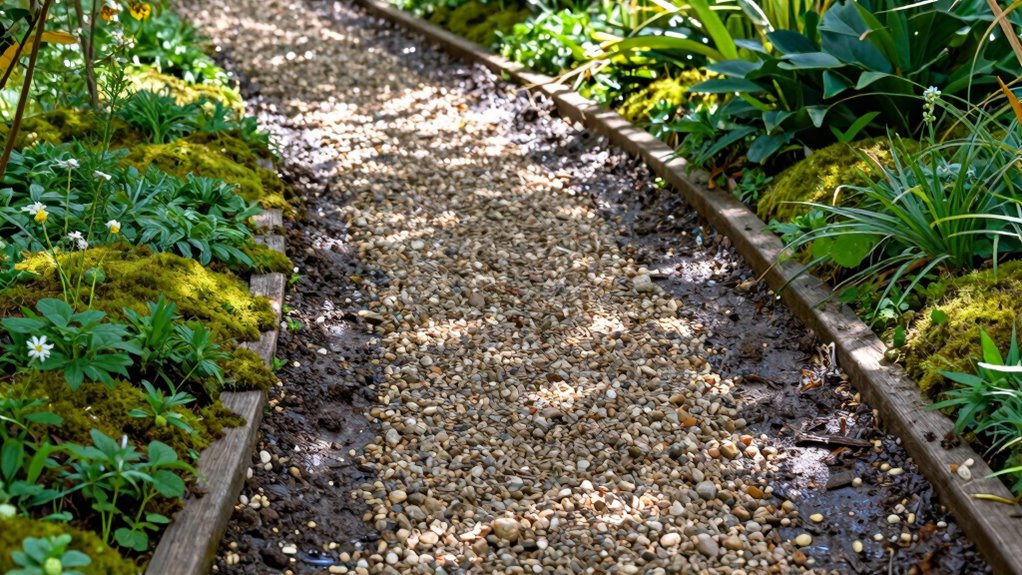
Once you’ve added compost, consider installing a simple drainage system if the problem persists. This could be as straightforward as creating small trenches alongside the path to direct water away or laying gravel beneath the surface to promote quicker runoff. Ensuring the path has a slight slope away from your house or other structures encourages water to flow off naturally, reducing saturation. Using permeable materials for your path, such as crushed stone or permeable pavers, also allows water to seep into the ground rather than pooling on the surface. These materials work well with improved soil drainage, making your path less prone to becoming muddy. Additionally, choosing permeable materials can significantly improve water runoff and reduce muddy patches.
In addition to enhancing drainage, focus on proper compost layering around and beneath your path. Adding layers of compost not only improves soil health but also creates a more stable base. This layered approach helps prevent erosion and compaction, keeping your path firm and safe to walk on during wet weather. Regularly top up the compost layers to maintain ideal drainage and soil quality. Incorporating soil aeration techniques can help prevent soil compaction and promote better water absorption. Moreover, applying mulching strategies around the path can help regulate moisture levels and prevent soil erosion. Over time, these adjustments lead to a more resilient and dry path that withstands seasonal rains better.
permeable pavers for garden path
As an affiliate, we earn on qualifying purchases.
As an affiliate, we earn on qualifying purchases.
Frequently Asked Questions
Can This Fix Prevent Future Muddy Path Issues?
Yes, this fix can prevent future muddy path issues by improving path durability and drainage effectiveness. When you install proper materials like gravel or pavers, they support the weight of foot traffic and help water drain away quickly. Regular maintenance also guarantees your path remains solid and dry. By addressing these factors, you’ll enjoy a stable, mud-free garden path year-round, reducing the need for repairs and keeping your garden accessible.
How Long Does the Installation Process Typically Take?
The installation process usually takes about one to two days, depending on your garden’s size and complexity. You’ll want to take into account your landscape design and drainage solutions to guarantee the fix works effectively. Proper planning and preparation speed up the process, so you can enjoy a more accessible, mud-free path quickly. This quick installation minimizes disruption while maximizing the longevity of your garden access improvements.
Is This Solution Suitable for All Types of Soil?
While this solution isn’t suited for all soil types, it excels in improving drainage effectiveness where soil is compacted or clay-heavy. If your soil has good permeability, the fix might not be necessary. You’ll find it transforms muddy, unusable paths into stable walkways, evoking relief and joy. Always consider soil compatibility first, so you guarantee your garden’s pathways stay firm and dry, no matter the season.
What Maintenance Is Required After Installation?
After installation, you should regularly check your path for loose stones or gravel, especially after heavy rain or storms. Raking and leveling the surface helps maintain its appearance and prevents uneven spots, which keeps your garden looking tidy. For better garden aesthetics, consider adding edging or border plants. Use DIY tips like applying a weed barrier underneath to reduce weeds and make future maintenance easier, ensuring your path stays functional and attractive season after season.
Will This Fix Work During Heavy Rain or Snow?
This fix is tough enough to handle even the heaviest downpour or snowstorm. It offers excellent rain resistance, preventing mud from soaking through, and withstands snow impact without collapsing. You’ll find your garden path remains stable and accessible, no matter how fierce the weather gets. So, rest assured, this solution keeps your garden accessible all season, rain or snow, making your outdoor experience smoother and less messy.
garden path gravel crushed stone
As an affiliate, we earn on qualifying purchases.
As an affiliate, we earn on qualifying purchases.
Conclusion
Now that you’ve laid down this simple fix, your garden path will stay dry and accessible all season, no matter the weather. It’s like giving your yard a sturdy pair of shoes that never slip, making every step easier and safer. With this quick upgrade, you’ll enjoy your garden more — whether it’s spring rains or winter snows — without the hassle of muddy messes. Just step outside and enjoy your beautiful, accessible garden, rain or shine.
As an affiliate, we earn on qualifying purchases.
As an affiliate, we earn on qualifying purchases.
Fall Picks
fall essentials
As an affiliate, we earn on qualifying purchases.