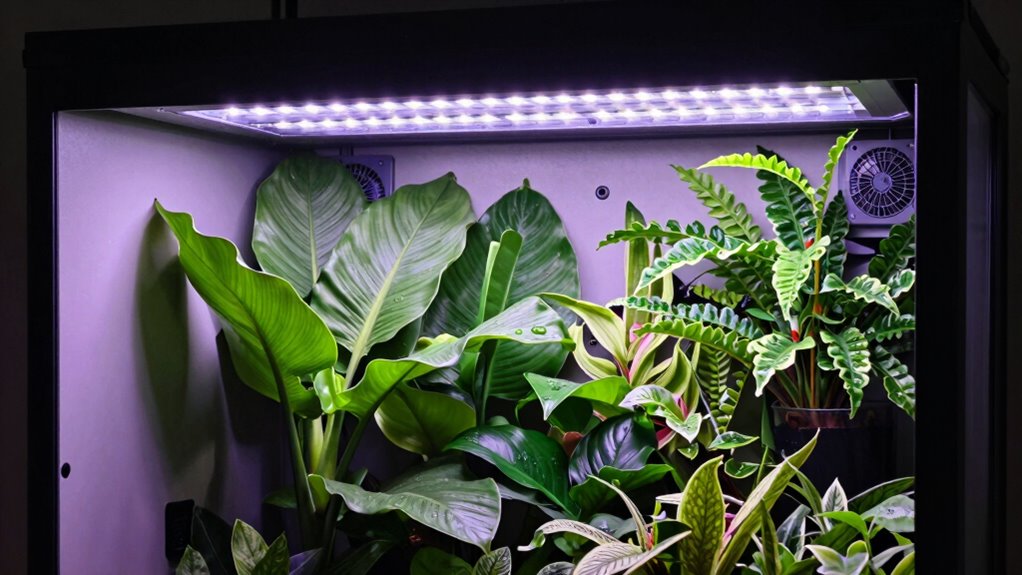

You need air exchange in your indoor garden cabinet because it prevents issues like mold, mildew, and root rot by controlling humidity and temperature levels. Good airflow ensures your plants get fresh CO2, reduces heat buildup, and promotes even light distribution. Without proper ventilation, stagnant air can lead to microbial problems and stress your plants. If you want to discover how air circulation boosts healthy growth and environment stability, keep exploring how to optimize your setup.

Get garden gear delivered free with Prime
- Fast, free delivery on millions of items
- Prime Video, Amazon Music and more included
- Member-only deals all year
Key Takeaways
- Air exchange prevents mold, mildew, and root rot by controlling humidity and moisture levels.
- Proper airflow disperses heat, avoids hotspots, and ensures even lighting distribution.
- Ventilation reduces microbial growth risks and maintains a healthy microclimate for plants.
- Fresh air supplies essential CO2 for photosynthesis, boosting plant growth and vitality.
- Managing air quality enhances nutrient absorption, disease prevention, and overall garden health.
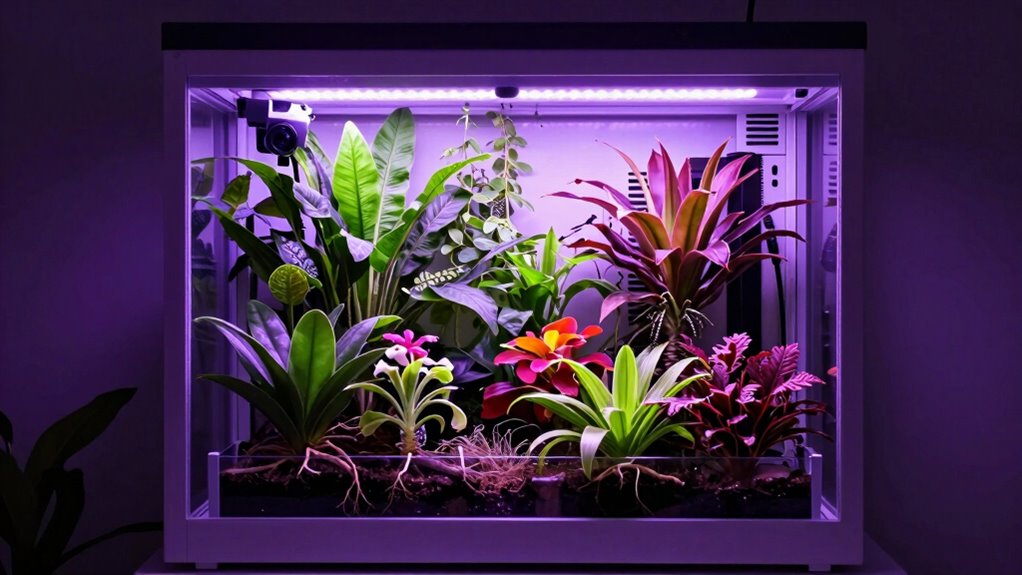
Indoor garden cabinets can thrive only if they have proper air exchange. While it might seem like investing in good lighting is enough to keep your plants healthy, neglecting airflow can lead to problems that stunt growth or even kill your plants. The right balance of air exchange ensures that humidity levels stay within ideal ranges, preventing issues like mold, mildew, or root rot. Without fresh air cycling through your cabinet, humidity can spike unexpectedly, creating a damp environment that encourages pests and diseases. Proper humidity control through ventilation helps maintain a stable environment, allowing your plants to absorb nutrients efficiently and grow stronger.
Proper air exchange is essential for healthy indoor garden growth and preventing issues like mold and root rot.
You might be tempted to focus solely on the light spectrum — after all, good LED grow lights are designed to mimic the sun’s rays and promote photosynthesis. But light alone isn’t enough. If your cabinet lacks airflow, your plants won’t receive the full benefits of your carefully chosen spectrum. Stale air can cause heat buildup and uneven light distribution, reducing the effectiveness of your grow lights. Good airflow prevents heat pockets from forming, ensuring that your plants are evenly exposed to the ideal light spectrum, which enhances photosynthesis and accelerates growth. Additionally, fresh air exchange helps deliver a steady supply of CO2, an essential element in the photosynthesis process, making your lighting investment even more effective.
Beyond humidity control and light spectrum, proper air exchange also helps maintain a healthy microbial environment. When stale air accumulates, it can create a breeding ground for mold, fungi, and bacteria that threaten your plants’ health. Ventilation mitigates this risk by removing excess moisture and promoting a balanced microclimate. It’s not just about providing fresh air; it’s about creating an environment where your plants can thrive without the stress caused by stagnant, humid air. Ensuring proper air circulation is essential for maintaining the overall microclimate within your cabinet. Proper ventilation systems can help regulate temperature and humidity levels, creating a more resilient environment for plant growth. Maintaining proper air exchange also supports healthy microbial activity, which is vital for nutrient uptake and plant immunity. Introducing adequate airflow can also prevent the buildup of heat, which is crucial for maintaining optimal growing conditions. Incorporating air quality management strategies can further enhance your garden’s health by ensuring that harmful pollutants do not accumulate within the cabinet.
indoor garden cabinet ventilation fan
As an affiliate, we earn on qualifying purchases.
As an affiliate, we earn on qualifying purchases.
Frequently Asked Questions
How Often Should I Ventilate My Indoor Garden Cabinet?
You should ventilate your indoor garden cabinet daily, especially when light intensity is high, to maintain ideal plant nutrition. Regular airflow prevents excess humidity and keeps CO2 levels balanced, promoting healthy growth. If you notice mold or a musty smell, increase ventilation. Proper air exchange ensures your plants get fresh air, supports photosynthesis, and prevents issues caused by stagnant air, helping your garden thrive.
What Are the Best Methods to Improve Air Exchange?
Did you know that plants need fresh air to thrive, just like us? To improve air exchange, you should use oscillating fans or exhaust vents to boost airflow and maintain ideal oxygen levels. Regularly opening your cabinet or installing an inline fan helps refresh air quality, preventing stale conditions. These methods guarantee your plants get enough oxygen, promoting healthy growth and preventing issues like mold or pests.
Can Poor Air Exchange Affect Plant Health?
Poor air exchange can seriously affect your plant health by causing stagnant air, which hampers nutrient uptake and weakens plants. Without fresh air, pests can thrive, and plant nutrient levels may drop, leading to yellowing or stunted growth. Proper air circulation helps prevent pests and guarantees your plants get the necessary nutrients, promoting stronger, healthier growth. So, don’t overlook air exchange if you want vibrant, thriving indoor plants.
Is There a Way to Automate Air Exchange?
Think of your garden as a living, breathing organism requiring fresh air to thrive. Yes, you can automate air exchange with smart fans that monitor air quality. These fans activate when levels drop, ensuring your plants get fresh air without your constant effort. Automation maintains ideal conditions, preventing issues like mold or stale air, and keeps your indoor garden healthy and productive effortlessly.
How Do Odors Relate to Air Exchange in Cabinets?
Odors in your indoor garden cabinets are directly affected by air exchange. Without proper air filtration and odor control, stale or smelly air can build up, causing unpleasant smells. Ensuring good air exchange helps remove odorous air and brings in fresh air, reducing odor issues. Automating this process with exhaust fans or air purifiers maintains a cleaner environment, keeps odors in check, and promotes healthier plant growth.
As an affiliate, we earn on qualifying purchases.
Conclusion
Remember, a healthy garden is built on more than just pretty lights—you need a breath of fresh air to keep your plants thriving. Proper air exchange prevents mold, controls humidity, and supplies essential carbon dioxide. Don’t just focus on the aesthetics; prioritize ventilation to guarantee your indoor garden cabinet flourishes. As the saying goes, “A breath of fresh air makes everything better.” Keep that in mind, and enjoy growing a lush, vibrant space indoors.
plant humidity and temperature controller
As an affiliate, we earn on qualifying purchases.
As an affiliate, we earn on qualifying purchases.
LED grow light with airflow integration
As an affiliate, we earn on qualifying purchases.
As an affiliate, we earn on qualifying purchases.
Columbus Day / Indigenous Peoples' Day Picks
long weekend sales
As an affiliate, we earn on qualifying purchases.