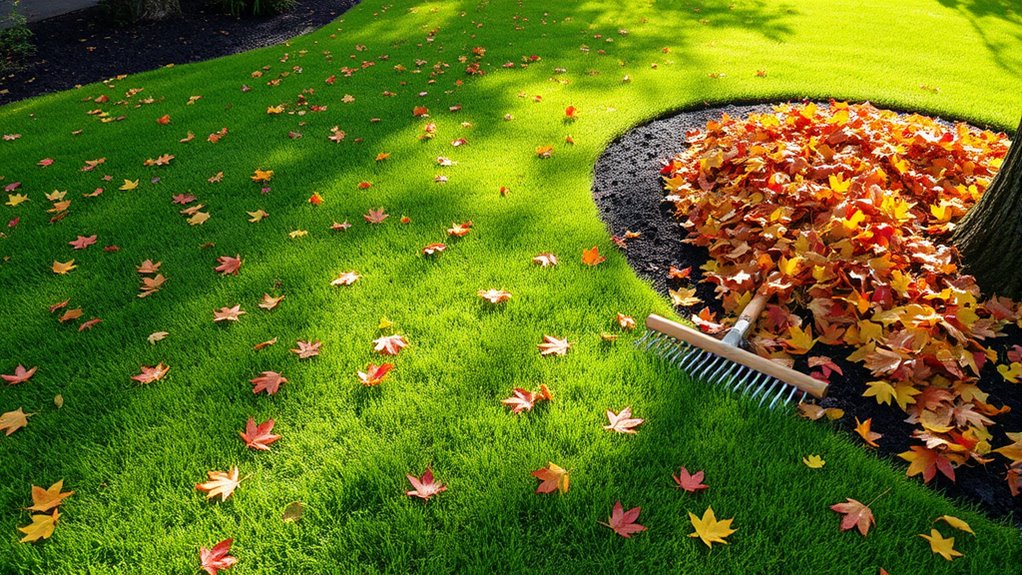

To effectively manage leaf drop on lawns and beds, start by regularly raking or using a leaf blower to keep your yard tidy. Shred leaves to speed up composting or mulch them into garden beds to enrich the soil and suppress weeds. Composting your leaves turns yard waste into valuable nutrients, but remember to turn the pile and maintain proper moisture for quick decomposition. Keep your landscape healthy and lush by applying these simple tips—you’ll find more helpful ideas as you continue.
Key Takeaways
- Regularly rake or blow leaves into manageable piles to prevent smothering grass and plants.
- Mulch shredded leaves directly into garden beds to conserve moisture and add nutrients.
- Compost collected leaves with green materials to create nutrient-rich soil for lawns and beds.
- Shred leaves to speed up decomposition and improve mulch and compost effectiveness.
- Maintain proper moisture and turn compost regularly to ensure efficient breakdown of leaf materials.
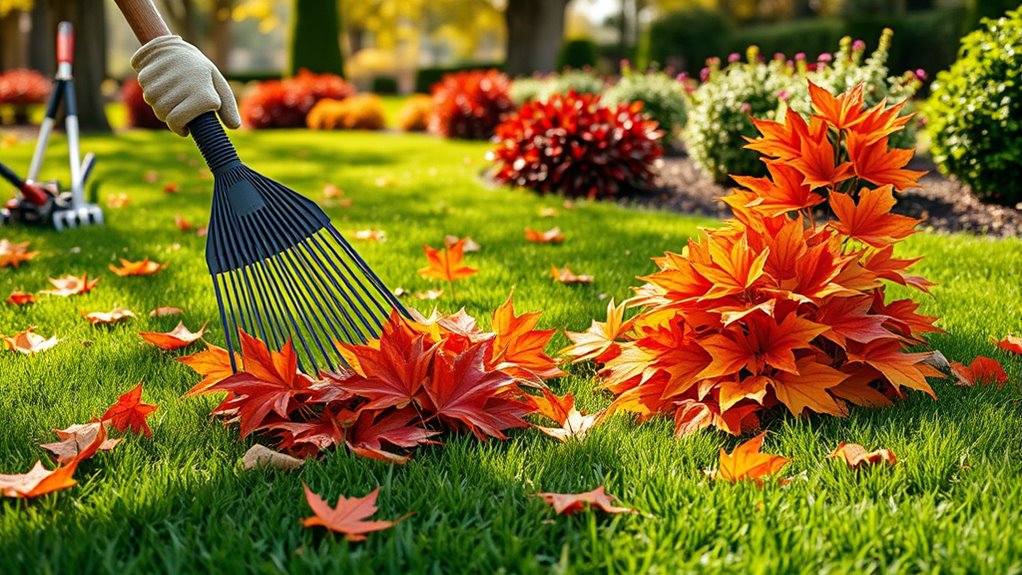
Have you noticed an increase in falling leaves around your yard? As autumn rolls in, your lawn and garden beds become covered in a colorful layer of leaves. While they add seasonal charm, they can quickly turn into a hassle if not managed properly. The key to maintaining a healthy yard during this time is effective leaf cleanup. Clearing fallen leaves regularly prevents them from smothering your grass and plants, reducing the risk of disease and damage. Raking or using a leaf blower makes the task more manageable, especially if you have a large yard. Make sure to gather the leaves into manageable piles, so you can either bag them for disposal or repurpose them elsewhere.
One of the best ways to handle leaves is to compost them. Composting leaves transforms what seems like yard waste into valuable nutrient-rich soil. Simply collect the leaves and layer them with other compost ingredients like grass clippings and kitchen scraps. The process might take a few months, but you’ll end up with a natural fertilizer that improves your soil’s health and reduces the need for chemical fertilizers. To speed up decomposition, shred the leaves before composting; this increases surface area and accelerates breakdown. You can use a leaf shredder or run over the leaves with a lawnmower, which makes the process quicker and easier. Additionally, understanding foraging techniques can help you find other organic materials to enhance your compost.
If you prefer not to compost leaves, consider mulching them directly into your garden beds. Spread a thin layer of shredded leaves around your plants, which acts as natural mulch. This helps conserve moisture, suppress weeds, and slowly releases nutrients back into the soil as the leaves break down. Mulching with leaves is especially beneficial for perennial beds and vegetable gardens, providing insulation during colder months and enriching the soil for spring planting.
If you have a compost bin or pile, make sure to turn it regularly to aerate and speed up the decomposition process. Keep the pile moist but not waterlogged, and add a mix of green and brown materials for optimal composting conditions. Remember, leaves are a brown material—high in carbon—so balance them with green materials like grass clippings or vegetable scraps.
Managing leaf drop doesn’t have to be overwhelming. With consistent leaf cleanup and creative recycling through composting or mulching, you can keep your yard tidy while enriching your soil naturally. This approach not only maintains curb appeal but also benefits your garden in the long run. By staying proactive, you turn a seasonal chore into an opportunity to nurture your landscape sustainably.
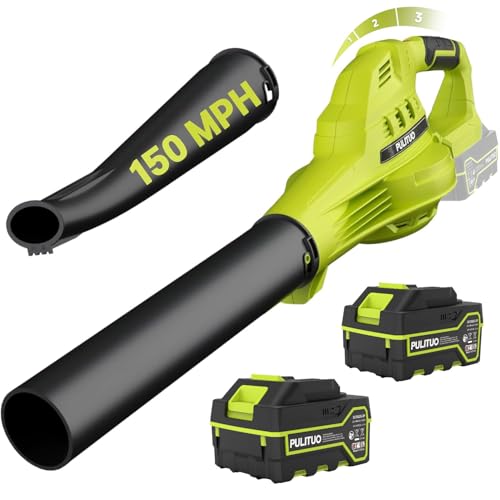
Leaf Blower Cordless with 2X 4.0Ah Batteries and Charger, 150MPH Lightweight Cordless Blower, 3 Speeds Small Electric Leaf Blowers for Lawn Care, Patio, Yard, Leaves, Grass, Dust (Green)
POWERFUL EFFICIENT CLEANER: Pulituo cordless leaf blower makes yard work effortless with no need for gas or cords….
As an affiliate, we earn on qualifying purchases.
As an affiliate, we earn on qualifying purchases.
Frequently Asked Questions
How Can I Compost Fallen Leaves Effectively?
You can compost fallen leaves effectively by shredding them first, which speeds up decomposition. Place them in composting bins, mixing them with green materials like grass clippings for balance. Turn the pile regularly to aerate it. Over time, leaves will break down into rich leaf mold, perfect for enriching your garden soil. Keep the compost moist and patience will turn your leaves into valuable, nutrient-rich compost.
What Are Eco-Friendly Methods to Clear Leaf Debris?
You can clear leaf debris eco-friendly by using leaf collection tools like rakes, leaf vacuums, or mulching mowers to gather leaves efficiently. Instead of bagging everything, consider using mulch alternatives such as composting or spreading leaves as natural mulch to enrich your soil. This method reduces waste, avoids chemical use, and nurtures your garden, making cleanup both sustainable and beneficial for your landscape.
When Is the Best Time to Mulch Leaves?
You should mulch leaves when they are still slightly moist and manageable, typically in early to mid-autumn. This timing allows you to perform leaf removal efficiently while creating a natural mulch that benefits your soil. Mulch timing is vital because mulching too early can leave leaves exposed to the elements, and too late can make leaf removal more difficult. Mulching at the right time helps recycle nutrients and reduces yard waste.
Can Leaf Drop Harm My Lawn’s Health?
Did you know that fallen leaves can cover up to 50% of your lawn’s surface? Leaf drop can harm your lawn’s health if left unchecked, as thick layers promote leaf mold and create insect habitats that damage grass roots. But, if you mulch leaves properly, you can enrich your soil and prevent these issues, keeping your lawn healthy and vibrant instead of vulnerable to decay and pests.
How Do I Prevent Future Leaf Accumulation?
To prevent future leaf accumulation, you should establish a regular yard cleanup schedule and perform leaf removal promptly. Raking or using a leaf blower keeps your lawn clear, preventing excess leaf build-up that can smother grass and promote disease. Consider setting aside time every few weeks during fall to stay ahead of leaf drop, ensuring your yard stays healthy and tidy. Consistent maintenance makes managing leaf debris much easier.
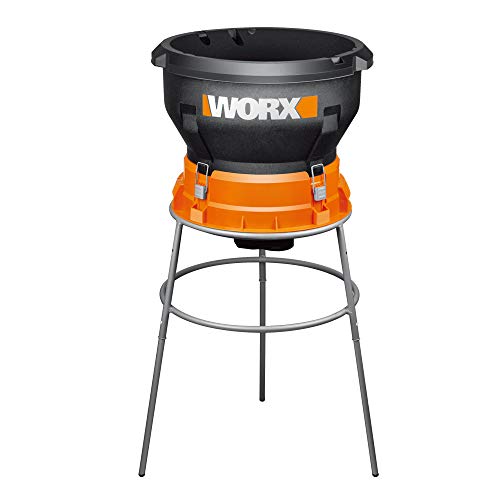
Worx 13 Amp Electric Leaf Mulcher, Leaf Shredder with High-Compression Mulching, Powerful & Compact Yard Waste Shredder, Corded, WG430
53 GALLONS/MIN: That’s right, the 13.0 Amp motor mulches up to 53 gallons of leaves per minute.
As an affiliate, we earn on qualifying purchases.
As an affiliate, we earn on qualifying purchases.
Conclusion
Now that you know the secrets to sorting, sweeping, and stacking leaves, you’ll stay savvy and save time this season. With a little effort, you’ll turn leaf chaos into a charming, clean landscape. Remember, proactive pruning and proper disposal prevent problems and promote healthy growth. So, stay steady, stay sharp, and enjoy a spotless, stunning lawn and beds all season long. Leaf management is manageable when you make it methodical and mindful—master your mulch and mulch your mess!

VIVOSUN Outdoor Tumbling Composter Dual Rotating Batch Compost Bin, 43 Gallon Black Door
Twin chambers: Two separate chambers allow one side to finish composting while leaving the other side available to…
As an affiliate, we earn on qualifying purchases.
As an affiliate, we earn on qualifying purchases.

Garden Rake for Leaves,Heavy Duty Metal Adjustable Leaf Rake for Lawns,Long Handle 33"-69" with Expandable Head 8"-15",Garden Tools for Yard Lawn Shrub Garden Beds
Adjustable Length & Expandable Head: Customize your reach with a handle extending from 33 inches to 69 inches…
As an affiliate, we earn on qualifying purchases.
As an affiliate, we earn on qualifying purchases.