To manage snow load on shrubs, start by pruning to remove weak or dense branches that can trap snow. Gently reinforce vulnerable branches with ties or supports, being careful not to damage growth. Regularly sweep snow off with a soft broom or rake before it accumulates too heavily. Choosing resilient shrub varieties and thinning crowded areas help snow slide off more easily. For more tips on keeping your shrubs safe during winter storms, keep exploring these strategies.
Key Takeaways
- Regularly remove accumulated snow from shrubs to prevent excessive weight and branch breakage.
- Gently sweep snow off with a soft broom or rake before it becomes heavy or frozen.
- Reinforce vulnerable branches with soft ties or support stakes to withstand snow loads.
- Prune dense or weak areas to improve snow shedding and reduce stress on branches.
- Choose shrub varieties with strong, flexible branches suited for snowy conditions.
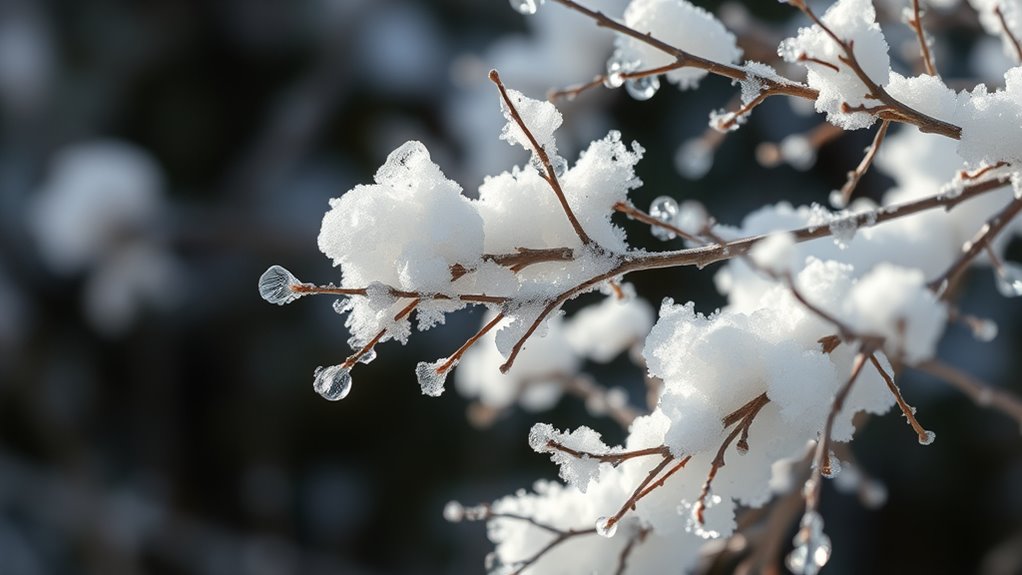
When heavy snow accumulates on shrubs, it can cause branches to bend or break under the weight. To prevent this damage, you need to take proactive steps, especially during the winter months. One effective approach is winter pruning, which involves trimming your shrubs before winter sets in. By removing dead or weak branches during this process, you reduce the overall weight that snow can add to the plant. Proper winter pruning not only promotes healthier growth but also makes your shrubs more resilient against snow loads. Focus on thinning out dense areas so snow can slide off more easily, minimizing the risk of branches snapping under pressure.
Winter pruning helps shrubs shed snow and reduces branch breakage risk.
In addition to pruning, branch reinforcement plays an essential role in managing snow load on your shrubs. You can reinforce vulnerable branches by tying them gently to the main framework using soft twine or plant ties. This technique helps keep heavy branches from sagging or breaking as snow accumulates. When reinforcing branches, avoid tying too tightly, as it can restrict growth or cause damage. Instead, aim for a snug but gentle hold that offers support without harming the plant. For particularly large or heavy branches, consider installing support stakes or braces to distribute the weight more evenly and prevent bending or snapping.
Another helpful tip is to regularly remove snow from your shrubs during a snowfall. Using a broom or rake with a soft brush, gently sweep off the snow before it builds up too heavily. Do this carefully to avoid damaging branches. If snow has already compacted or frozen onto the branches, wait until it melts slightly or thaws before attempting to clear it. Removing snow reduces the weight on branches and lessens the likelihood of breakage, especially during storms or continuous snowfalls.
It’s also wise to evaluate the type of shrubs you have and their susceptibility to snow damage. Some species are more prone to branch breakage due to their structure or wood strength. For these, additional reinforcement and more careful pruning are necessary. When planting new shrubs, select varieties that are better suited to snowy climates or that have naturally strong, flexible branches. Additionally, understanding the expiration of vape juice and proper storage techniques can help ensure your stored supplies remain safe and effective, especially if you need to use them during winter months.
winter shrub support stakes
As an affiliate, we earn on qualifying purchases.
As an affiliate, we earn on qualifying purchases.
Frequently Asked Questions
How Do I Identify if My Shrub Has Snow Damage?
You can tell if your shrub has snow damage by inspecting for branch breakage or bent, sagging branches. Look closely for signs of bud damage, such as buds that appear shriveled or dead. Heavy snow can cause these issues, especially on thin or weak branches. If you notice significant breakage or damaged buds, gently remove the snow and prune damaged areas to help your shrub recover.
When Is the Best Time to Remove Snow From Shrubs?
You should remove snow from your shrubs as soon as it starts to pile up, ideally during daylight hours when the snow is softer. Use gentle methods like sweeping or shaking to avoid damaging branches. After snow removal, consider seasonal pruning to remove weak or damaged parts and add protective coverings for future storms. Timely action prevents heavy snow from causing long-term damage and helps maintain your shrub’s health.
Can Snow Load Cause Long-Term Damage to My Plants?
Snow load can absolutely cause long-term damage to your plants, like bending branches so severely they never bounce back, turning your shrubs into frozen, broken sculptures. Heavy snow weighs down plant insulation and weakens branch reinforcement, risking cracks or even total collapse. If you don’t remove snow promptly, you might end up with a landscape full of damaged, lifeless plants that take years to recover—or never do at all.
Are There Specific Shrub Varieties More Resistant to Snow Load?
Yes, certain shrub varieties are more resistant to snow load. You should look for evergreen varieties and hardy shrubs, which naturally withstand heavy snow. These plants have flexible branches and stronger wood, making them less prone to damage from accumulated snow. By choosing these resilient types, you guarantee your landscape stays healthy and attractive during winter storms. Always consider local climate and specific shrub needs when selecting resistant varieties.
How Can I Prevent Snow Accumulation on Delicate Shrub Branches?
Think of your shrub branches like delicate dancers, easily weighed down by snow. To prevent snow buildup, support the branches with stakes or wire supports, and set up wind barriers to reduce snow crashing onto them. Regularly gently brush off accumulated snow with a broom, being careful not to damage the branches. This proactive approach keeps your shrubs safe, helping them stay resilient through winter’s weight.
soft plant ties for branches
As an affiliate, we earn on qualifying purchases.
As an affiliate, we earn on qualifying purchases.
Conclusion
By taking simple steps to manage snow load on your shrubs, you can protect them from the crushing weight of winter’s icy grip. Think of your shrubs as delicate masterpieces—without your care, they could be flattened like a pancake in a storm! Regularly gently remove snow, avoid piling it high, and give your plants some breathing room. With these quick actions, you’ll keep your garden thriving through even the harshest winter, standing tall like a fortress of greenery.
snow removal tools for shrubs
As an affiliate, we earn on qualifying purchases.
As an affiliate, we earn on qualifying purchases.
resilient shrub varieties for snowy climates
As an affiliate, we earn on qualifying purchases.
As an affiliate, we earn on qualifying purchases.