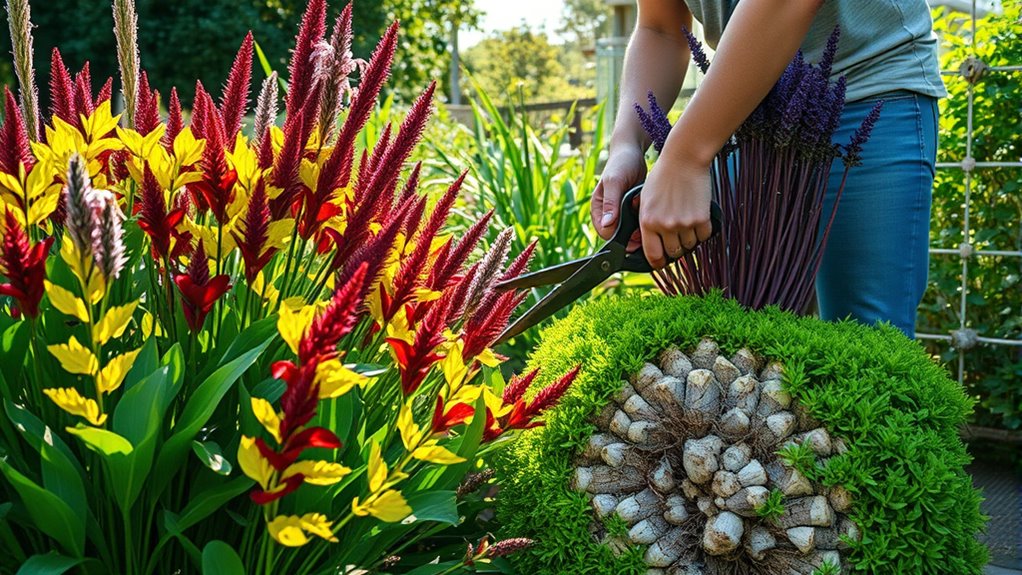

To divide and rejuvenate overgrown perennials, do so in early spring or fall when plants are actively growing. Carefully dig around the clump, divide it into sections with healthy roots and foliage, then replant at the same depth, removing any damaged parts. Water thoroughly and mulch to retain moisture. Following seasonal timing and proper care helps keep perennials healthy and vigorous—continue exploring for more detailed tips to guarantee success.
Key Takeaways
- Divide perennials in early spring or fall during active growth to reduce stress and promote quick recovery.
- Carefully dig around the clump, identify natural divisions, and ensure each section has sufficient roots and foliage.
- Use sharp tools like knives or shears to split congested clumps, removing damaged or diseased parts before replanting.
- Replant divisions at the same depth, water thoroughly, and apply mulch to support root establishment and moisture retention.
- Post-division, maintain consistent watering, remove dead material, and provide proper seasonal care to rejuvenate overgrown plants.
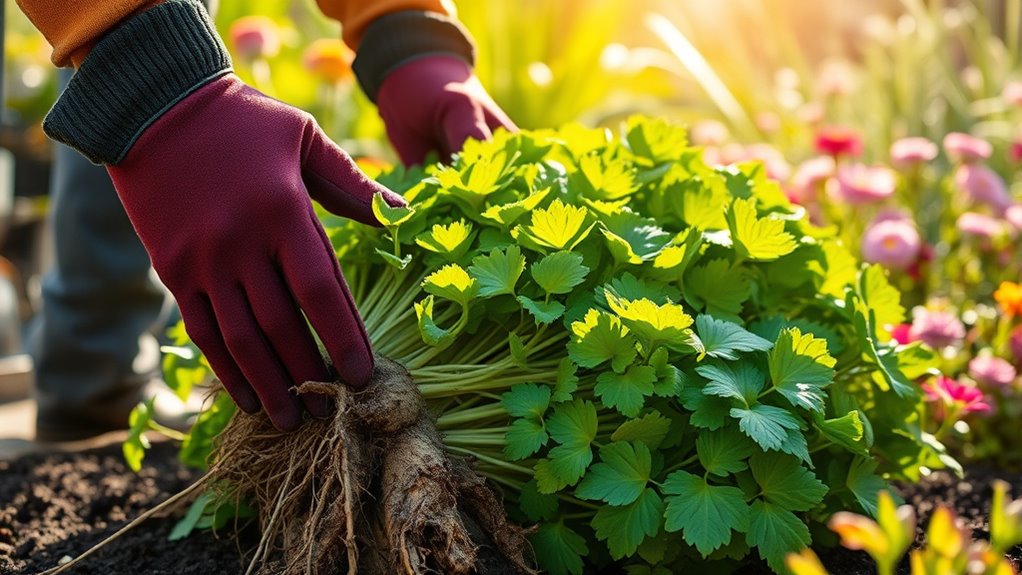
Overgrown perennials can become crowded and less vigorous over time, but with proper dividing and rejuvenating techniques, you can restore their health and beauty. One of the most important factors to consider is plant health, which depends heavily on timing. Knowing the right seasonal timing ensures you’re not stressing the plants unnecessarily and that they can recover quickly. Generally, the best time to divide perennials is during their active growth period—early spring or fall—when the weather is mild and the plants are naturally more resilient. Avoid dividing during extreme heat or cold, as these conditions can hinder recovery and make plants more susceptible to disease.
Dividing perennials in spring or fall promotes healthy, resilient plants and minimizes stress.
When planning to divide, assess the plants first. Look for signs of overcrowding, such as smaller flowers or foliage, or a clumping habit that’s become tight and congested. Carefully dig around the root ball, keeping as much of the root system intact as possible. Gently lift the entire clump from the ground, taking care not to damage the roots. Once out of the ground, you can see how the plant has formed natural divisions—these are your best candidates for replanting. Use a sharp knife, garden spade, or pruning shears to cut through the root mass into manageable sections. Make sure each division has enough roots and foliage to support growth afterward.
After dividing, it’s essential to rejuvenate the plants properly. Remove any damaged, dead, or diseased roots and foliage. This not only promotes healthy new growth but also helps prevent disease spread. Replant the divisions at the same depth they were growing before, ensuring good soil contact. Water thoroughly after planting to settle the soil and provide moisture for recovery. Applying a layer of mulch helps retain soil moisture and temperature stability, further supporting plant health.
Additionally, understanding the plant’s natural growth cycle and seasonal timing can significantly influence the success of dividing and rejuvenating efforts. Keep in mind that proper seasonal timing isn’t just about when you divide but also when you give the plants time to settle before facing extreme weather. Fall divisions often give plants a head start before winter, allowing roots to establish before dormancy ends in spring. Spring divisions, on the other hand, allow plants to grow actively during the season, but require prompt watering and care. Throughout this process, your attentive care—adjusted to the plant’s specific needs and the seasonal conditions—will ensure robust growth, vibrant blooms, and long-lasting health. By dividing and rejuvenating with care and timing in mind, your overgrown perennials will thrive anew, enriching your garden for years to come.
Frequently Asked Questions
When Is the Best Time to Divide Perennials in My Climate?
You should divide perennials in your climate during early spring or late fall when they’re dormant. After seasonal pruning, prepare the soil by enriching it with compost to give your new divisions a healthy start. Timing is key; dividing at the right time guarantees vigorous growth and prevents stress. Always water thoroughly after dividing and keep the soil moist to help plants recover quickly.
How Do I Identify When Perennials Need Dividing?
When your perennials start to look crowded or their foliage appears sparse or weak, it’s time to divide them. Check their root health—if roots are tightly packed or circling, they need space to thrive. Overgrown plants often produce fewer flowers and have uneven growth. By observing these signs, you can identify when your perennials need dividing, ensuring they stay healthy, vigorous, and beautiful year after year.
Can All Perennials Be Divided Successfully?
Not all perennials can be divided successfully, but many can, especially those with vigorous root growth like hostas and daylilies. You should consider dividing when the plant becomes overcrowded, roots are tightly packed, or flower color diminishes due to age. Dividing stimulates new growth, revitalizes the plant, and often results in more vibrant blooms. Always research specific varieties to guarantee proper timing and technique for successful division.
What Tools Are Safest for Dividing Delicate Perennials?
You should use sharp, clean tools like a serrated knife or a garden fork to divide delicate perennials safely. Always prioritize garden safety by wearing gloves and eye protection. Keep your tools well-maintained—sharp blades reduce the risk of slipping and damaging plants. After use, clean and store them properly to prevent rust and make sure they’re ready for next time. Proper tool care and safety measures make dividing delicate perennials easier and safer.
How Do I Care for Perennials After Dividing?
After dividing perennial roots, you should water them thoroughly to help them settle in, make sure they’re planted in well-draining soil that meets perennial soil requirements, and provide shade during the hottest part of the day. Keep the soil consistently moist but not waterlogged, mulch to retain moisture, and avoid heavy fertilization until new growth appears. Proper care encourages healthy roots and vibrant blooms, helping your perennials thrive after dividing.
Conclusion
By dividing and rejuvenating your overgrown perennials, you breathe new life into your garden, much like a gardener pruning a tangled vine to let fresh growth flourish. With a little effort, you’ll transform tired plants into vibrant, healthy specimens that bloom with renewed vigor. Think of it as giving your garden a fresh start—a chance for new beginnings to blossom and thrive, turning your outdoor space into a lush, colorful oasis.