To keep your pruning tools effective, regularly clean off sap, dirt, and plant residue with a brush or cloth, and use mild soap for stubborn spots. Always dry tools thoroughly and apply light oil to prevent rust and corrosion. Sharpen blades with a fine file or sharpening stone, following the original bevel angle, to ensure clean cuts that promote healthy plants. Proper maintenance extends tool life, and if you want to know more, you’ll find simple tips to keep your tools in top shape.
Key Takeaways
- Regularly clean tools with a brush and mild soap to remove sap, dirt, and residue, preventing rust and ensuring effective pruning.
- Dry tools thoroughly after cleaning and apply light oil to protect blades from rust and corrosion.
- Use appropriate sharpening tools like sharpening stones or fine files, following the original bevel angle for a clean cut.
- Sharpen blades periodically to maintain sharpness, reducing plant damage and promoting faster healing.
- Store tools in a dry, covered area and perform routine maintenance to extend tool lifespan and effectiveness.

Keeping your pruning tools sharp and clean is essential for healthy plants and efficient gardening. When you prioritize blade maintenance, you ensure that your tools perform their best and last longer. Dull blades can damage plant tissues, leading to increased vulnerability to disease and slower healing. Regularly inspecting your shears and pruning saws allows you to spot any dullness or damage early, so you can address issues before they worsen. Sharpening the blades restores their cutting edge, making clean cuts that promote faster healing in plants. It’s a straightforward process that, when done correctly, considerably improves your gardening results.
Rust prevention is equally important in maintaining your tools. Rust not only dulls blades but also weakens the metal, making tools more prone to breakage. To prevent rust, always clean your tools thoroughly after use, especially if you’ve been working with damp or salty environments. Wiping down blades with a cloth and a light coating of oil creates a protective barrier against moisture. Applying a thin layer of oil regularly, even when not in use, helps keep rust at bay and preserves the sharpness of your blades. Store your tools in a dry, covered area to avoid exposure to humidity, which accelerates rust formation. Proper storage and routine maintenance aren’t just about keeping tools looking good—they’re about safeguarding your investment and ensuring your pruning tools stay effective season after season.
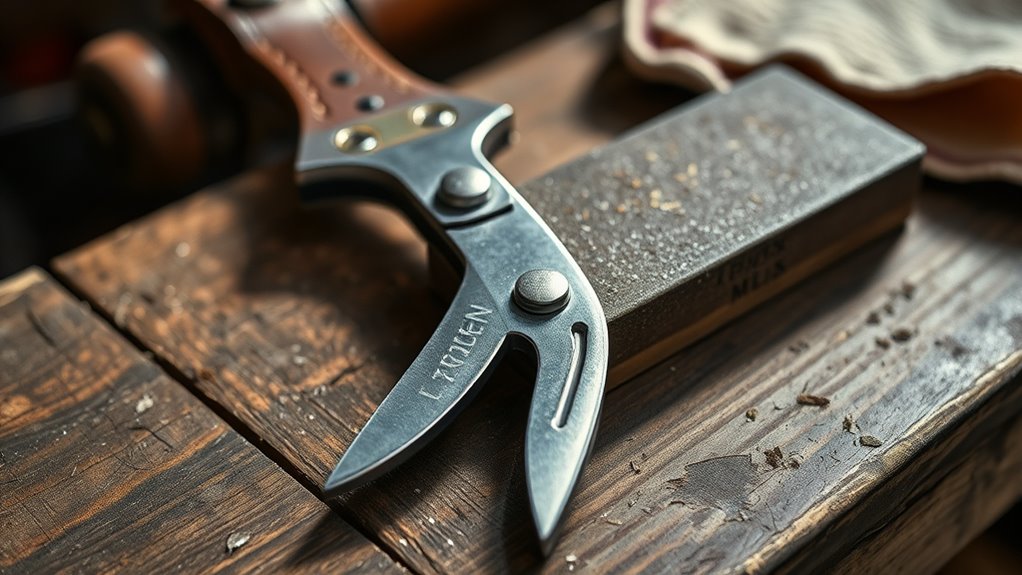
When sharpening your blades, use the right tools. A sharpening stone or a fine file works well for most pruning shears and scissors. Follow the original bevel angle to maintain the blade’s cutting efficiency. Take your time; a steady hand produces a cleaner edge and reduces the risk of damaging the blade. After sharpening, wipe off any metal filings and apply a light coat of oil. For pruning saws, use a fine-tooth file to restore the teeth, making sure each tooth is evenly sharpened. Remember, a sharp blade reduces effort and minimizes plant damage, which is critical for healthy growth. Additionally, proper storage techniques can significantly extend the lifespan of your tools and ensure they remain effective for each gardening season.
Cleaning your tools after each use is just as important as sharpening. Remove sap, dirt, and plant residue with a brush or cloth. For stubborn sap or residue, a mild soap solution or a specialized tool cleaner can do the trick. Dry everything thoroughly before storing to prevent rust and corrosion. Regular maintenance might seem like a chore, but it’s an investment that pays off by keeping your pruning tools in top shape. With sharp blades and rust-free tools, you’ll find pruning easier and more precise, leading to healthier, more vigorous plants and a more enjoyable gardening experience.

TopHomer 2 Pieces Garden Sharpening Stone with Diamond Coated for Pruning Shears, Hedge Trimmers, 180 Mesh, Portable Sharpener Stone Tool (Model D)
【Hard and Sturdy】We have 5 models of this garden sharpening stone from A to E for you to…
As an affiliate, we earn on qualifying purchases.
As an affiliate, we earn on qualifying purchases.
Frequently Asked Questions
How Often Should I Sharpen My Pruning Tools?
You should sharpen your pruning tools every 4 to 6 uses or when you notice them tearing or crushing plant material. Regular tool maintenance ensures clean cuts and prevents damage to your plants. If you’re working with hardwood or thick branches, sharpen more often. Keep an eye on dull blades, and don’t wait too long—dull tools make pruning harder and less effective. Proper sharpening frequency keeps your tools in top shape.
Can I Sharpen Pruning Tools With Household Items?
Yes, you can sharpen pruning tools with household sharpening methods. Use DIY cleaning solutions like vinegar or lemon juice to remove rust and debris. For sharpening, try a sharpening stone, fine-grit sandpaper, or even a metal file. Make sure to hold the tool at the correct angle and apply consistent pressure. These simple household items and techniques can keep your pruning tools effective and in good condition without special equipment.
What Are the Signs My Tools Need Cleaning?
Your tools might be crying out for help if you notice rust buildup, sticky blades, or dull cuts that make pruning feel like a battle. These are clear signs your tool maintenance needs attention, which directly impacts pruning durability. When tools are clean, sharp, and well-maintained, they perform like a champion, slicing through branches effortlessly. Don’t ignore these signs — your gardening success depends on it!
Are There Eco-Friendly Cleaning Solutions for Pruning Tools?
Yes, you can use eco-friendly cleaning solutions for pruning tools. Look for biodegradable cleaners that break down naturally and are safe for the environment. You can also opt for plant-safe solutions like a vinegar and water mix or baking soda paste. These options effectively clean and disinfect your tools without harming plants or ecosystems, making them a responsible choice for eco-conscious gardeners.
How Do I Prevent Rust on My Pruning Tools?
To prevent rust on your pruning tools, you should focus on regular tool maintenance and rust prevention strategies. After each use, clean and dry your tools thoroughly to remove moisture, which causes rust. Apply a thin coat of oil, like mineral or vegetable oil, to create a protective barrier. Store your tools in a dry place, and periodically inspect them for signs of corrosion. Proper tool maintenance keeps them sharp, clean, and rust-free.

RETAIN Organic Pruning Tool Cleaner, Lube, No Rust 4 oz Spray
All ingredients are registered organic
As an affiliate, we earn on qualifying purchases.
As an affiliate, we earn on qualifying purchases.
Conclusion
By regularly sharpening and cleaning your pruning tools, you keep them in top shape and guarantee healthy plants. Think of it like sharpening a sword—you’ll cut more smoothly and safely. Remember, a tool well-maintained is like a well-tended garden: it flourishes. So, take the time to care for your tools, and you’ll reap the rewards of easier cuts and healthier growth. After all, a stitch in time saves nine.

ZORSHUY 4-in-1 Weeding Tool with Hoe, Grabber, Pruning Shears & Scrub Brush,Garden Hoe & Weed Puller Tool with Long Handle,Dandelion Heavy Duty Uprooting Tool for Lawn Yard Garden
【Complete 5-Piece Gardening Tool Set – Everything You Need】 This all-in-one garden maintenance kit includes: 1 adjustable long…
As an affiliate, we earn on qualifying purchases.
As an affiliate, we earn on qualifying purchases.
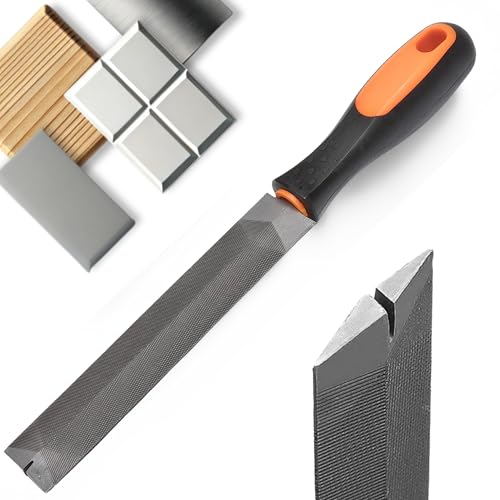
Double Hook Sharpener Tool – Small Metal File for Professionals Saw Sharpening Files for Hand Saws Pruning Saw File Hand Saw Mill File
You will receive 1 pcs of grinding rasp. Overall length of hand saw sharpening files 260mm, handle length…
As an affiliate, we earn on qualifying purchases.
As an affiliate, we earn on qualifying purchases.