Cleaning your gardening tools after each use is essential to prevent the spread of pests and diseases that can cause serious plant problems. Dirty tools can transfer pathogens and pests from one plant to another, risking infestations and soil contamination. Proper cleaning and maintenance also extend your tools’ lifespan and improve soil health. By establishing this habit, you’ll protect your garden’s overall health and growth. Keep going to discover more simple steps to keep your garden thriving.

Get garden gear delivered free with Prime
- Fast, free delivery on millions of items
- Prime Video, Amazon Music and more included
- Member-only deals all year
Key Takeaways
- Regularly cleaning and disinfecting gardening tools prevents the spread of diseases and pests between plants.
- Removing soil and debris from tools reduces the risk of soil-borne infections and weed transfer.
- Oiling tools after cleaning prevents rust and extends their lifespan, ensuring reliable garden performance.
- Proper tool hygiene interrupts pest life cycles, preventing infestations and reinfestation of plants.
- Incorporating a routine cleaning habit promotes overall plant health and a more productive, disease-free garden.
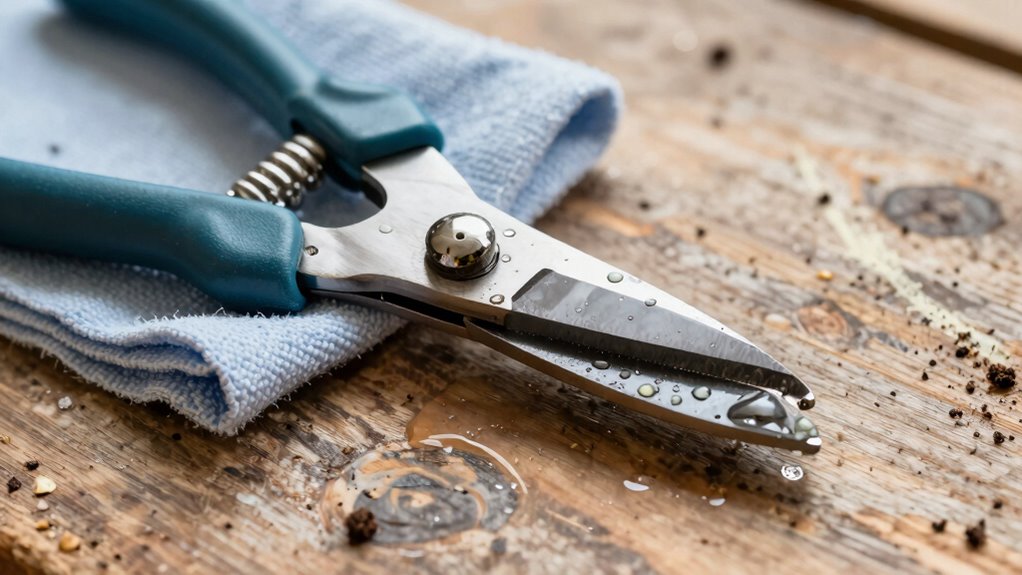
Maintaining clean tools might seem like a small task, but it has a big impact on your work quality and safety. When your gardening tools are spotless, you prevent the spread of diseases and pests that can devastate your plants. Dirty tools carry pathogens and pests from one plant to another, making thorough cleaning an essential part of soil preparation. If you skip this step, you risk contaminating healthy soil and plants, which can lead to stubborn infestations or diseases that are harder to control later on. Clean tools help you create a healthier environment for your plants, giving you a better chance at a thriving garden.
Clean tools prevent disease spread and promote healthier, thriving plants.
Good tool hygiene also plays an indispensable role in pest control. Many pests latch onto garden tools, hiding in crevices or on blades, ready to transfer to the next plant you work on. When you clean your tools regularly, you remove eggs, larvae, and pest residues, reducing the chances of an infestation. This simple habit acts as a first line of defense, preventing pests from gaining a foothold in your garden. It’s especially important after dealing with a pest problem, as it stops the cycle from continuing and spreading to healthy plants.
Proper soil preparation is another area that benefits from clean tools. When you’re working to loosen, aerate, or amend your soil, dirty implements can introduce weeds or soil-borne diseases. By keeping your tools clean, you make certain that you’re not unintentionally transferring unwanted seeds or pathogens into your garden beds. This makes your soil preparation more effective and reduces the need for chemical or organic interventions down the line. Additionally, tool maintenance is essential for extending the lifespan of your gardening equipment, saving you money in the long run. Incorporating regular tool cleaning practices can also help you identify rust or damage early, ensuring your tools remain in optimal condition for future use. Recognizing the importance of preventative maintenance can further enhance your gardening success.
Every time you clean your tools, you’re practicing a preventative approach that saves you time and effort later. It’s easier to spot damage or wear on clean blades or tines, allowing you to repair or replace tools before they break during critical gardening tasks. Plus, clean tools are safer to handle, reducing the risk of cuts or infections. The habit of wiping down, disinfecting, or oiling your tools after each use isn’t just about cleanliness; it’s about protecting your plants, your soil, and yourself. Regularly maintaining tool hygiene enhances the overall health of your garden ecosystem and prevents the spread of pests and diseases. It also promotes long-term tool durability, which is crucial for consistent gardening success. It might seem minor, but this routine creates a strong foundation for healthier plants and a more efficient gardening process.
gardening tool disinfectant spray
As an affiliate, we earn on qualifying purchases.
As an affiliate, we earn on qualifying purchases.
Frequently Asked Questions
How Often Should Garden Tools Be Cleaned for Optimal Performance?
You should clean your garden tools after each use to maintain ideal performance. Follow a consistent cleaning schedule—especially after working with soil, sap, or plant residue—to prevent rust and disease. Proper tool maintenance keeps blades sharp and handles sturdy. By making cleaning a routine part of your gardening, you’ll extend tool lifespan and ensure healthier plants. Don’t skip this step; it’s key to successful gardening.
What Cleaning Products Are Safest for Delicate Plant Tools?
You’d think harsh chemicals would do the job, but plant-safe cleans and eco-friendly disinfectants are gentler on your delicate tools—and your plants. These solutions effectively clean without damage or toxicity, making them ideal for pruning shears or delicate plant tools. Ironically, using harsh products might seem like the quick fix, but eco-friendly options protect your tools and plants in the long run, keeping your garden thriving and safe.
Can Improper Cleaning Cause Plant Diseases?
Yes, improper cleaning can cause plant diseases by increasing tool contamination risks. When you neglect cleaning your tools, pathogens like fungi and bacteria can transfer from one plant to another, leading to infections. To prevent plant disease, always sanitize your tools after each use, especially when switching between plants. This simple habit is essential for plant disease prevention and keeping your garden healthy. Proper cleaning breaks the cycle of disease transmission effectively.
Are There Eco-Friendly Cleaning Methods for Garden Tools?
Yes, there are eco-friendly cleaning methods for garden tools. You can use biodegradable solutions and natural disinfectants to keep your tools clean without harming the environment. These options are just as effective as chemical cleaners but safer for your plants and soil. By choosing natural disinfectants like vinegar or citrus-based solutions, you prevent the spread of disease while supporting sustainable gardening practices. Your plants will thank you for it.
How Do I Remove Rust From Garden Tools Effectively?
To remove rust from your garden tools effectively, start with rust removal by soaking them in white vinegar or a baking soda paste for a few hours. Use a wire brush or steel wool to scrub away loosened rust, then rinse and dry thoroughly. Regular tool maintenance, like oiling after cleaning, prevents future rust buildup. This simple routine keeps your tools in top shape, ensuring they last longer and work better.
As an affiliate, we earn on qualifying purchases.
Conclusion
By adopting the simple habit of cleaning your tools, you’re not just wiping away dirt—you’re shielding your plants like a diligent guardian. Think of it as planting seeds of care that blossom into healthy, thriving greenery. Every scrub and wipe acts as a shield against unseen pests and diseases, turning your gardening routine into a fortress of growth. Keep your tools clean, and watch your garden flourish like a well-tended masterpiece.
rust remover for gardening tools
As an affiliate, we earn on qualifying purchases.
As an affiliate, we earn on qualifying purchases.
As an affiliate, we earn on qualifying purchases.
Fall Picks
fall essentials
As an affiliate, we earn on qualifying purchases.