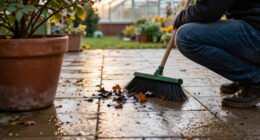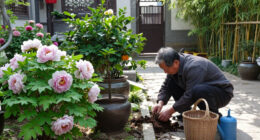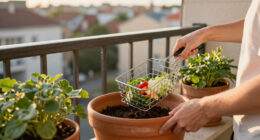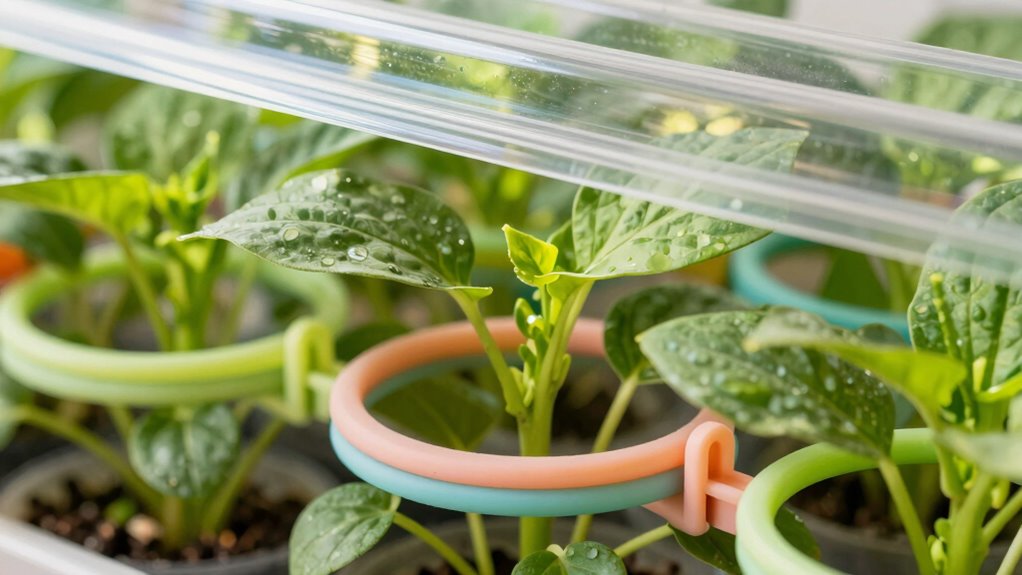

To avoid crushing your plants with hoops, clips, and covers, choose sturdy but lightweight materials that won’t add unnecessary weight. Gently push hoops into the soil without forcing, and secure covers loosely to allow airflow and growth. Use clips that are gentle, avoid over-tightening, and regularly check their position for adjustments. Proper handling and careful installation protect your plants while keeping your support system functional. Keep exploring for more tips to guarantee your plants stay healthy and safe.

Get garden gear delivered free with Prime
- Fast, free delivery on millions of items
- Prime Video, Amazon Music and more included
- Member-only deals all year
Key Takeaways
- Select appropriately sized, sturdy hoops that can support covers without bending or damaging plants.
- Use gentle, properly sized clips that secure covers loosely, allowing plant growth and airflow.
- Ensure covers are lightweight and not too tight, providing space for plant breathing and avoiding pressure.
- Regularly inspect and adjust clips and hoops to prevent shifting or sagging that could harm plants.
- Handle all equipment with care, and monitor plant responses to maintain healthy growth and prevent crushing.

Using hoops, clips, and covers can be a great way to organize and protect your plants, but it’s important to do so carefully to avoid crushing them. Proper plant care involves understanding how to support your plants without causing damage. When you’re working with these tools, safety isn’t just about your own well-being—it’s also about ensuring your plants stay healthy. Equipment safety means handling each piece with attention and care to prevent accidental breakage or crushing.
Start by selecting the right size and type of hoops for your plants. You want hoops that are sturdy enough to hold covers without bending or collapsing under their weight. When installing hoops, gently push them into the soil, making sure they sit firmly but not so tight that they damage delicate roots or stems. If you’re using flexible wire or plastic hoops, avoid forcing them into place, as this can crush tender plant parts. Instead, ease them in gradually, ensuring the plant’s growth isn’t restricted or harmed. Additionally, choosing appropriate materials for hoops can prevent unnecessary damage and improve longevity. Understanding how to select the proper materials for plant support is a crucial aspect of equipment safety. Using the right materials can also reduce the risk of abrasion or damage to the plant tissues over time.
Choose sturdy, appropriately sized hoops and install gently to protect delicate plant roots and stems.
Clips are useful for securing covers to hoops, but you need to use them thoughtfully. Choose clips that are gentle yet firm enough to hold the cover in place. When attaching covers, avoid over-tightening clips, which can pinch or crush the plant tissues. Instead, position clips loosely enough to allow for natural plant growth and air circulation. Regularly check the clips and covers to make sure they haven’t shifted or become too tight as your plants grow. This ongoing maintenance is essential for both plant care and equipment safety.
Covers serve as shields against pests, harsh weather, or frost, but they shouldn’t be so heavy or tight that they press down on your plants. When placing covers over hoops, ensure there’s enough space for the plants to breathe and grow. Use lightweight materials that won’t add unnecessary weight, and always support covers with hoops that are properly installed. If covers are sagging or pressing against the plants, adjust the hoops or replace the cover with a lighter option. This prevents crushing and promotes healthy growth.
In all, the key to using hoops, clips, and covers effectively is to pay attention to how your plants respond and to prioritize gentle handling and regular inspections. Good plant care hinges on equipment safety—making sure your tools and covers are used correctly avoids damage and encourages vigorous, healthy growth. When you handle each component with care, you create an environment where your plants can thrive without the risk of being crushed or harmed. Being mindful of plant support techniques can help you maintain a healthy garden while minimizing accidental damage.
Products Worth Considering

Greenworks 48V Brushless 3-in-1 Leaf Blower, Vacuum, and Mulcher with Two 4.0Ah Batteries

VEVOR 14-Pack Polycarbonate Greenhouse Panels, 2 × 4 ft

Solo Stove Bonfire 2.0 Smokeless Wood-Burning Fire Pit with Stand, Silver
As an affiliate, we earn on qualifying purchases.
Frequently Asked Questions
Can I Reuse Hoops and Covers Multiple Times Safely?
Yes, you can reuse hoops and covers multiple times safely if you choose reusable safety options. Make sure the cover durability remains intact after each use, inspecting for cracks, tears, or deformities. Properly clean and store them to maintain their integrity. Reusing high-quality hoops and covers not only saves money but also promotes eco-friendliness, as long as you regularly check for signs of wear and replace any damaged parts promptly.
What Materials Are Best for Plant Covers?
Think of plant cover materials as your plant’s armor—strong yet flexible. The best materials are breathable fabrics like spunbonded polypropylene or horticultural fleece, which balance durability and airflow. They resist tearing, withstand weather, and last through multiple seasons. Cover material resilience ensures your plants stay protected from frost, pests, and harsh sun, without sacrificing growth. Choose wisely, and your plants will thrive under resilient, effective covers.
How Do I Prevent Pests With These Tools?
To prevent pests with hoops, clips, and covers, you should focus on effective crop protection by using pest deterrents like fine mesh or insect netting. Make sure the covers fit snugly over your plants, sealing edges with clips to prevent pest entry. Regularly inspect your covers for tears or gaps, and promptly repair them. This approach creates a physical barrier, reducing pest problems and safeguarding your crops naturally.
Are There Plants That Shouldn’t Be Covered?
Some indoor plants with delicate foliage shouldn’t be covered, as they’re more sensitive to restrictions. These fragile plants can suffer from trapped moisture or limited airflow, which might harm their health. You should avoid covering plants like ferns, certain succulents, and exposed leaf varieties. Instead, give them gentle protection or leave them uncovered, ensuring their tender leaves continue to flourish without unnecessary pressure or stress.
How to Store Hoops and Clips When Not in Use?
When not in use, store your hoops and clips in a dedicated garden decor area or a toolbox to keep them organized and prevent damage. You should also clean and dry them to avoid rust or corrosion, which is essential for tool maintenance. Hanging hoops and clips on hooks or stacking them neatly helps avoid crushing or bending, ensuring they stay in good condition for your next gardening session.
Conclusion
Now, as you gently place hoops, clips, and covers over your plants, imagine a protective embrace, cradling each delicate leaf and stem. Feel the anticipation of watching your garden thrive, free from damage. With careful hands and mindful choices, you create a safe haven where your plants can flourish. Every gentle touch is a promise—your garden’s future, vibrant and strong, unfolding beneath your loving care.