TL;DR

Get garden gear delivered free with Prime
- Fast, free delivery on millions of items
- Prime Video, Amazon Music and more included
- Member-only deals all year
An Amateur Gardening report recommends composting, leaving suitable woody material in wildlife piles and making compact bundles as alternatives to garden bonfires. The article says smoky fires can pollute the air, harm small animals and waste organic matter; it gives no new official guidance or measured environmental data.
The report focuses on the seasonal clear-up of fallen leaves, withering plants and pruned branches. For manageable amounts, it advises putting suitable material in a compost bin. Short lengths of fresh woody stems can be mixed with other compost, the article says, where they add nutrients and help keep the material aerated. Thorny cuttings may be buried or put out for green-waste collection to avoid hazards, while the report advises keeping diseased material out of ordinary home compost.
When there is too much material for a compost bin or green-waste collection, the article suggests making a wildlife pile from suitable wood and plant debris rather than setting it alight. Left to decay, such a pile can return nutrients to the soil and provide habitat for insects, amphibians and hibernating mammals. The report says small versions can fit beneath evergreens, at the base of dense hedges or in less visible garden corners.
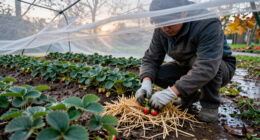
For gardens with limited space, it describes making a compact “wildlife log.” Gardeners lay two lengths of wire or strong twine parallel on the ground, stack pruned shoots across them, trim oversized pieces and roll the bundle tightly by tying the ends. The finished bundle can be tucked among dense shrubs or evergreens, where it may offer shelter. The source describes these as practical suggestions, not as a substitute for official local rules on burning or green-waste disposal.
Reducing Smoke and Garden Waste
The advice matters to gardeners deciding how to manage bulky seasonal cuttings. A bonfire can dispose of a large volume quickly, but the report says burning creates smoke and carbon dioxide, can affect people nearby and may kill small animals sheltering in the material. Leaving suitable debris to decay instead can retain organic matter in the garden and create habitat.
The options also vary with garden size and the type of waste. Composting suits quantities that can be mixed and accommodated; wildlife piles need space and are not appropriate for diseased material, according to the article. Smaller gardens can use compact bundles or tucked-away piles. These suggestions may reduce reliance on burning, but the source does not quantify emissions avoided or establish how much wildlife a particular pile will attract.
Products Worth Considering

Greenworks 48V Brushless 3-in-1 Leaf Blower, Vacuum, and Mulcher with Two 4.0Ah Batteries

Husqvarna 120 Mark III Gas Chainsaw, 38-cc, 2-Cycle X-Torq Engine, 16 Inch Bar

EGO POWER+ Cordless Electric Leaf Blower, 530 CFM, with 2.5Ah Battery (LB5302)
As an affiliate, we earn on qualifying purchases.
Seasonal Clear-Up Choices
The report describes autumn and other garden-tidying periods as times when leaves fall and herbaceous plants wither, while hedges, shrubs, trees and fruit bushes are pruned. In small gardens and allotments, the resulting waste may be modest enough to compost or put out for collection. Larger quantities, or a surplus of one material such as leaves or woody prunings, can be harder to handle.
The article acknowledges that bonfires are sometimes used for large piles and notes that wood ash can be useful. It distinguishes those fires from a smoky heap that affects neighbours, which it characterises as a health hazard. Its main focus is garden practice and wildlife-friendly alternatives, rather than a change in law or a formal public-health announcement.
““Wood collected into piles will gradually rot, returning nutrients to the soil, and provide shelter for insects, amphibians and hibernating mammals.””
— Amateur Gardening report
Limits of the Advice
The supplied report does not give a publication date, identify a particular local authority or cite research measuring the effects of garden bonfires. It also does not specify local rules, which can vary by location, or set out detailed procedures for disposing of diseased plants. The article’s recommendations should not be read as legal guidance.
It is also unclear how well each option would work for individual gardens: space, the quantity and condition of the material, and access to green-waste collection all differ. The report offers no estimates for how quickly a pile will break down or how many animals it may support; it says decomposition may take a few years and can last longer if the pile is kept dry inside.
Choosing a Waste Method
The report urges gardeners to sort their cuttings by type and volume: compost manageable quantities, use collection or burial for thorny material, and keep diseased waste separate. Where space allows, suitable woody debris can be left in a wildlife pile or tied into a compact bundle and placed among dense planting. Gardeners considering any burning should check applicable local guidance, since the source does not cover jurisdiction-specific rules.
The article presents these as ongoing seasonal practices rather than a programme with a scheduled next announcement. It does not report policy changes or a new monitoring effort; its immediate next step for readers is to choose a disposal method suited to their garden and the material they have.
Key Questions
What alternatives to a garden bonfire does the report suggest?
It recommends composting suitable material, leaving woody debris in a wildlife pile, or tying prunings into a compact bundle for shelter among shrubs. Thorny and diseased material may need separate handling.
Why does the report advise against smoky bonfires?
It says smoky fires can cause air pollution and health hazards, kill small creatures and waste organic material that could otherwise decay in the garden. It gives no measured emissions figures.
Can a wildlife pile work in a small garden?
The report says smaller piles can be tucked beneath evergreens, at dense hedge bases or in hidden corners. It also describes a tightly tied bundle of pruned stems for gardens with limited space.
What should gardeners do with diseased or thorny waste?
The article advises keeping diseased material out of ordinary compost. Thorny cuttings can be buried or placed in a green-waste collection, according to the report; local disposal rules may differ.
Does the report say garden bonfires are illegal?
No. It discusses their potential impacts and recommends alternatives, but does not set out legal rules. Gardeners should check guidance that applies where they live.
Source: amateurgardening.com