To avoid soil pests in container gardens, choose pest-resistant plant varieties and practice crop rotation to disrupt pest cycles. Use soil sterilization methods like solarization or baking to eliminate existing pests before planting. Incorporate companion planting with marigolds and basil to naturally repel pests and attract beneficial insects. Keep your containers clean, promptly remove diseased plants, and enrich soil health with organic amendments. For more tips on pest-free container gardening, keep exploring additional strategies.
Key Takeaways
- Use sterilized or new soil to eliminate existing pests before planting in containers.
- Implement soil solarization or heat sterilization to kill pests and pathogens in garden soil.
- Rotate plant species regularly to disrupt pest life cycles and prevent buildup.
- Incorporate organic amendments like neem meal to boost soil health and naturally repel pests.
- Maintain cleanliness by removing debris and diseased plants to minimize pest habitats.

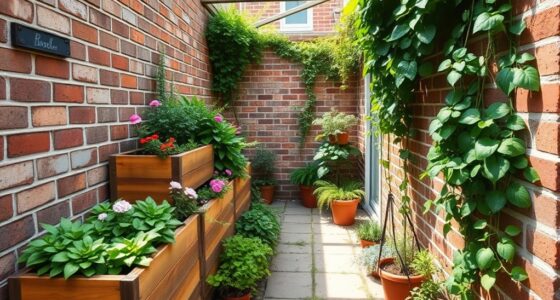
Container gardens are a beautiful way to grow plants, but soil pests can quickly ruin your efforts. If you want to keep your plants healthy and thriving, it’s essential to adopt strategies that prevent pests from taking hold. One effective method is beneficial companion planting. By choosing the right plant combinations, you can naturally repel pests or attract beneficial insects that hunt down harmful ones. For instance, planting marigolds near your vegetables can deter nematodes and aphids, while basil can repel mosquitoes and other pests. Companion planting creates a balanced ecosystem within your container garden, reducing the need for chemical treatments and promoting plant health.
Beneficial companion planting naturally deters pests and promotes a healthy, balanced container garden.
In addition to companion planting, soil sterilization techniques play a *vital* role in pest prevention. Before planting, you can sterilize the soil to eliminate existing pests, eggs, or pathogens that might be lurking. Methods like solarization involve covering moist soil with clear plastic during hot sunny days, trapping heat and killing pests and weed seeds. Alternatively, you can use heat sterilization by baking soil in an oven at 180°F for 30 minutes, making sure it’s safe for your plants. These sterilization techniques help create a clean environment, giving your garden a fresh start and reducing the chances of pest infestations from the outset.
It’s also helpful to rotate plants regularly, as planting the same species repeatedly can encourage pest build-up in the soil. Mixing up your container garden’s plant varieties disrupts pest cycles and prevents specific pests from establishing a foothold. Incorporate organic amendments like compost or neem meal, which can enhance soil health and act as natural pest repellents. Keeping your containers clean, removing debris, and promptly disposing of any diseased plants also help minimize pest issues.
Furthermore, selecting pest-resistant plant varieties can greatly reduce your garden’s vulnerability. Many nurseries now offer cultivars bred for pest resistance, making your gardening experience more manageable. Combine this with regular monitoring—checking your plants daily for signs of pests—so you can catch problems early before they spread. Introducing beneficial insects like ladybugs or predatory nematodes can also help control pest populations naturally. Paying attention to soil health and maintaining a balanced ecosystem are key components of long-term pest management in container gardens.
Frequently Asked Questions
Which Plants Are Most Resistant to Soil Pests in Container Gardens?
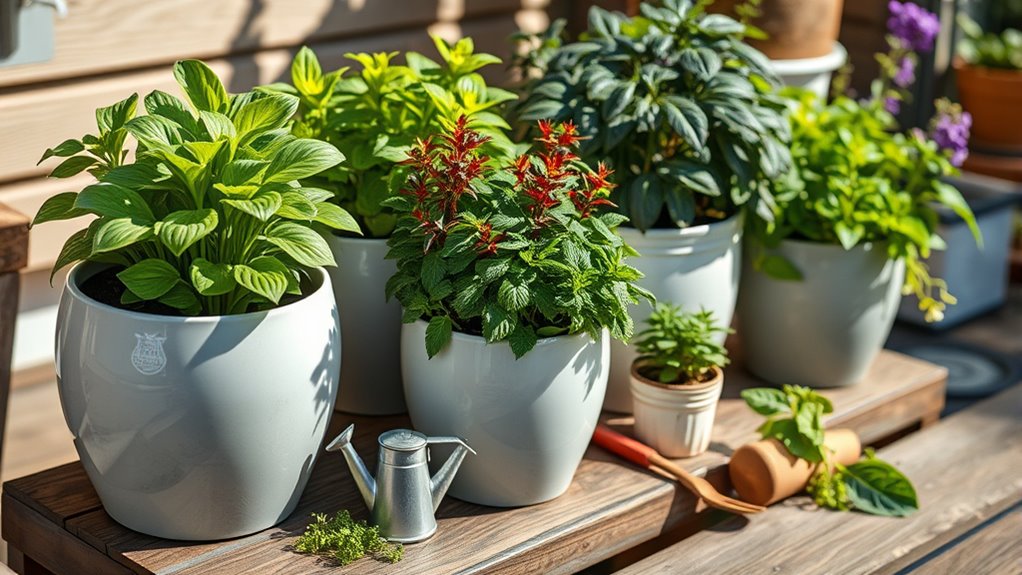
You should choose resistant plant varieties like marigolds, basil, and mint for your container garden. These plants naturally repel soil pests and are easy to grow. Incorporate pest resistant garden design by using healthy, well-drained soil and avoiding overcrowding. Regularly inspect your plants for signs of pests, and consider companion planting to further deter unwanted visitors. This strategy helps keep your container garden thriving and pest-free.
How Often Should I Change the Soil in My Container Garden?
Like a gardener tending to a delicate rose, you should replace the soil in your container garden every 1-2 seasons or when you notice drainage issues or reduced plant vitality. Regular soil replacement and compost renewal help keep pests at bay and maintain nutrient-rich conditions. This practice prevents soil-borne diseases and keeps your plants thriving. Keep an eye on your containers, and refresh the soil to guarantee continued success.
Can Organic Methods Effectively Prevent Soil Pests in Containers?
Yes, organic methods can effectively prevent soil pests in containers. You should use companion planting, which involves growing pest-repelling plants alongside your veggies, and natural repellents like neem oil or diatomaceous earth. Regularly inspect your plants and keep the soil healthy with compost. These organic strategies create a balanced environment, making it difficult for pests to thrive and reducing the need for chemical interventions.
What Are the Signs of Soil Pest Infestations in Containers?
You’ll notice signs of infestation in your container garden when you see distorted or chewed leaves, small holes, or sticky residues. Pest symptom identification also includes tiny insects on soil or plants, webbing, or discolored spots. If roots appear rotted or there’s a foul smell, pests might be attacking beneath the surface. Regularly inspecting your plants helps catch these issues early, so you can take quick action to protect your garden.
Are There Specific Container Materials That Deter Soil Pests?
Certain container materials can help you dodge dirt-dwelling pests. Pest-resistant containers like plastic, metal, or glazed ceramic create a barrier that pests find tough to penetrate. These materials are durable, discouraging pests from burrowing or nesting. By choosing these sturdy, pest-proof containers, you reduce pest problems, promote plant health, and make your gardening more manageable. So, opt for pest-resistant containers to keep pests at bay and enjoy thriving plants.
Conclusion
By following these tips, you can keep your container gardens healthy and pest-free. Remember, prevention is better than cure, so stay vigilant and take proactive steps. Don’t let pests spoil your hard work; nip problems in the bud before they grow out of control. With a little care, your garden can flourish, proving that patience and persistence truly pay off. Keep your garden thriving, and enjoy the fruits of your labor without unnecessary worries.