To make the most of small spaces, try designing your fruit trees with espalier or cordon systems. Use sturdy supports like wires or trellises to guide their growth along attractive, space-efficient patterns such as fan, vertical cordon, or lattice. Regular pruning shapes the trees and promotes fruit production while maintaining a neat appearance. With a bit of planning and regular care, you can turn limited areas into lush, productive gardens—discover more ideas to maximize your space.
Key Takeaways
- Use vertical cordon or fan patterns to maximize fruit production in limited spaces.
- Incorporate sturdy supports like wires or trellises for guiding growth along desired shapes.
- Select dwarf or semi-dwarf fruit varieties suitable for small gardens and easy pruning.
- Regularly prune to establish a neat, structured framework and promote healthy airflow.
- Plan your design ahead, combining aesthetic appeal with space-efficient growth for a lush, productive garden.
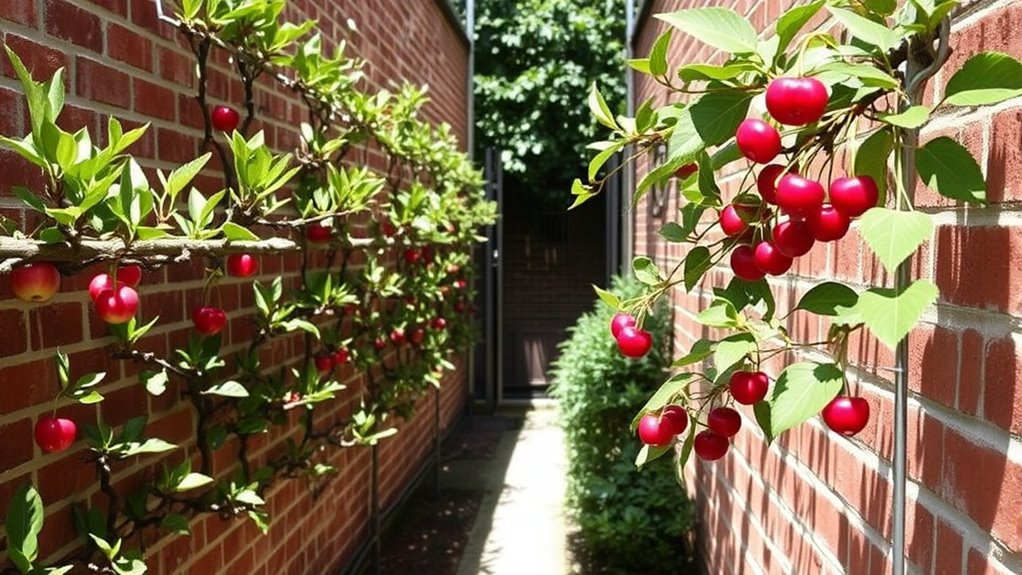
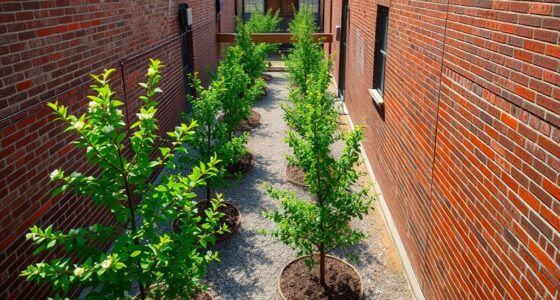
Have you ever admired the elegant, space-saving designs of espalier and cordon-trained fruit trees? These methods transform small yards, patios, or even balcony spaces into lush, productive gardens without overwhelming the area. To successfully create and maintain these structures, you need to understand essential pruning techniques and make wise plant selections. Pruning is the backbone of espalier and cordon systems, shaping the growth of your trees and ensuring they develop into the desired form. You’ll want to prune regularly, removing any crossing or inward-growing branches to promote airflow and light penetration. This not only keeps the tree healthy but also encourages fruit production. Use sharp, clean tools to make precise cuts, and always prune just above a bud facing the direction you want the new growth to go. This technique guides the branches along your desired pattern and maintains the structure’s neat appearance.
When it comes to plant selection, choose fruit trees that are compatible with your climate and space. Apples and pears are popular choices for espalier because they respond well to pruning and can be trained into various shapes. Citrus and fig trees can also work as cords or espaliers if your climate supports them. Opt for dwarf or semi-dwarf varieties, as their smaller size makes training and maintenance more manageable. Consider the growth habit of the tree and how much space it will ultimately need. Selecting healthy, disease-resistant plants from the start will save you time and effort later on. It’s best to buy from reputable nurseries that provide detailed care instructions and variety information, ensuring you pick the right plant for your specific conditions.
In addition, incorporating traditional pruning techniques rooted in Indigenous wellness practices can help promote healthier growth and a more sustainable gardening approach. Once you’ve selected the right plants, plan your design carefully. Sketch out the pattern you want—whether it’s a simple vertical cordon, a fan shape, or a more complex espalier pattern. Use sturdy supports like wires or trellises to guide the branches as they grow. Regularly monitor your trees’ growth, and perform pruning techniques suited to each stage of development. Young trees require formative pruning to establish the framework, while mature trees benefit from maintenance pruning to keep their shape and productivity. Patience is key; it might take a few seasons for your trees to reach their full shape, but the results—beautiful, space-efficient fruit trees—are worth the effort. With attentive plant selection and precise pruning, you’ll transform a small space into a thriving, eye-catching garden feature.
Frequently Asked Questions
What Are the Best Fruit Varieties for Espalier in Small Spaces?
You should consider dwarf apple and patio cherry varieties for espalier in small spaces. Dwarf apples are compact, produce abundant fruit, and adapt well to training against walls. Patio cherries are small, hardy, and produce delicious cherries without taking up much room. Both options thrive with proper pruning and support, making them perfect choices for limited space gardens. Their manageable size lets you enjoy fresh fruit without sacrificing valuable yard space.
How Do I Protect Espalier Plants From Harsh Weather Conditions?
Think of your espalier plants as delicate dancers needing a sturdy stage. To protect them from harsh weather, you should provide winter protection by wrapping the plants with horticultural fleece or burlap. Additionally, setting up wind barriers like fences or planting windbreaks shields your plants from gusts. These measures help your espalier thrive through winter’s chill and gusty winds, ensuring they stay healthy and productive.
Can Espalier Techniques Be Used Indoors Effectively?
Yes, you can use espalier techniques indoors effectively. To do so, focus on indoor pruning to maintain the shape and health of your plants. guarantee they receive adequate light requirements—place them near south-facing windows or supplement with grow lights. Regular pruning helps keep the plant compact and encourages fruiting or flowering, making your small indoor space both functional and attractive with stylish espalier designs.
What Maintenance Is Required for Cordon-Trained Plants?
For cordon-trained plants, you need to follow a regular pruning schedule to shape the growth and promote fruit production. Check for pests regularly and manage them promptly to keep your plants healthy. You should also remove any dead or diseased wood and adjust ties as the plant grows. Consistent maintenance guarantees your cordon-trained plants stay productive and visually appealing in your small space.
How Long Does It Take for an Espalier to Reach Full Maturity?
An espalier typically reaches full maturity in about 3 to 5 years, depending on growth timeline and maturity factors like variety, climate, and care. You’ll see steady growth each season if you provide proper pruning, feeding, and support. Keep in mind, patience is key—consistent maintenance helps your espalier develop a strong framework and healthy fruit production over time. With proper care, you’ll enjoy your beautifully trained plant for years to come.
Conclusion
By embracing espalier and cordon techniques, you transform small spaces into lush, productive gardens—think of it as turning your backyard into a secret garden like in the tales of old. These methods allow you to grow more while taking up less room, proving that even in tight quarters, nature’s beauty and bounty can flourish. So go ahead, channel your inner gardener and create your own enchanted, space-saving oasis—just like a story waiting to unfold.