TL;DR
A garden tool set is a group of tools sold together for planting, weeding, pruning, or general garden care. Choose a set by matching its tools, materials, and grip to your garden and the tasks you repeat; a few sturdy, comfortable tools often serve you better than a large kit with duplicates.
A box marked “10-piece garden tool set” can look like a bargain until you discover that half the pieces are duplicates or accessories you never use. The trowel you reach for every weekend matters more than the number printed on the lid.

Get garden gear delivered free with Prime
- Fast, free delivery on millions of items
- Prime Video, Amazon Music and more included
- Member-only deals all year
A garden tool set is a group of tools sold together for planting, pruning, weeding, cultivating, or general garden care. Since no standard list defines what belongs in one, contents range from a few hand tools to bags, gloves, and extras. That makes the label a starting point, not a promise.
This guide will help you match a set to your space, compare steel and handle materials, and spot signs of sturdy construction. You’ll also get a simple way to check a set before buying and a care routine that keeps soil from crusting onto the metal and sap from gumming up the blades.
A garden tool set has no standard contents; read the itemized list before comparing piece counts.
A trowel, hand fork or cultivator, and weeder form a useful starting point for many container and raised-bed gardeners.
Small hand tools are not a replacement for full-size equipment when you dig substantial areas or work in compacted soil.
Compare blade thickness, joints, grip, balance, and repair options as well as steel type.
Brush off soil, dry tools, and clean pruning blades after use to keep the set ready for its next job.
Start with the tools you’ll reach for every week
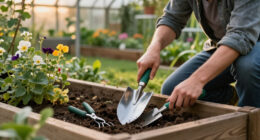
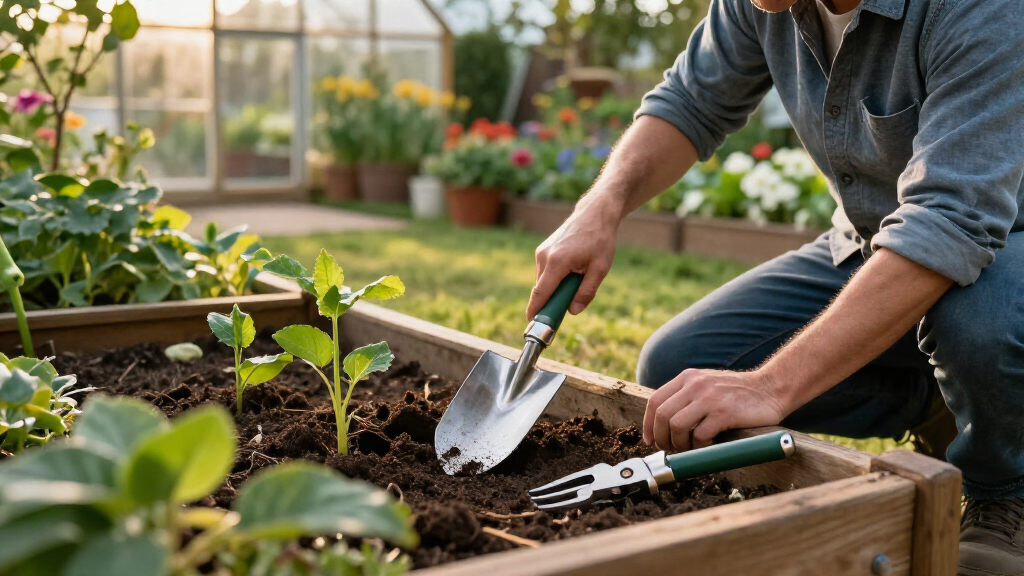
A useful garden tool set covers the jobs you actually do, usually with a trowel, a hand fork or cultivator, and a weeder. A trowel digs small planting holes, the fork loosens soil around roots, and the weeder helps lift unwanted plants. Together, they support a sequence of common jobs: opening the soil, adjusting it around a plant, and removing competition afterward. That makes them a practical core for containers, raised beds, and close planting.
Imagine you’re planting basil seedlings in a balcony box. You need a narrow hole, loose soil around each root ball, and a way to tease out a small weed without disturbing the herbs. A trowel and hand fork handle those jobs; a large collection of tools for lawn care won’t make the seedlings settle in any faster. Thinking through a real task also reveals whether a tool’s shape matters: a narrow blade can reach between crowded stems, while a broad one may be awkward in a small pot.
Sets vary widely, so don’t assume a certain piece count guarantees a particular tool. Some add a transplanting trowel with a slim blade, which can be handy between crowded seedlings. Others include a small rake, gloves, or tote. Hose fittings and sprayers may appear in broad garden kits, but they handle watering tasks rather than digging or cultivating. Extras are useful when they solve a job you already do; otherwise, they add storage and cost without improving the work your core tools can handle.
Choose by task, not piece count. A compact set with the right three tools can outwork a box of ten pieces that repeats the same job.
Pruning shears belong on your list if you regularly trim herbs, deadhead flowers, or cut small stems. Check their stated cutting capacity against your plants; thick woody branches call for loppers or a pruning saw. A basic hand-tool kit rarely replaces full-size spades, forks, or lawn-care equipment. Matching each tool to the size of the job helps prevent damaged tools and strained hands, and makes it easier to decide whether a set truly fills a gap in your shed.
Products Worth Considering

EAGLE PEAK 8 x 6 ft Pop-Up Walk-In Greenhouse, Clear and Green

Blackstone OTG 22-Inch Propane Tabletop Griddle with Hard Cover

Blackstone 2350 On-the-Go 22-Inch Omnivore Griddle with Hood
As an affiliate, we earn on qualifying purchases.
Match the set to your garden’s size and soil
Choose tools for your garden’s scale and ground. Small hand tools suit pots, balcony boxes, and raised beds, while established shrubs, large lawns, and broad planting areas often call for long-handled tools or full-size digging equipment. A hand set is a useful toolbox, not a miniature version of every tool a garden might need. The difference is leverage: short tools give you precision in a small area, but they require more effort when you try to move a lot of soil.
For example, a gardener tending six tomato plants in raised beds may use a hand fork every week to loosen the top layer of soil. Someone planting a hedge in compacted ground will put much more force through a small tool, and a sturdy full-size spade or fork is likely the better choice. Clay and rocky soil can strain a hand tool more than loose potting mix. Repeatedly forcing a small blade into hard ground can bend it or make your wrist absorb the resistance, so the right scale of tool affects both durability and comfort.
Think of a hand tool like a small kitchen knife: it gives you control in close quarters, but you wouldn’t use it to chop through a log. The same principle applies when your garden grows beyond container-scale tasks. A bigger set won’t change the leverage or strength of a short handle; adding more hand tools may simply mean more pieces to store while the hard digging remains difficult.
- Containers and balconies: Look for compact tools and a narrow trowel that fits small pots.
- Raised beds: A sturdy trowel, hand fork, and weeder cover common planting and upkeep.
- Shrubs and larger plots: Check whether you also need long-handled tools, loppers, or a spade.
- Hard or rocky ground: Use small tools for light work; choose full-size equipment for substantial digging.
Picture an early spring planting day: if you’re working in damp, loose compost, a light hand trowel feels nimble. If each push meets a hard clay clod, that same trowel may twist or tire your wrist. Match the kit to the ground you have, not the garden you hope a marketing photo suggests. A well-matched tool saves effort on recurring jobs; buying for the toughest job you rarely do can add weight and expense without making everyday planting easier.
Compare materials by how much care they need
Stainless steel resists rust, carbon steel can hold a sharp edge, and aluminum keeps weight down. None of those material labels alone tells you whether a tool will feel solid after a season of digging. Thickness, joints, balance, and how securely the handle attaches to the blade also matter. These details determine how well a material’s advantages hold up in use: a rust-resistant blade can still loosen at a weak joint, and strong steel can feel tiring if the tool is poorly balanced.
Stainless steel is often easier to clean and less prone to rust if you forget a tool on the potting bench overnight. That convenience can matter for gardeners who work in damp conditions or want a simple cleanup routine. Carbon steel can be strong and sharp, but moisture calls for a little more attention: wipe it dry and oil the metal occasionally. Its performance depends partly on that upkeep, so a gardener who tends to leave tools out may find rust prevention a recurring chore. Aluminum offers a lighter feel, which can help during repeated potting, while plastic parts can lower weight and cost but may stand up less well to heavy force. The practical choice is a balance between weight, toughness, and the care you are willing to give.
Handles shape the experience too. Wooden handles are traditional and can be repaired or replaced on some tools, which may extend a tool’s useful life if parts are available. Contoured or rubberized grips may feel more secure when your hands are damp, though a thick grip can feel awkward if you have smaller hands. A tool should sit comfortably in your palm, like a pen you can control, rather than force you to squeeze until your knuckles ache. A comfortable grip can matter more than a premium material label when you repeat the same movement dozens of times.
| Material | What it offers | What to check |
|---|---|---|
| Stainless steel | Rust resistance and easy cleanup | Blade thickness and handle joint |
| Carbon steel | Strength and a sharp edge | Drying, oiling, and rust prevention |
| Aluminum | Lower weight | Sturdiness for your soil and task |
| Wood or molded grips | Different feel, weight, and repair options | Comfort, grip security, and attachment |
If possible, hold a trowel before buying. A light tool can reduce fatigue during repeated potting, while a heavier, sturdier tool may suit occasional work in firmer soil. The right balance depends on your hands and the job. If you buy online, dimensions, weight, and close-up views of the joint can help you judge fit and construction; vague material claims alone leave important questions unanswered.
Use this five-step check before you buy
A quick five-step check helps you judge a garden tool set by fit, usefulness, and upkeep. Read the contents list, inspect the build details, and imagine using the tools in your own garden. If an online listing hides measurements or the blade-to-handle connection, you don’t yet have enough information to judge how the set will feel. Those missing details matter because tool names say what a piece is meant to do, while size and construction help show whether it can do that job comfortably and repeatedly.
- Name your regular jobs. Write down whether you mostly plant, weed, cultivate, or prune.
- Match tools to tasks. Check for a trowel, fork or cultivator, and weeder if you work in beds or containers.
- Check dimensions and grip. Compare tool length, weight, and handle shape with your hand and working space.
- Inspect construction details. Look for material descriptions, blade thickness, secure joints, and clear cutting limits for pruners.
- Count useful extras. Treat gloves, totes, and rolls as bonuses only if you will use them.
Say you’re buying a gift for someone with a small courtyard garden. A compact kit with comfortable grips and a useful storage roll may suit them better than a heavy collection designed for broad beds. If they already own a trowel and hand fork, a quality pair of pruners may fill a real gap. The point of checking what they own is to avoid paying for duplicates, while choosing a tool they can use often makes the gift more likely to earn a place in their routine.
Online reviews can reveal whether a grip feels slippery or a tote’s seams tear, but read beyond the star average. Look for comments about dimensions, repeated use, and repairs. A review that describes months of use or a specific loose joint can help you judge durability better than a general first impression. Current product availability changes, so verify the listing’s exact contents and specifications instead of relying on an old roundup or a promotional image.
Price tells only part of the story. Compare the tools you’ll use, construction, comfort, warranty, and whether replacement blades or handles are available. A lower-priced kit that fits your raised beds may serve you better than an expensive set with pieces that stay in the shed. Replacement parts can also affect long-term value: a tool that can be repaired may remain useful after a small failure, whereas an unrepairable favorite may need to be replaced entirely.
Keep your tools ready with a two-minute cleanup
Brush off soil, dry the tools, and store them somewhere dry. This short routine reduces rust, protects wooden handles, and keeps blades ready for the next planting session. Clean tools are also easier to inspect for loose joints or damaged edges before you put them to work. A quick check can catch small problems while they are easier to address, before a loose connection makes a tool uncomfortable or unreliable.
After weeding a damp bed, tap loose soil from the blades and brush away what clings around the joints. Wash a tool when soil or sap needs it, then dry it before putting it away. Soil left around a joint can hold moisture against the metal, while sap on pruning blades can become sticky and make a clean cut harder. Wipe sap off after trimming so the blades move freely the next time you prune.
Keep cutting tools sharp when their edges dull. A clean cut on a small stem is easier than forcing a blunt blade through it, and less force can make repetitive pruning more comfortable. A sharp edge also helps you avoid crushing stems as you press harder to compensate for a dull one. Follow the tool maker’s directions for sharpening and maintenance, especially if the blades have a special coating.
At the end of a Saturday in the garden, don’t leave your trowel buried in a damp bucket or leaning in wet soil. A quick wipe and a dry shelf make a better home. Oil metal surfaces or wooden handles when appropriate for their material, and keep tools in a tote or tool roll only if they can dry fully first. A storage roll is convenient for keeping a kit together, but trapping moisture inside it can undo the benefit of cleaning.
- After use: Remove soil and wipe the tool dry.
- After pruning: Clean sap from blades and check the cutting action.
- Before storage: Look for loose handles, damage, or dull edges.
Care affects value over time. Even a well-made set won’t stay pleasant to use if its blades gum up or its metal sits wet. A small cleanup habit can be as useful as paying more for extra pieces because it preserves how the tools work and helps you notice when a repair or sharpening is due.
Frequently Asked Questions
What should a basic garden tool set include?
A practical starter set often includes a trowel, hand fork or cultivator, and weeder. Add pruning shears if you regularly trim herbs, flowers, or small stems. Check what is actually in the box, since sets don’t follow a standard contents list.
Are stainless-steel garden tools better than carbon-steel tools?
Stainless steel resists rust and is usually easier to care for, while carbon steel can be strong and hold a sharp edge. Carbon steel needs prompt drying and occasional attention to prevent rust. Construction and handle comfort matter for either material.
Can a hand-tool set handle clay or compacted soil?
Hand tools can manage light, close-up jobs, but compacted or heavy soil puts more strain on them. For substantial digging, a sturdy full-size spade or fork gives you more reach and leverage. Use the hand set for planting and small adjustments rather than forcing it through hard ground.
What is the difference between a trowel and a hand fork?
A trowel moves soil and digs small planting holes. A hand fork loosens and aerates soil, or lets you work around roots with less disturbance. For example, use the trowel to set a marigold and the fork to loosen soil around a nearby herb.
Do garden tool sets make good gifts?
They can, if the tools suit the recipient’s garden and feel comfortable to use. A compact set may suit someone with pots or raised beds, while a gardener with a larger plot may need long-handled tools or pruners instead. Check whether they already own the basics before choosing a big kit.
How should I clean and store garden tools?
Remove soil, wash tools when needed, and dry them before storage. Clean sap from pruning blades, sharpen cutting edges as needed, and keep the tools in a dry place. Oil metal surfaces or wooden handles when appropriate for their material.
Conclusion
Choose a set by picturing the work you’ll do this weekend: the seedling holes, weeds between stems, or herbs that need a trim. Buy the tools that fit those jobs and your hands, then give them a quick clean before they go back on the shelf.
A good garden tool set earns its space one comfortable, useful task at a time. When you reach for it, you should find the right tool—not another piece you have to work around.