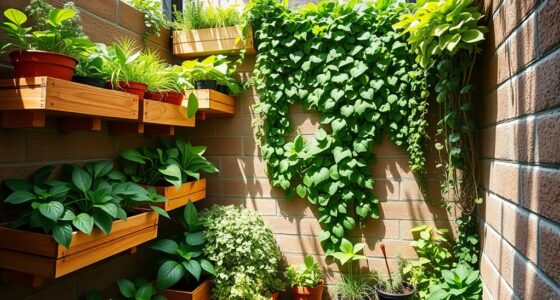
To create perennial borders with fewer pest issues, choose native, resilient plants that thrive in your climate. Incorporate aromatic herbs like lavender and marigolds to repel pests and attract beneficial insects like ladybugs and lacewings. Mix diverse plant species to boost resilience and support beneficial insect habitats. Maintain healthy soil and proper watering to strengthen plants. By applying these strategies, you’ll build a vibrant border that naturally resists pests—and there’s more you can do to enhance your garden’s health.
Key Takeaways
- Select native, pest-resistant perennials and incorporate aromatic herbs to naturally deter pests.
- Use companion planting strategies to repel pests and support plant health.
- Attract beneficial insects like ladybugs and lacewings with nectar-rich flowers and habitat options.
- Diversify plantings to prevent monocultures, disrupting pest spread and increasing resilience.
- Maintain optimal garden conditions through proper watering, healthy soil, and regular pest monitoring.
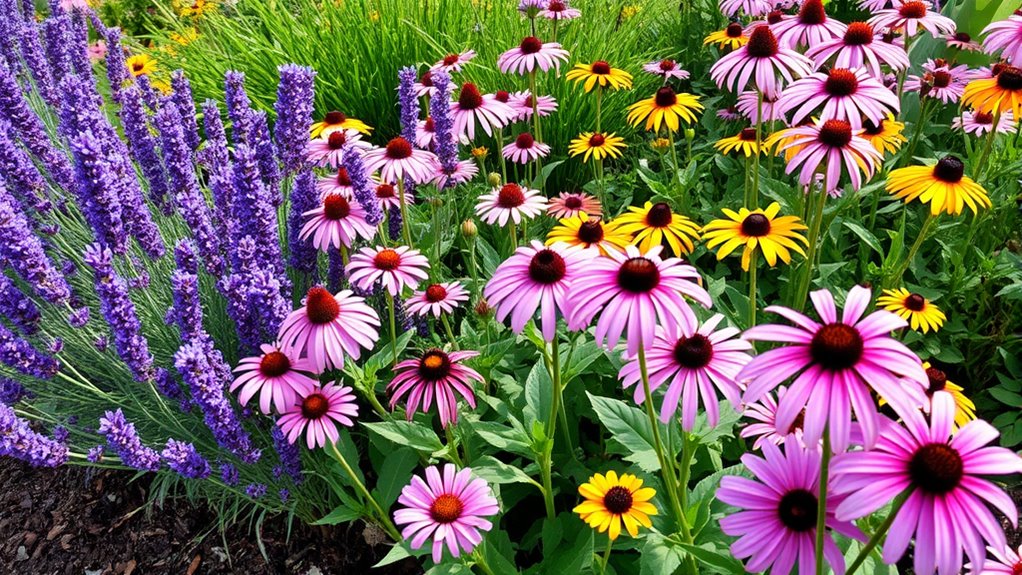
Creating perennial borders that resist pests starts with selecting the right plants. When you choose the right combination, you can naturally reduce the need for chemical interventions and encourage a healthier, more balanced garden. One effective strategy is companion planting, where you pair plants that support each other’s growth and pest resistance. For example, planting aromatic herbs like lavender or marigolds alongside your perennials can deter common pests such as aphids and beetles. These plants emit scents that confuse or repel pests, making your garden less inviting to unwanted visitors.
Pair herbs like lavender and marigolds with perennials to naturally repel pests and promote garden health.
In addition to companion planting, fostering beneficial insects is vital. These helpful bugs, such as ladybugs, lacewings, and parasitic wasps, prey on pests that threaten your plants. You can attract beneficial insects by including nectar-rich flowers and providing habitat options like small brush piles or insect hotels within your border. When beneficial insects have a steady food source and shelter, they flourish, naturally controlling pest populations without the need for sprays or pesticides.
Choosing plants that attract beneficial insects also ties into selecting the right perennials. Many native plants serve as excellent hosts because they’re well-adapted to your climate and more resistant to pests themselves. For example, planting purple coneflowers, black-eyed Susans, or bee balm not only adds vibrant color but also draws pollinators and beneficial insects. These insects then help keep pest levels down by preying on or competing with pests for resources.
Creating a diverse, layered perennial border is another key step. Monocultures are more vulnerable to pest outbreaks because pests can easily spread across large, uniform areas. By mixing different species, you disrupt pest pathways and create a more resilient landscape. This diversity encourages beneficial insects to settle and thrive, as they often prefer a variety of plants for nectar and habitat. Plus, it makes your borders more visually appealing and ecologically balanced.
Finally, maintain healthy soil and proper watering practices. Stressed plants are more susceptible to pests and diseases. When your perennials are vigorous and healthy, they’re better equipped to resist invasions. This holistic approach—combining companion planting, attracting beneficial insects, selecting diverse plants, and ensuring good plant health—sets the foundation for perennial borders that naturally stay pest-free. Regularly monitoring your garden and understanding local pest patterns can help you address issues early and keep your garden thriving. With these strategies, you’ll enjoy a lush, vibrant garden that requires fewer interventions and supports a thriving ecosystem.

2000+ Mixed Candytuft Flower Seeds – Perennial Plant for Outdoor Planting, Attracts Pollinators, Deer & Rabbit Resistant, Ideal Ground Cover for Garden
2000+ Mixed Candytuft Flower Seeds – Produces delicate blooms in white, pink, and lavender, adding charm to your…
As an affiliate, we earn on qualifying purchases.
As an affiliate, we earn on qualifying purchases.
Frequently Asked Questions
Which Perennial Species Are Naturally Pest-Resistant?
You’ll find that native plants like lavender, coneflowers, and black-eyed Susans are naturally pest-resistant, making them great choices for low-maintenance borders. Additionally, selecting pest-resistant cultivars can help you reduce pest problems markedly. These plants have evolved defenses against common pests, so you won’t need to use chemicals as often. Incorporate these species into your garden for a vibrant, healthy perennial border that’s easier to care for and pest-free.
How Can Soil Health Reduce Pest Problems in Borders?
Think of your soil as a bustling city; a balanced soil nutrient profile keeps pests at bay like vigilant guards. By nurturing microbial soil health, you strengthen natural defenses, making pests less likely to invade. When your soil has the right nutrient balance, it promotes healthy plant growth, which resists pests better. Regularly enriching your soil with organic matter and avoiding chemical overuse creates a thriving environment that naturally reduces pest problems in your borders.
Are There Specific Companion Plants That Deter Pests?
Yes, you can plant pest-repellent herbs like basil, marigolds, and thyme to deter pests in your borders. These companion plants attract beneficial insects such as ladybugs and lacewings, which help control pest populations naturally. Incorporating these plants into your perennial borders creates a balanced ecosystem, reducing the need for chemical interventions and promoting healthier, pest-free gardens.
What Organic Methods Effectively Control Pests in Perennial Borders?
You can’t afford to ignore organic pest control—it’s your secret weapon against relentless garden invaders! By encouraging beneficial insects like ladybugs and lacewings, you create a natural army that devours pests. Spraying neem oil or insecticidal soap keeps pests at bay without harming your plants or the environment. Regularly inspecting your borders and introducing these helpful bugs guarantees your perennials stay healthy, vibrant, and pest-free all season long.
How Does Plant Diversity Impact Pest Populations?
Plant diversity reduces pest populations by encouraging healthy pollinator interactions that naturally control pests. When you include a variety of species, pests find fewer preferred hosts, making infestations less likely. Plus, diverse plantings support beneficial insects and aid invasive species management, creating a balanced ecosystem. This approach minimizes the need for chemical controls and promotes resilient perennial borders, keeping pests in check while supporting overall garden health.

Beneficial Bug Wildflower Seed Mix – (2oz) – Attract Ladybugs, Lacewings & Hoverflies – Natural Pest Control Flower Seeds for Outdoor Garden and Yard!
Wildflower Blends have a RESEALABLE POUCH – Helps wildflower seeds stay fresh by protecting them from moisture, which…
As an affiliate, we earn on qualifying purchases.
As an affiliate, we earn on qualifying purchases.
Conclusion
By choosing resilient perennials, you’re planting a garden that’s like a well-tuned orchestra—less prone to pests, more harmonious. I once watched a neighbor’s border thrive despite nearby infestations, thanks to hardy plants that stood strong. Just as a sturdy ship weathers storms, these adaptable perennials keep your garden vibrant with less fuss. Embrace these low-maintenance choices, and you’ll enjoy a beautiful, pest-resistant paradise that stands the test of time.

Wooden Insect House, Insect Hotel for Bugs, Bees, Butterflys, Ladybirds, Natural Beneficial Insect Habitat for Garden and Yard
Constructed with durable and natural cedar wood, this house includes a ground stake
As an affiliate, we earn on qualifying purchases.
As an affiliate, we earn on qualifying purchases.

Eaton Pet and Pasture Premium Nesting Herbs, Aromatic Blend for Nesting Boxes & Chicken Coop, Natural Refresher & Pest Deterrent
Herbal Aromatic Freshness: Carefully crafted with a premium mix of calendula, basil, lavender, blue cornflower, lemon balm, rose…
As an affiliate, we earn on qualifying purchases.
As an affiliate, we earn on qualifying purchases.