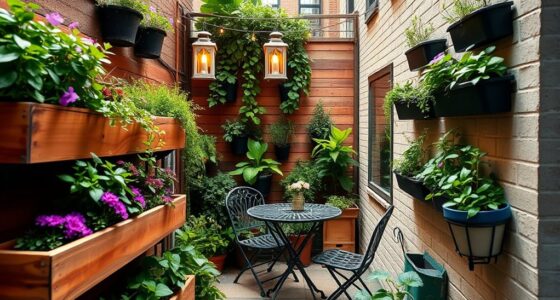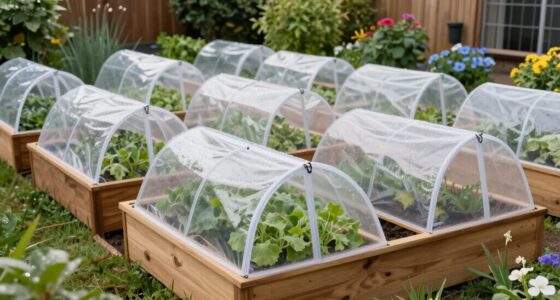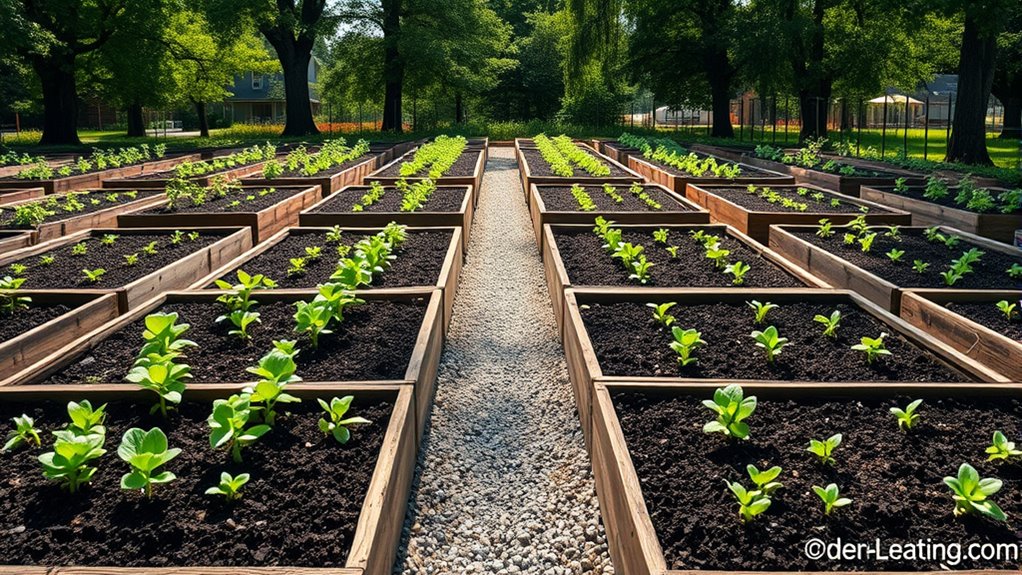

Designing flexible raised bed layouts makes crop rotation and soil maintenance easier for you. Use removable dividers or grid systems to reconfigure sections seasonally, which helps prevent pests and enriches nutrients. Group compatible plants and rotate crops systematically to keep your soil healthy and productive. Incorporate companion planting strategies and soil amendments for better growth. By planning with adjustable features, you’ll maximize space and resilience—plus, there’s more to discover for a thriving garden.
Key Takeaways
- Use modular, adjustable bed designs with removable dividers to facilitate seasonal crop changes.
- Divide raised beds into designated sections for specific crop families to streamline crop rotation.
- Incorporate companion planting strategies within layouts to naturally deter pests and support plant health.
- Replenish soil nutrients with compost and organic amendments after each crop cycle to maintain soil vitality.
- Plan layouts that allow easy reconfiguration, enabling quick adaptation for different crops and rotation schedules.
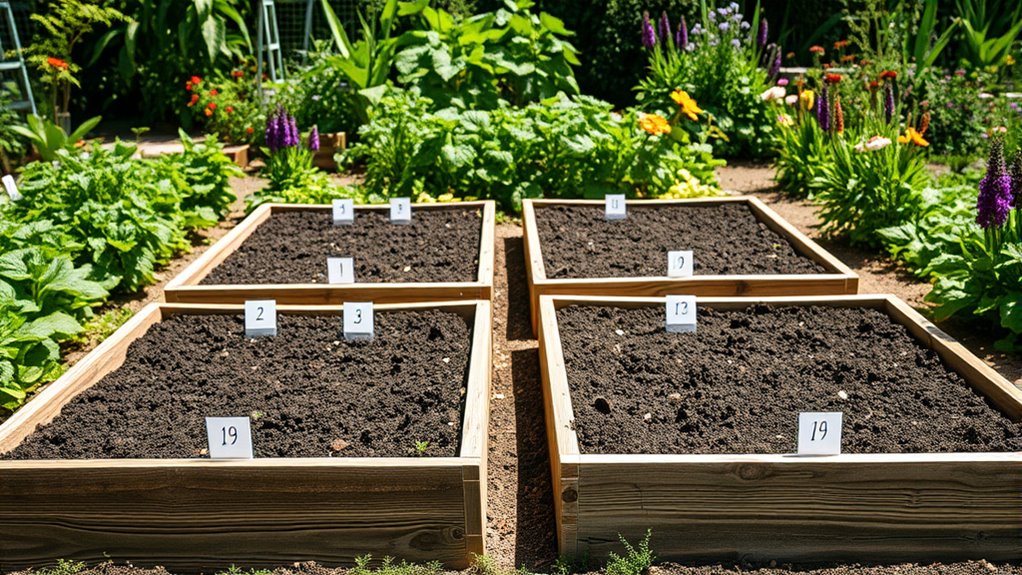
Are you wondering how to make the most of your garden space? One effective way is to design your raised beds with flexible layouts that facilitate easy crop rotation. This approach not only improves your harvest but also keeps your soil healthy over time. When planning your layout, think about how different plants can work together through companion planting. Grouping compatible crops helps reduce pests and diseases naturally, making your garden more sustainable. For example, planting marigolds near tomatoes can deter nematodes, and basil alongside peppers can enhance flavor while repelling pests. Incorporating these companion planting strategies into your raised beds boosts productivity and minimizes the need for chemical interventions.
To support healthy plant growth and enable effective crop rotation, soil amendments are essential. Over time, planting the same crops in the same spot depletes specific nutrients, leading to reduced yields. By adding compost, organic matter, or specific supplements, you can replenish what’s been used up and improve soil structure. This is especially important in raised beds where soil can quickly become compacted or depleted. When planning your layout, consider how soil amendments can be integrated into your planting schedule. For example, after harvesting a root crop like carrots, you might add compost before planting leafy greens in the same bed the following season. This rotation keeps the soil balanced and minimizes disease buildup.
Designing your raised beds with crop rotation in mind also involves planning the sequence of plant families. For instance, follow heavy feeders like tomatoes and peppers with nitrogen-fixing legumes such as beans or peas. This helps naturally replenish nutrients and reduces reliance on synthetic fertilizers. You can further streamline this process by dividing your beds into sections dedicated to specific plant families, making it easier to rotate crops systematically. This layout encourages healthy soil and prevents the buildup of pests or diseases specific to certain plants.
In addition, adjustable bed designs—such as removable dividers or grid systems—make it easier to switch crops from one section to another each season. This flexibility allows you to implement crop rotation efficiently without disturbing the entire bed. By combining thoughtful layout planning with companion planting and regular soil amendments, you’ll create a thriving garden that’s resilient and productive year after year. This strategic approach to raised bed layouts ensures you maximize space, boost yields, and maintain healthy soil, making gardening more enjoyable and sustainable.
Frequently Asked Questions
How Often Should I Rotate Crops in Raised Beds?
You should rotate crops in raised beds every planting season, typically every year, to prevent soil exhaustion and reduce pests. Incorporate companion planting to enhance pest management and improve plant health. By changing plant families, you break pest cycles and enrich the soil naturally. This rotation keeps your garden productive, healthy, and pest-free, ensuring your plants thrive season after season.
What Crops Are Best Suited for Raised Bed Rotation?
You might think some crops are too delicate, but surprisingly, leafy greens, legumes, and root vegetables excel in raised beds. They’re perfect for crop rotation, especially when paired with companion planting, which naturally boosts pest management. By rotating these plants, you reduce soil depletion and pest issues, proving that even the most “fragile” crops thrive with a little planning and a smart rotation schedule.
Can I Use the Same Layout Every Year?
Yes, you can use the same layout every year, but it’s better to rotate crops and incorporate companion planting to prevent pests and diseases. Changing the layout helps disrupt pest cycles and improves soil health. Consider planting pest-repelling companions alongside your crops and adjusting your bed arrangements to promote natural pest management. This approach keeps your garden productive and healthy, even with a repetitive layout.
How Does Crop Rotation Improve Soil Health?
Crop rotation improves your soil health by reducing pests and diseases, breaking pest cycles, and preventing nutrient depletion. When you rotate crops, you allow soil amendments and nutrients to replenish naturally. Incorporate companion planting to boost benefits, as certain plants support each other’s growth. This practice keeps your soil balanced, promotes healthy roots, and enhances productivity, making your garden more sustainable and resilient over time.
Are There Specific Tools for Managing Bed Layouts?
Think of managing your beds as orchestrating a symphony; garden markers act as guiding notes, keeping your layout in harmony. Bed mapping tools help you visualize and plan your space, ensuring each crop finds its perfect spot. Use labels, stakes, or digital apps to stay organized, making rotation a breeze. With these tools, you orchestrate your garden’s rhythm, turning chaos into a well-tuned garden masterpiece.
Conclusion
Now that you’ve explored these raised bed layouts, imagine what you could grow next season. The right design might just unblock new possibilities—and surprises—you’re not yet considering. Are you ready to experiment with a layout that could change your gardening game forever? The secret to effortless crop rotation and bountiful harvests might be closer than you think. Don’t wait—your next great garden discovery is just a layout away.