Roots circling and girdling occur when roots grow against the container edge, often due to limited space and poor aeration. This causes roots to strangle themselves, slowing growth and reducing water and nutrient uptake. Regular inspection and root pruning help prevent these issues, while repotting into a larger container with fresh, aerated soil encourages healthy root expansion. If you want to learn more about how to tackle these problems effectively, keep exploring.
Key Takeaways
- Roots often circle or girdle due to container confinement and poor soil aeration.
- Girdling roots slow growth, cause yellowing, and can lead to root death.
- Proper soil management and aeration prevent root constriction and circling.
- Regular root pruning and inspection encourage healthy, outward-growing roots.
- Repotting into larger containers with fresh, well-draining soil reduces girdling risk.
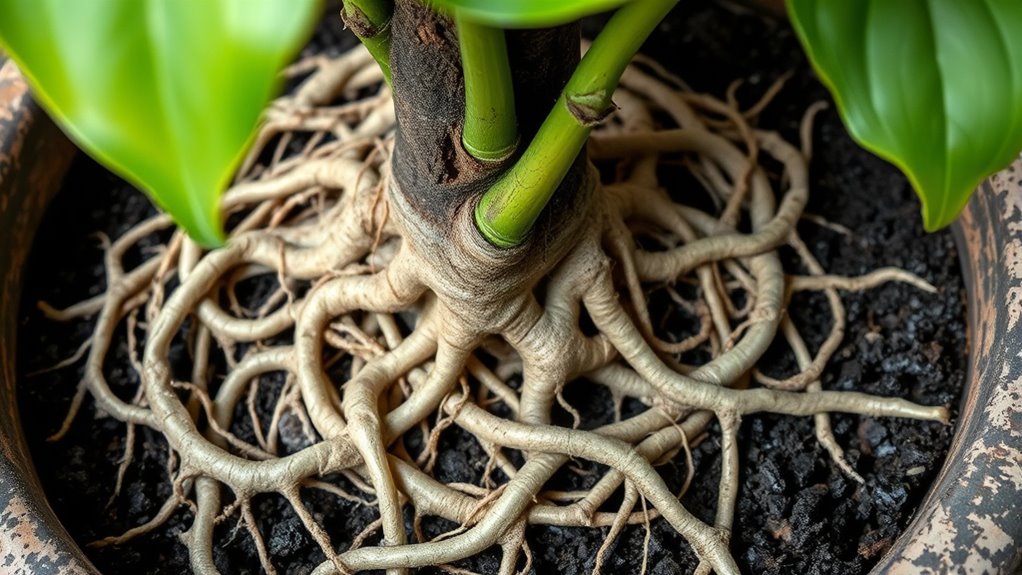
Have you ever wondered how roots can sometimes cause problems for trees and plants? When roots start to circle around inside a container, they can become a major issue that affects the health of your plant. This phenomenon, known as root circling or girdling, occurs when roots hit the edge of the pot and begin to grow in a circular pattern, eventually strangling themselves and limiting their ability to absorb water and nutrients. The first sign of this problem might be slowed growth, yellowing leaves, or overall poor plant health. To address this, you need to understand the importance of proper soil aeration and effective pruning techniques. Good soil aeration promotes healthy root growth, preventing roots from becoming compacted and circling in the first place. Aerated soil allows air, water, and nutrients to reach roots more efficiently, reducing the likelihood of girdling. When roots are constrained in a container, they often respond by growing in tight circles, which can eventually girdle the plant and cause root death in extreme cases.
To prevent this, regular inspection and maintenance are essential. When you notice roots beginning to circle, it’s time to employ pruning techniques that help manage root growth and promote a healthier root system. Carefully removing circling roots, especially those at the container’s edge, encourages roots to grow outward rather than inward. Using sharp, sterilized pruning tools, you can cut away circling roots, which stimulates the plant to produce new, healthier roots that spread out in search of nutrients. This process, often called root pruning, mimics natural pruning and helps break the cycle of root circling, ultimately improving soil aeration around the roots and enhancing overall plant health.
In addition to pruning, repotting your plant into a larger container or root pruning during repotting can prevent roots from becoming root-bound or girdled. When repotting, loosen the root ball and trim away any circling roots to encourage a more fibrous and outward-growing root system. Combining this with a fresh, well-draining soil mix can markedly improve soil aeration, giving roots more room to grow and reducing the risk of girdling. Remember, the key is to stay vigilant and proactive. Regularly check your plants, especially if they’re in containers, and apply these pruning techniques to keep roots healthy and avoid the potentially damaging effects of roots circling and girdling.
Frequently Asked Questions
How Can I Prevent Roots From Circling in New Containers?
To prevent roots from circling in new containers, you should use proper pruning techniques when transplanting. Gently tease and trim circling roots before planting to encourage outward growth. Make certain soil aeration by choosing well-draining pots and adding organic matter. Regularly check roots and prune any that start to circle, promoting healthy, balanced root development and preventing girdling issues in the future.
What Are the Signs That Girdling Roots Are Harming My Plant?
Imagine your plant’s leaves turn yellow and wilt unexpectedly—that’s a clear sign of girdling roots harming your plant. Girdling symptoms include stunted growth, poor flowering, and root damage signs like circling roots that constrict nutrient flow. You should regularly inspect root systems for abnormal circling or thickened roots near the trunk, which indicate girdling issues. Catching these early helps prevent severe damage and keeps your plant healthy.
Are Some Plant Species More Prone to Root Circling?
Some plant species are more susceptible to root circling due to their growth patterns and species susceptibility. You’ll notice that trees like maples and oaks tend to develop circling roots more often, especially when grown in containers without proper root pruning. These species’ natural growth habits make them prone to girdling roots, so you should regularly check and adjust your plant’s root system to prevent damage.
Can Root Circling Be Corrected Without Repotting?
Did you know that over 60% of root girdling issues can be improved without repotting? You can often fix root circling by applying root pruning and using girdling solutions like gentle loosening or creating small cuts around the circling roots. These methods help prevent further damage and encourage healthy root growth. Act promptly, and you’ll give your plant a better chance to thrive without the stress of repotting.
How Often Should I Inspect Roots for Girdling Issues?
You should inspect your roots regularly, ideally every 4 to 6 weeks, to catch girdling issues early. During root inspection, look for roots that are circling the container’s edge or tightly wound. Girdling detection involves checking if roots are constricting the trunk or stem, which can stunt growth. Regular inspections help you identify problems early, allowing you to take corrective action before root girdling causes serious damage.
Conclusion
If you ignore roots circling and girdling, you risk suffocating your plant and stunting its growth. If you neglect to check for root problems, you invite disease and decline. If you fail to address these issues early, your plant’s health suffers, and its future weakens. Stay vigilant, stay proactive, and inspect regularly. Because healthy roots mean healthy plants, healthy plants mean thriving life—keep roots in check, and your garden will flourish.