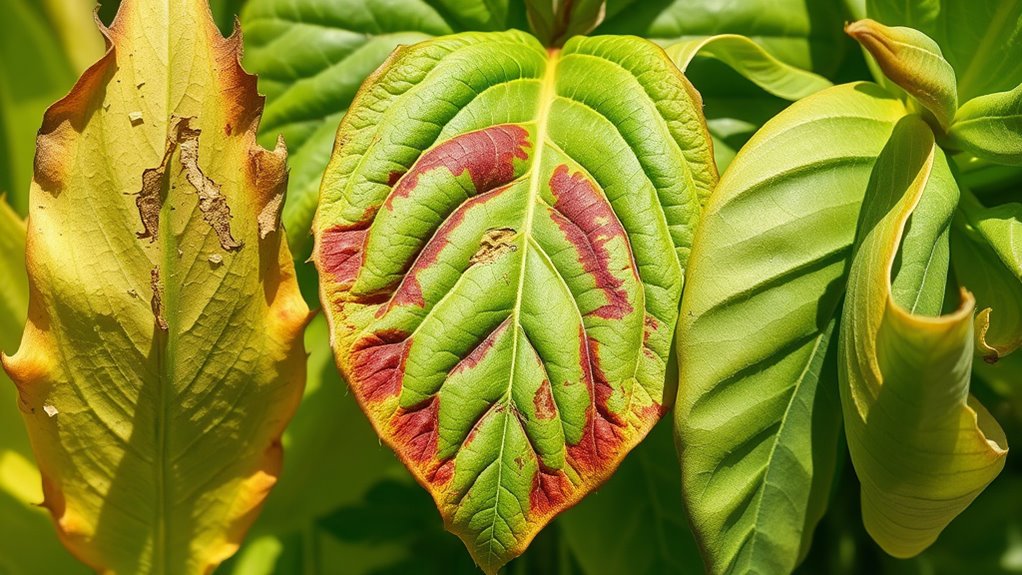
Sunscald affects tree bark, causing cracks and discoloration mainly on the trunk’s south or southwest side, from exposure to intense sunlight and temperature fluctuations. Leaf scorch shows as browning and crispy edges on leaves, often due to water stress and high heat. Drought impacts the whole plant, leading to wilting, yellowing, and leaf drop from prolonged water deficiency. Understanding these signs helps you identify what’s stressing your plants and take appropriate steps—if you keep exploring, you’ll find more solutions.

Get garden gear delivered free with Prime
- Fast, free delivery on millions of items
- Prime Video, Amazon Music and more included
- Member-only deals all year
Key Takeaways
- Sunscald damages tree bark, causing cracking and discoloration, primarily on south or southwest sides during winter or early spring.
- Leaf scorch affects foliage, leading to browning or crisping of leaf edges due to water stress and high temperatures.
- Drought causes overall plant wilting, leaf drop, and decline, resulting from prolonged water deficiency.
- Sunscald involves physical bark damage, while leaf scorch impacts leaf tissue; drought affects the entire plant’s health.
- Prevention and treatment differ: wrapping trunks for sunscald, improving watering for leaf scorch, and consistent watering with mulching for drought.
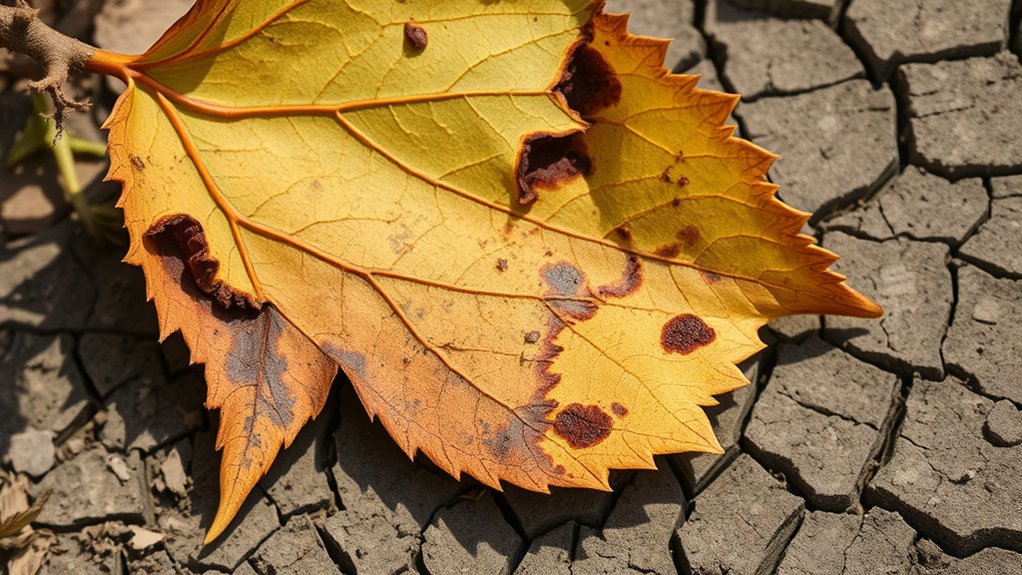
Understanding the differences between sunscald, leaf scorch, and drought is essential for maintaining healthy plants. Each of these issues causes distinct symptoms and can lead to significant tree damage if not properly identified and managed. Recognizing the signs early helps you reduce plant stress and ensures your trees and plants remain vigorous and resilient.
Recognizing sunscald, leaf scorch, and drought helps protect your plants from damage and promotes their healthy growth.
Sunscald occurs when the bark on your tree’s trunk becomes damaged due to exposure to intense sunlight, especially during winter or early spring when the tree’s protective bark is thin. You might notice areas of cracked, sunken, or discolored bark, often on the south or southwest sides of the trunk. This type of damage weakens the tree’s structural integrity, making it more vulnerable to pests and diseases, and can ultimately lead to tree damage if left untreated. Sunscald typically results from rapid temperature fluctuations, which cause the bark to expand and contract, creating stress on the tree tissues. To prevent sunscald, you can wrap vulnerable trunks with protective materials or plant shade trees to shield the bark from direct sunlight.
Leaf scorch, on the other hand, appears as browning or crisping of leaf edges and tips, primarily caused by water stress or high temperatures. Unlike sunscald, leaf scorch affects the foliage directly and is often visible during hot, dry conditions. You may notice the edges of your leaves turning brown, while the centers remain green, or spots that resemble scorched tissue. Leaf scorch indicates that your plant is under stress, struggling to transport adequate water from roots to leaves, which can be exacerbated by poor soil conditions, compacted roots, or insufficient watering. Proper watering practices, mulching, and ensuring good soil health help alleviate the stress and prevent further damage.
Drought stress is caused by an extended lack of water, leading to wilting, leaf drop, and overall decline in plant vigor. During drought, your plants conserve water by closing stomata, which reduces photosynthesis and hampers growth. Symptoms include drooping leaves, yellowing foliage, and sometimes, dieback of branches. Drought not only stresses your plants but can also cause irreversible tree damage if prolonged. To combat drought stress, you need to establish a consistent watering schedule, use mulch to retain soil moisture, and select drought-tolerant species if water availability is limited. Proper hydration supports plant health, minimizes stress, and prevents long-term damage.
tree trunk sunscald protection wrap
As an affiliate, we earn on qualifying purchases.
As an affiliate, we earn on qualifying purchases.
Frequently Asked Questions
Can Sunscald Occur on All Tree Species Equally?
Sunscald doesn’t affect all tree species equally because some have higher susceptibility due to their bark type and age. Young, thin-barked trees are more vulnerable, especially under environmental factors like intense sunlight and temperature fluctuations. You’ll notice sunscald mainly on species with smooth, thinner bark, while trees with thick, rugged bark are less prone. Recognizing these differences helps you protect your trees better from sunscald damage.
How Can I Prevent Leaf Scorch in Potted Plants?
Think of your potted plants as delicate dancers needing just the right rhythm. To prevent leaf scorch, you should adjust your watering frequency to keep the soil evenly moist without overwatering. Also, place your pots in a spot with filtered sunlight, avoiding intense afternoon sun. Regular watering and strategic pot placement act like a gentle lullaby, protecting your plants’ leaves from scorching and helping them thrive in their new environment.
What Soil Conditions Contribute to Drought Stress?
You contribute to drought stress when your soil has low moisture levels and poor drainage. When the soil dries out quickly or doesn’t hold water well, your plants struggle to get enough water, leading to stress. To help, guarantee your soil retains adequate moisture and improves drainage if needed. Regular watering and adding organic matter can boost soil moisture, reducing drought stress and keeping your plants healthy.
Are There Specific Signs to Distinguish Between Leaf Scorch and Drought?
Yes, you can distinguish between leaf scorch and drought by observing discoloration patterns and leaf texture. Leaf scorch usually shows browning edges with a distinct, crisp appearance, often starting at the tips. Drought stress might cause more uniform discoloration with wilting and dry, brittle leaves. Pay attention to these signs; scorched leaves often have irregular patches, while drought-affected leaves tend to be uniformly dry and limp.
How Does Humidity Influence Leaf Scorch Development?
Sure, because who wouldn’t want their leaves to turn crispy right? Humidity effects play a sneaky role in leaf scorch development. Low humidity dries out leaves faster, making scorch more likely, while high humidity can mask symptoms or slow the process. So, if you’re trying to keep your plants lush, pay attention to humidity levels—they’re the silent puppeteers behind leaf scorch drama. Keep them balanced for happier, healthier foliage.
plant watering and drought relief products
As an affiliate, we earn on qualifying purchases.
As an affiliate, we earn on qualifying purchases.
Conclusion
Understanding sunscald, leaf scorch, and drought helps you care for your plants better, even if you’re new to gardening. You might worry that diagnosing these issues is complicated, but with a little observation, you’ll start noticing the signs quickly. Remember, plants are resilient and can recover with proper care. So, don’t get discouraged—by learning to identify these problems early, you’ll keep your garden healthy and thriving all season long.
leaf scorch treatment for plants
As an affiliate, we earn on qualifying purchases.
As an affiliate, we earn on qualifying purchases.
garden mulch for drought prevention
As an affiliate, we earn on qualifying purchases.
As an affiliate, we earn on qualifying purchases.
Fall Picks
fall essentials
As an affiliate, we earn on qualifying purchases.