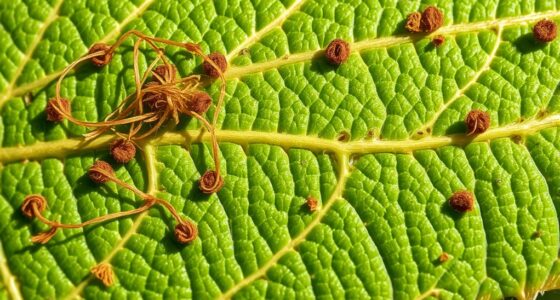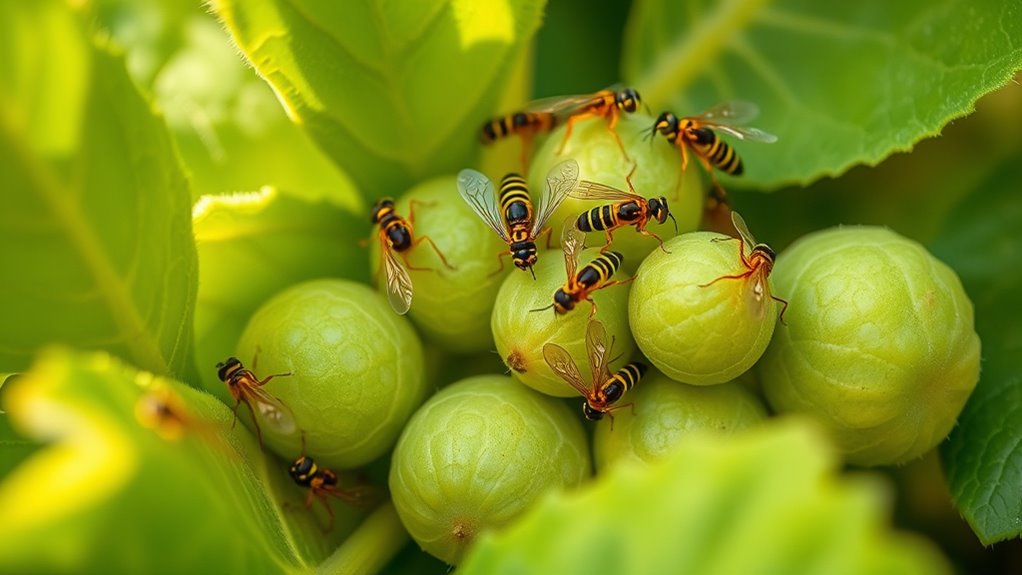

If you’re curious about gall-making insects, you’ll find several common types. Enormous oak galls are created by wasps, while aphids are responsible for small, fuzzy galls on leaves. You might also notice gall midges forming tiny, intricate structures on various plants. Some insects, like gall wasps, produce complex, often spherical or elongated galls. If you’re interested, exploring these different forms can uncover fascinating ways insects manipulate their host plants and transform growths into habitats.
Key Takeaways
- Common gall-making insects include wasps (Cynipidae), midges (Cecidomyiidae), and gall wasps that induce diverse plant galls.
- Gall wasps (family Cynipidae) are renowned for creating intricate galls on oak, poplar, and rose plants.
- Gall midges (family Cecidomyiidae) often produce small, round galls on leaves, stems, or roots of various plants.
- Some insects, like gall aphids, induce galls on crops and ornamental plants, affecting their growth.
- The diversity in gall structure and insect species reflects specialized adaptations in plant-insect interactions.
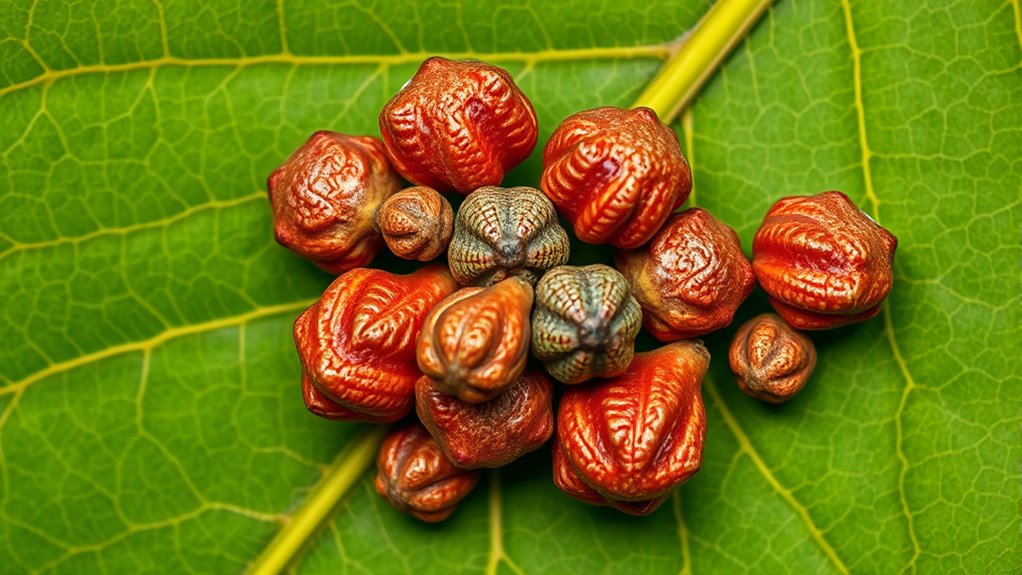
Many insects have developed the fascinating ability to induce plants to produce galls—abnormal growths that serve as their homes and sources of nutrition. When you observe these unique structures, you’re witnessing a complex interaction rooted in the insects’ ability to manipulate plant physiology. These insects often integrate into the plant’s defense strategies by exploiting its vulnerabilities, turning what might seem like a threat into a beneficial habitat. Understanding their life cycles reveals how these insects cleverly coordinate their development stages to maximize their survival within these galls.
As you explore the world of gall-making insects, you’ll notice that their life cycles are tightly intertwined with the formation and maintenance of galls. Many go through complete metamorphosis—starting as eggs laid on or within the host plant, then developing into larvae that induce gall formation. Once inside, the larvae feed on the plant tissue, which provides both shelter and nourishment. The plant, meanwhile, activates various defense strategies in response to insect activity, but these insects have evolved to circumvent or even manipulate these defenses to their advantage. They often secrete chemicals that influence plant cell growth, causing the abnormal structures to develop. Interestingly, some gall-inducing insects are also specialized to target only certain plant species, reflecting a high degree of co-evolution.
The timing of their life cycles is critical. Some species synchronize egg-laying with specific plant growth phases to ensure ideal gall development. As the larvae mature, they remain protected inside the gall, shielded from predators and harsh environmental conditions. When the time is right, they pupate within the gall, emerging as adults ready to repeat the cycle. This intricate timing highlights how these insects have adapted to exploit plant responses and their own life cycle needs simultaneously.
You might also notice that different types of gall-making insects target various plants and produce distinctive gall forms—some look like small swellings, others resemble complex structures. Their ability to manipulate plant growth is a testament to their evolved strategies to bypass plant defenses. Instead of outright harming the plant, they often coexist in a delicate balance, with the plant tolerating or even encouraging the formation of galls when it benefits from the insects’ role in controlling other pests or aiding in seed dispersal. Additionally, understanding the plant-insect interaction can provide insights into ecological balance and evolutionary adaptation.
Frequently Asked Questions
How Do Insects Choose Which Plant to Infest?
You influence insects’ plant choices through plant signaling, which releases specific chemicals attracting or repelling them. Insects navigate using these chemical cues, helping them find suitable hosts. They also respond to visual and scent cues, honing in on particular plants. By detecting these signals, insects can choose the plants that best support their development and survival, ensuring they infest the most advantageous hosts for their lifecycle.
Are Galls Harmful to the Host Plants?
Imagine a tiny storm brewing on your plant—galls can be small or large, but they rarely threaten plant health. Usually, gall size doesn’t cause serious harm; it’s like a temporary scar. However, if galls become too numerous or large, they may weaken your plant over time. Generally, galls are more of an aesthetic issue than a true threat, so your plant can usually recover easily.
Can Galls Be Used for Medicinal Purposes?
Yes, galls have been used for medicinal purposes in traditional practices. You can find that some galls possess medicinal properties, such as antimicrobial or anti-inflammatory effects. Historically, people used galls to treat various ailments like wounds, diarrhea, and sore throats. While modern science explores these traditional uses, always consult a healthcare professional before using galls medicinally, as research on their efficacy and safety is still ongoing.
How Do Insects Protect Themselves Inside Galls?
Insects protect themselves inside galls by taking advantage of plant defense mechanisms and the gall formation process. They create a secure, insulated environment that shields them from predators and harsh conditions. The gall’s structure, formed during the plant’s response to insect activity, acts as a protective barrier. This natural fortress helps insects avoid predation, parasites, and environmental stress, ensuring their survival within the plant’s specialized gall habitat.
Do Different Insect Species Create Similar Galls?
Yes, different insect species create similar galls, often targeting the same plant species. This happens because plant defense mechanisms can be overcome or bypassed, leading to convergent gall development. Gall diversity varies widely, with some insects inducing distinctive structures, while others produce more similar forms. You’ll notice that despite differences in species, similar environmental factors and plant defenses contribute to the occurrence of comparable galls across various insects.
Conclusion
Did you know that over 13,000 insect species worldwide create galls? These tiny structures are marvels of nature’s engineering, showcasing insects’ incredible ability to manipulate plant growth. As you explore more about gall-making insects, remember how these fascinating creatures impact ecosystems and plant health. Next time you see a strange bump on a plant, you’ll know an insect is at work, turning ordinary plants into extraordinary homes. Nature’s ingenuity really is astounding!