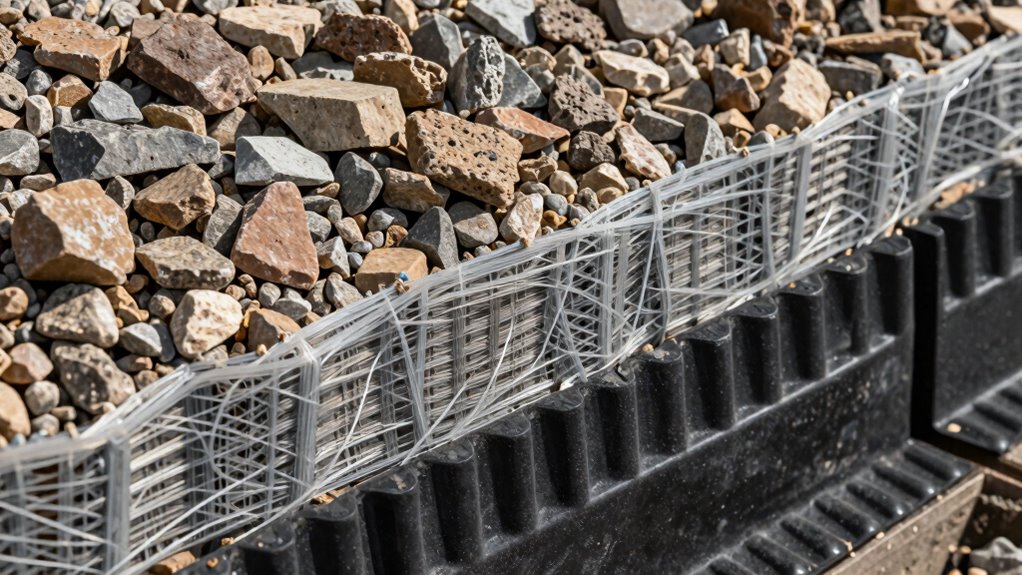

Geotextiles are permeable fabrics that reinforce soil, prevent erosion, and support drainage, helping your project stay stable and durable. Gravel acts as a filter and drainage layer, allowing water to flow quickly while stabilizing the soil beneath. Drainage layers, often made of gravel or specialized materials, manage water movement to prevent pooling and foundation damage. Together, these components work to protect structures and landscapes—exploring them further reveals how each element plays an essential part in successful design.

Get garden gear delivered free with Prime
- Fast, free delivery on millions of items
- Prime Video, Amazon Music and more included
- Member-only deals all year
Key Takeaways
- Geotextiles reinforce soil, prevent erosion, and improve drainage by acting as permeable barriers within soil layers.
- Gravel facilitates water flow, filters fine particles, and provides a stable base for drainage and foundation support.
- Drainage layers, typically made of gravel or specialized materials, channel water away to prevent pooling and foundation damage.
- Geotextiles work with gravel and drainage layers to enhance soil stability and extend the lifespan of landscapes and structures.
- Proper installation of all three components ensures effective erosion control, water management, and soil stabilization.
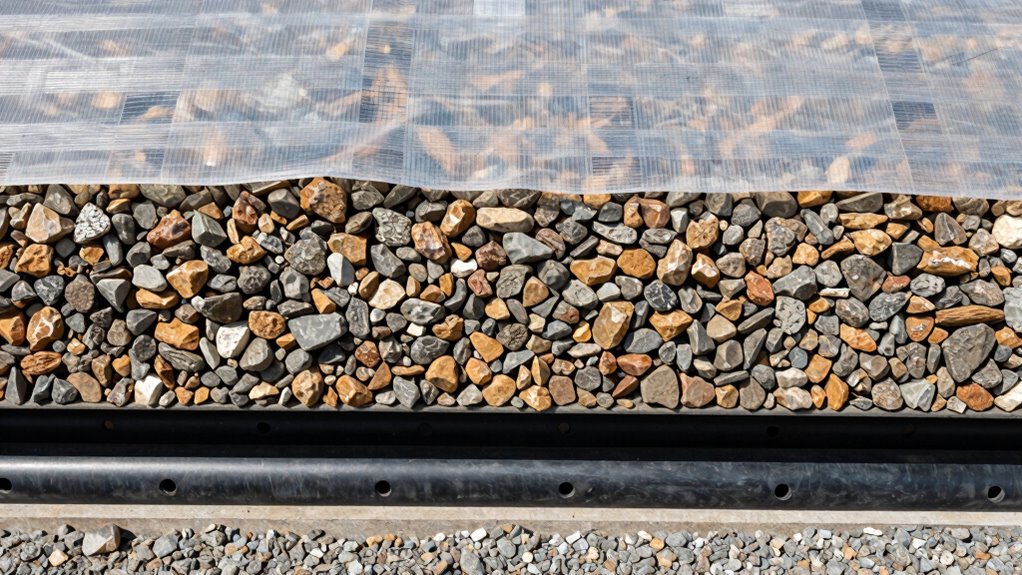
When constructing or maintaining landscapes and infrastructure, understanding the roles of geotextiles, gravel, and drainage layers is essential. These materials work together to keep your project stable, prevent erosion, and guarantee proper water management. Each component has a specific function, and knowing how they interact helps you create durable and effective solutions.
Start with geotextiles. These permeable fabrics are designed to reinforce soil and prevent it from shifting or collapsing under pressure. If you’re aiming for soil stabilization, geotextiles are invaluable. They distribute loads evenly across the ground, reducing stress on the soil below and minimizing the risk of deformation. This makes them particularly useful in projects like roadbeds, retaining walls, or slope stabilization. Besides supporting soil stability, geotextiles effectively control erosion. By acting as a barrier, they prevent soil particles from washing away during heavy rains or runoff, preserving the integrity of your landscape. When installed properly, geotextiles create a stable foundation that keeps soil in place, even in challenging conditions. Soil reinforcement is a crucial benefit that enhances overall project durability. Additionally, geotextiles can help improve the filtration of water passing through soil layers, further supporting drainage efforts. Proper installation techniques are vital to maximize their effectiveness and longevity. Understanding how geotextiles interact with other materials in the soil helps optimize their performance.
Moving on to gravel, it’s more than just a decorative element; it plays a critical role in drainage and filtration. Gravel layers are commonly used beneath paving or around foundations to facilitate water flow and prevent pooling. When you incorporate gravel, you help direct excess water away from sensitive areas, reducing hydrostatic pressure that can weaken structures. Gravel also acts as a filter, trapping fine soil particles and preventing them from clogging drainage systems. This ensures water moves efficiently through the layers, reducing the risk of flooding or water damage. Additionally, gravel contributes to soil stabilization by providing a solid base that resists shifting under weight and moisture changes, further enhancing erosion control. Its permeability allows water to pass through quickly, which is essential for effective drainage systems. Properly designed gravel layers can significantly enhance your overall drainage strategy.
Drainage layers, often composed of gravel or specialized materials, serve to manage water movement within your landscape. Proper drainage prevents water from accumulating in unwanted areas, which can lead to soil erosion or structural instability. When you implement effective drainage layers, you’re actively protecting your project from water-related damage. These layers work in tandem with geotextiles and gravel to channel water away from foundations, slopes, or pavement, maintaining the project’s overall stability. By controlling water flow, drainage layers help preserve soil integrity and prevent erosion, ensuring your landscape remains resilient over time. Employing drainage systems that integrate these layers can significantly extend the lifespan of your landscape improvements. In addition, understanding the functions of each layer helps in designing a comprehensive water management plan tailored to your specific site conditions. Properly integrating these materials ensures a more sustainable and long-lasting landscape.
geotextile fabric for erosion control
As an affiliate, we earn on qualifying purchases.
As an affiliate, we earn on qualifying purchases.
Frequently Asked Questions
How Long Do Geotextiles Typically Last in the Ground?
You can expect geotextiles to last around 20 to 50 years underground, depending on material quality and environmental conditions. They play a crucial role in soil stabilization and erosion control, preventing soil movement and maintaining landscape integrity. Proper installation and choosing durable materials can extend their lifespan, ensuring your project remains protected over the long term. Regular inspections help identify any wear or damage, keeping erosion control effective.
Can Gravel Be Reused After Project Completion?
Yes, you can reuse gravel after a project by using recycling methods like screening and washing to remove debris and dirt. Reusing gravel benefits the environment by reducing waste and the need for new materials. Proper recycling helps you save costs and minimizes ecological impact. Just make certain the gravel remains stable and undamaged to maintain its effectiveness for future use, making it an eco-friendly and economical choice.
What Are the Environmental Impacts of Drainage Layers?
You should know that drainage layers can impact the environment, especially if not properly managed. They may cause soil erosion or water contamination, affecting sustainable drainage efforts. However, when designed with environmental remediation in mind, they help reduce runoff and pollution. Using eco-friendly materials and proper installation minimizes negative effects, supporting both environmental health and long-term infrastructure sustainability. Properly maintained drainage layers are key to protecting ecosystems while ensuring effective drainage.
Are There Different Types of Geotextiles for Specific Applications?
Sure, there are definitely different types of geotextiles for specific applications. You’ll want to match the right geotextile to your project’s needs, whether it’s for separation, filtration, or reinforcement. During geotextile installation, pay attention to fabric strength and permeability. And don’t forget, effective gravel compaction techniques are essential to guarantee your geotextile performs effectively, or you might just be wasting your effort on the wrong material.
How Do I Choose the Right Gravel Size for Drainage?
To choose the right gravel size for drainage, consider the drainage capacity you need. Select medium-sized gravel, around ¾ inch, which balances good drainage with compaction. Larger gravel improves drainage but might shift, while smaller gravel compacts too tightly, reducing flow. Make sure proper gravel compaction during installation to maximize drainage efficiency. This way, you’ll achieve ideal flow and stability for your drainage system.
gravel drainage layer for foundation
As an affiliate, we earn on qualifying purchases.
As an affiliate, we earn on qualifying purchases.
Conclusion
Now that you understand what geotextiles, gravel, and drainage layers do, you’re almost ready to tackle your project. But here’s the twist—you might find yourself wondering if there’s more beneath the surface. Could there be other layers or materials that make your foundation stronger? The real secret lies in knowing exactly how each component works together. Stay curious—you’ve only scratched the surface of what’s possible. The next step could change everything.
landscape drainage layer materials
As an affiliate, we earn on qualifying purchases.
As an affiliate, we earn on qualifying purchases.
As an affiliate, we earn on qualifying purchases.
Fall Picks
fall essentials
As an affiliate, we earn on qualifying purchases.