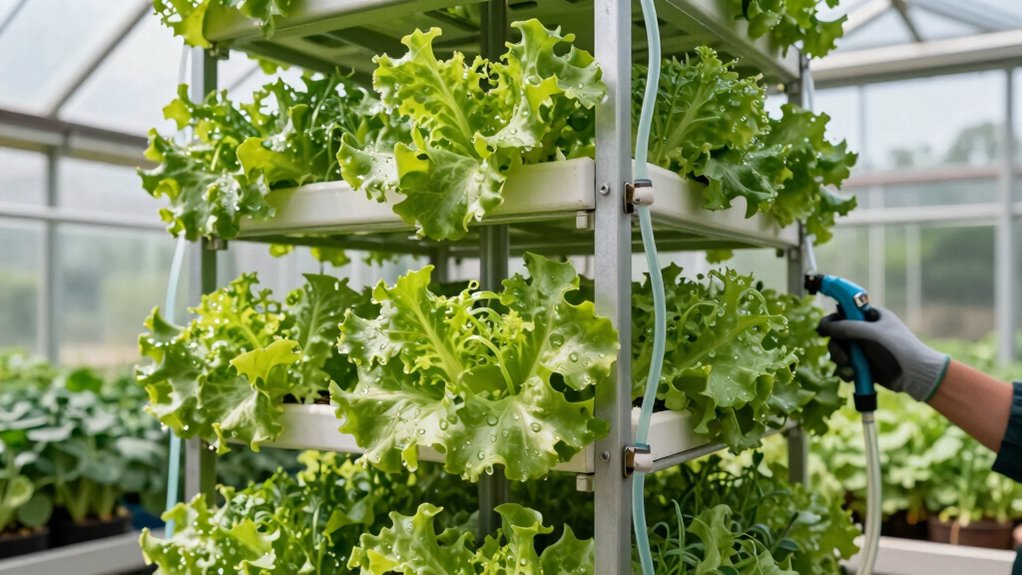
Maintaining a hydroponic tower isn’t about less work—it’s about different work. You’ll need to monitor water levels and nutrients closely, keep components like pumps and filters clean, and watch for pests and diseases even without soil. The system requires regular inspection and adjustments to guarantee plants get the right nutrients at each stage. If you stay on top of these tasks, you’ll succeed. Keep exploring how this unique gardening method can work best for you.

Get garden gear delivered free with Prime
- Fast, free delivery on millions of items
- Prime Video, Amazon Music and more included
- Member-only deals all year
Key Takeaways
- Hydroponic towers require regular monitoring of water quality, nutrient levels, and system components to ensure optimal plant growth.
- Maintenance involves frequent cleaning, inspection, and adjustment, differing from traditional gardening’s less technical upkeep.
- Controlling pests and diseases in hydroponic systems demands consistent vigilance and integrated management practices.
- Ensuring proper airflow, preventing salt buildup, and managing pump and filter functionality are essential tasks.
- The system’s efficiency depends on ongoing management of water, nutrients, and component maintenance, making it a different type of care.
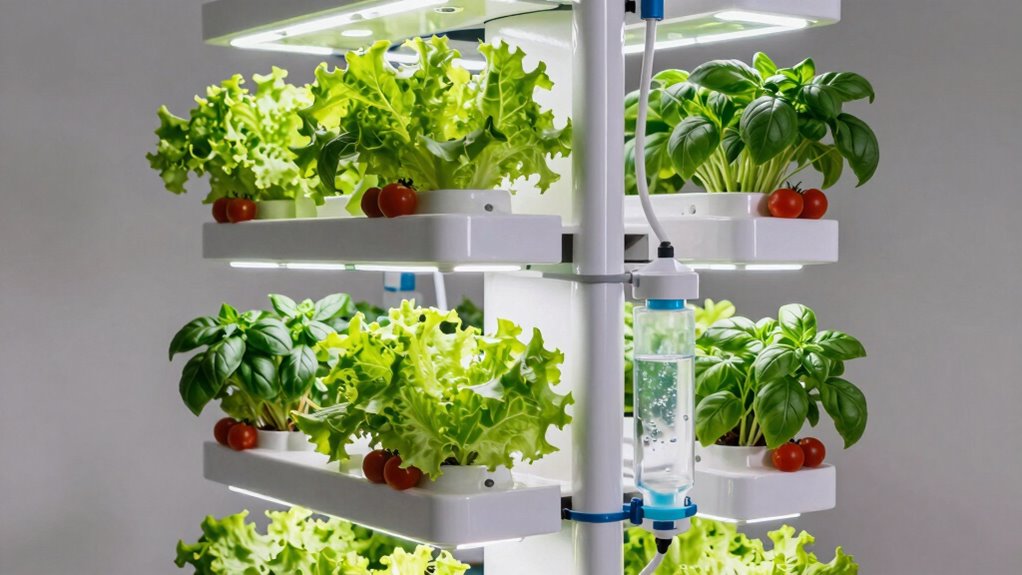
Hydroponic towers stand out from traditional gardening systems because they require a different approach to maintenance. Instead of soil, you work with nutrient-rich water, which means you won’t need to worry about soil integration or soil-borne pests. This shift simplifies certain aspects of gardening but introduces new responsibilities. You need to monitor your water levels and nutrient concentrations regularly to keep your plants healthy. Unlike soil-based gardens where pests can hide in the dirt, pest control in hydroponic towers is more straightforward, yet still essential. You’ll want to inspect your system frequently for signs of pests or disease, because the confined environment can sometimes lead to rapid spread if an issue arises.
Because hydroponic towers don’t rely on soil, you eliminate many of the common pests associated with traditional gardening, such as worms or soil-borne insects. However, pests like aphids or spider mites can still find their way onto your plants. Regularly cleaning your system and ensuring good airflow helps prevent pest infestations. If pests do appear, integrated pest management techniques work best—using natural predators or organic solutions rather than harsh chemicals, which can disrupt your system’s balance. You also need to stay vigilant about algae growth, which can thrive in the nutrient-rich water and interfere with plant health.
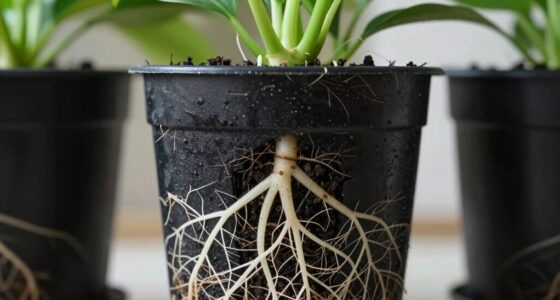
Your maintenance routine involves more than just monitoring pests; it also includes keeping the water clean and the system functioning efficiently. Since there’s no soil to anchor roots, your plants are more exposed to the nutrients you supply, making consistent nutrient solution management crucial. You’ll need to top up water regularly and sometimes flush the system to prevent salt buildup. This process differs markedly from traditional gardening, where soil acts as both a medium and a buffer. Additionally, understanding the importance of system components like pumps and filters is essential because they can clog or malfunction, affecting overall plant health. Properly maintaining these parts ensures the longevity and effectiveness of your hydroponic system.
Furthermore, because you’re not working with soil, you won’t face issues like soil compaction or erosion. But, you must pay attention to system components, such as pumps and filters, which can clog or malfunction. Regular inspection and maintenance of these parts ensure your plants receive a steady flow of nutrients and oxygen. It’s also important to stay informed about water quality and how it impacts plant growth, as impurities can sometimes build up in closed systems. Additionally, adjusting the nutrient solution composition based on plant development stages can optimize growth and yield. Overall, maintaining a hydroponic tower requires a shift in mindset—you’re managing a closed system that demands consistent oversight but offers a cleaner, more controlled environment. With proper care, pest control becomes easier, and your plants thrive without the challenges posed by traditional soil-based gardening.
hydroponic nutrient solution tester
As an affiliate, we earn on qualifying purchases.
As an affiliate, we earn on qualifying purchases.
Frequently Asked Questions
How Often Should I Clean My Hydroponic Tower?
You should clean your hydroponic tower every 2-4 weeks to prevent algae buildup and guarantee proper plant health. During cleaning, prune any dead or overgrown plants and check pH levels, balancing them as needed for ideal growth. Regular maintenance includes rinsing the system’s components and inspecting for clogs. This routine keeps your tower functioning smoothly, promotes healthy plant growth, and reduces the risk of disease.
What Are Common Pests in Hydroponic Towers?
Like the plague of locusts in ancient times, common pests in your hydroponic tower include aphids, whiteflies, and spider mites. To keep them at bay, practice organic management and pest control methods like neem oil or introducing beneficial insects. Regularly inspect your plants, and act swiftly if you notice pest signs. Maintaining cleanliness and healthy plant conditions will also help prevent infestations.
Can Hydroponic Towers Be Used Indoors Year-Round?
Yes, you can use hydroponic towers indoors year-round. Just make certain you have adequate indoor lighting, like grow lights, to support plant growth during darker months. Regular pest prevention is essential, even indoors, to keep pests away. With proper lighting and pest control, your hydroponic tower can thrive indoors all year, providing fresh produce regardless of outdoor conditions.
What Nutrient Solutions Are Best for Different Plants?
Did you know that proper nutrient solutions can boost plant growth by up to 25%? For different plants, you should focus on specific nutrient ratios and maintain a balanced pH. Leafy greens thrive with higher nitrogen, while fruiting plants prefer more phosphorus and potassium. Always check the pH balance, ideally between 5.5 and 6.5, to guarantee nutrients are absorbed effectively and your plants stay healthy.
How Do I Troubleshoot Uneven Water Distribution?
To troubleshoot uneven water distribution, first check the water flow in your system. Make sure the pump isn’t clogged or malfunctioning, as pump issues can cause inconsistent flow. Inspect tubing and emitters for blockages or kinks that restrict water movement. Adjust or replace any faulty components. Regularly clean and maintain your pump and tubing to keep water flow even, preventing dry spots and guaranteeing all plants receive consistent nutrients and hydration.
As an affiliate, we earn on qualifying purchases.
Conclusion
So, remember, hydroponic towers aren’t low-maintenance—they’re different-maintenance. They demand your attention, your care, and your commitment. They challenge you to learn, adapt, and grow alongside your plants. They require your patience, your persistence, and your passion. But in return, they reward you with fresh produce, vibrant greenery, and a sense of accomplishment. Embrace the difference, put in the effort, and watch your hydroponic tower thrive—because with the right care, it will too.
As an affiliate, we earn on qualifying purchases.
As an affiliate, we earn on qualifying purchases.
Columbus Day / Indigenous Peoples' Day Picks
long weekend sales
As an affiliate, we earn on qualifying purchases.