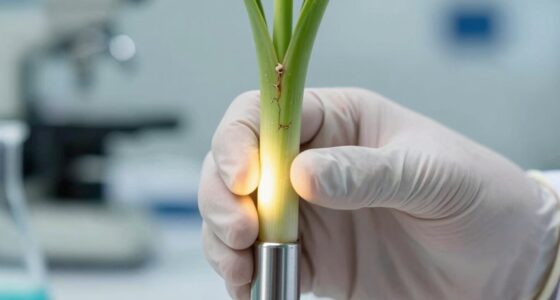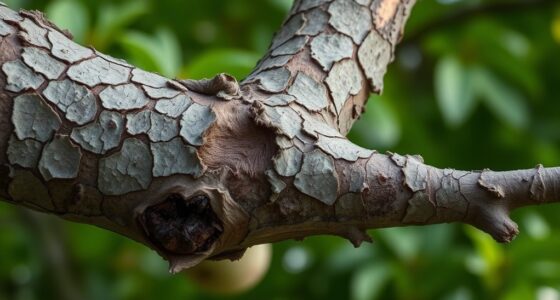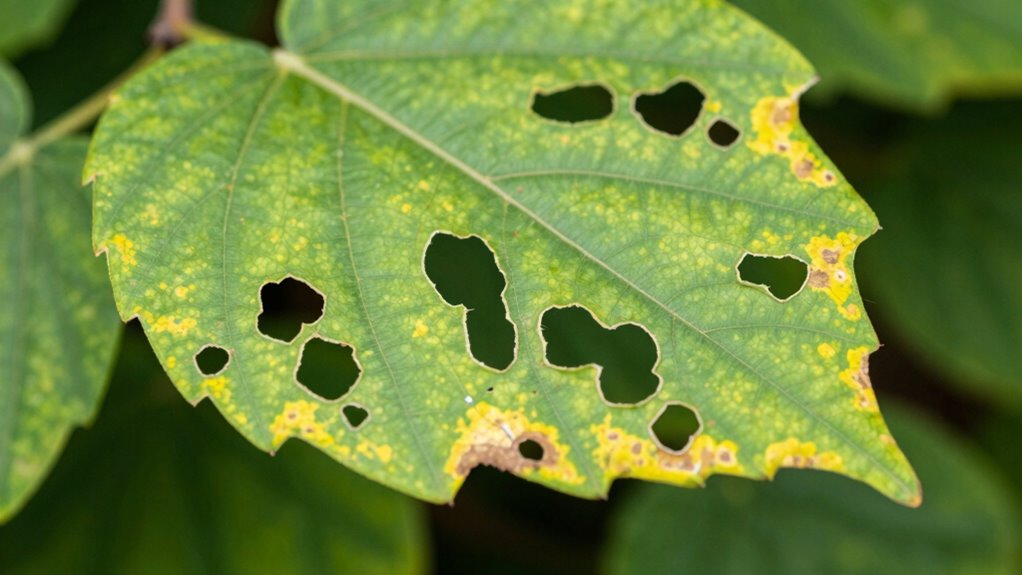

To tell pest damage apart from nutrient stress, look at the pattern of the damage on your leaves. Pest damage usually appears as irregular holes, chew marks, and localized rough spots, indicating insects or webbing. In contrast, nutrient deficiencies cause uniform discoloration, yellowing, or symmetrical symptoms across large areas of the leaf. Recognizing these patterns can help you identify the cause, and if you keep exploring, you’ll discover more clues to protect your plants effectively.
Prime for Young Adults — start your free trial
Fast free delivery, streaming and member deals for eligible 18–24 year olds.
As an affiliate, we earn on qualifying purchases.
Key Takeaways
- Pest damage often shows irregular holes, chew marks, or rough surfaces, whereas nutrient stress causes uniform discoloration or yellowing.
- The presence of visible pests, webbing, or debris indicates pest damage, unlike nutrient deficiencies which lack insect signs.
- Pest damage is localized with uneven patterns; nutrient deficiencies typically cause symmetrical, widespread symptoms.
- Insects like aphids or spider mites are visible clues pointing to pest issues, not nutrient problems.
- Nutrient deficiencies produce predictable, broad-area symptoms such as interveinal chlorosis or overall dullness.
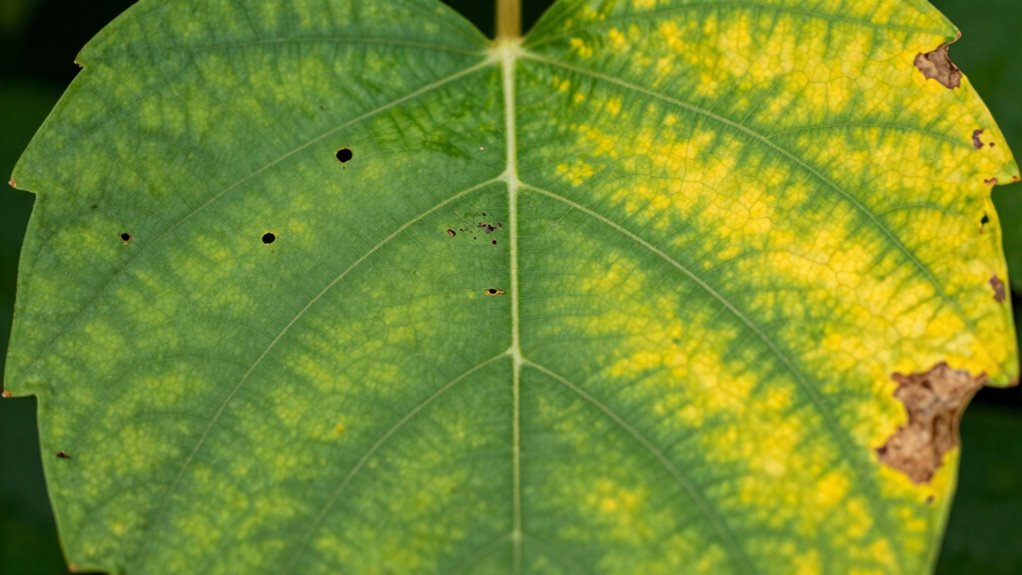
When you notice unusual spots or discoloration on your plant’s leaves, it can be tricky to determine whether pests are to blame or if the plant is suffering from nutrient deficiencies. The key to resolving this confusion lies in closely examining the leaf damage itself. Pest identification often involves specific patterns or signs, while nutrient deficiency typically shows more uniform symptoms. By paying attention to these details, you can figure out what’s causing the problem and take appropriate action.
If pests are responsible, you might see tiny insects on the underside of leaves, webbing, or eggs clustered in specific areas. Certain pests, like spider mites, cause stippling or speckling on the surface of the leaf, giving it a mottled appearance. Others, such as aphids, cluster at new growth and leave behind sticky honeydew that can lead to mold. The damage caused by pests usually appears as irregular holes, chew marks, or a rough, uneven surface. Look for movement or signs of crawling insects — these are strong clues for pest identification. Pest damage tends to be localized, affecting specific parts of the plant, and often comes with accompanying pests or debris. Recognizing pest signs and symptoms is essential for accurate diagnosis and treatment. Additionally, understanding the patterns of damage can help differentiate between pests and nutrient issues. Recognizing these patterns can greatly improve your ability to diagnose plant health problems accurately.
In contrast, nutrient deficiency tends to produce more uniform and predictable symptoms across the plant. For example, a nitrogen deficiency often results in yellowing leaves, especially older ones, as the plant pulls nutrients from lower leaves first. Magnesium deficiency causes a similar yellowing but with a distinctive pattern of interveinal chlorosis, where the veins stay green while the tissue between them turns yellow. Iron deficiency typically causes younger leaves to turn yellow first. The discoloration from nutrient deficiencies is usually symmetrical, affecting larger areas of the leaf evenly, and lacks the irregular holes or stippling associated with pests. There’s rarely any sign of insects or physical damage, but the overall plant might look dull, weak, or stunted if nutrients are lacking. Recognizing these symptoms involves understanding plant nutrient requirements and how deficiencies manifest in various parts of the plant. The timing and progression of symptoms can also provide clues about the specific deficiency involved. Being familiar with nutrient deficiency symptoms can help you respond more effectively to your plant’s needs.
As an affiliate, we earn on qualifying purchases.
Frequently Asked Questions
Can Nutrient Stress Cause Similar Leaf Damage as Pests?
Yes, nutrient deficiency can cause leaf damage that looks similar to pest infestation. When plants lack essential nutrients, their leaves may turn yellow, develop spots, or become distorted, mimicking pest damage. You might confuse nutrient stress with pest problems, but closely inspect for pests or signs of pest activity. Addressing nutrient deficiency through proper fertilization often resolves the issue, whereas pest infestation requires targeted pest control measures.
How Quickly Can Nutrient Deficiencies Be Corrected?
You can typically correct nutrient deficiencies within days to a couple of weeks, depending on the severity. To do so, consider proper fertilizer timing, ensuring you apply nutrients when plants need them most. Soil testing helps identify specific deficiencies, guiding targeted amendments. Keep an eye on plant responses, and adjust your feeding schedule accordingly. Prompt action with the right fertilizer and timing can restore your plants’ health efficiently.
Are There Specific Pests That Mimic Nutrient Deficiency Symptoms?
Some pests expertly employ pest camouflage, making their damage resemble nutrient deficiency symptoms, leading to symptom overlap. For example, spider mites and aphids can mimic nutrient stress by causing yellowing or mottling leaves. These pests subtly hide among plant tissues, tricking you into misdiagnosis. Recognizing pest camouflage requires close inspection, as their damage can look remarkably like nutrient-related issues. Stay vigilant and look for other signs to accurately identify pest presence.
What Are the Environmental Conditions Influencing Pest or Nutrient Issues?
Environmental conditions like soil pH and water availability greatly influence pest and nutrient issues. If your soil’s pH is too high or low, plants can struggle to absorb nutrients, mimicking deficiencies. Poor water availability, whether too little or excess, stresses plants and makes them more vulnerable to pests. Maintaining ideal soil pH and consistent watering helps prevent nutrient stress and pest infestations, promoting healthier, more resilient plants.
How Does Leaf Color Change Help Identify Pest Versus Nutrient Problems?
Did you know that leaf discoloration can be a key indicator in pest identification? When pests feed, they often cause irregular, localized spots, while nutrient deficiencies tend to lead to more uniform, widespread color changes. By observing these patterns, you can differentiate pest damage from nutrient issues. Spotting uneven leaf discoloration helps you target pest control effectively, avoiding unnecessary treatments and ensuring your plants stay healthy.
As an affiliate, we earn on qualifying purchases.
Conclusion
So, next time you spot those yellowing leaves or strange spots, remember that a simple leaf clue can reveal whether pests or nutrient stress are to blame. Coincidentally, catching these signs early often means you can prevent bigger problems down the line. Trust your eye and act quickly—because sometimes, it’s the tiniest leaf detail that saves your plants from a major setback. Keep vigilant, and your garden will thank you.
garden pest detection flashlight
As an affiliate, we earn on qualifying purchases.
As an affiliate, we earn on qualifying purchases.
plant nutrient deficiency test kit
As an affiliate, we earn on qualifying purchases.
As an affiliate, we earn on qualifying purchases.
Fall Picks
fall essentials
As an affiliate, we earn on qualifying purchases.