To measure light like a scientist, first prepare your space by removing reflective surfaces, adjusting environmental factors, and calibrating your PAR meter regularly. Turn on the device, hold it flat facing the light source, and take multiple measurements at the same spot to guarantee accuracy. Record the data, analyze the light distribution, and make adjustments to your setup as needed. Keep practicing proper technique, and you’ll improve your skills with each measurement. If you keep going, you’ll master precise light assessment.
Key Takeaways
- Calibrate the PAR meter regularly and position the sensor flat, facing the light source at measurement points.
- Minimize light interference by removing reflective surfaces, controlling ambient light, and shielding measurement areas.
- Take multiple readings at the same spot and average them for accurate, reliable results.
- Record measurements consistently at the same height, angle, and location to ensure comparability.
- Analyze PAR data to adjust lighting setup, ensuring levels match plant-specific requirements for optimal growth.
What Is a PAR Meter and Why Do Growers Need One?

A PAR meter measures the amount of Photosynthetically Active Radiation (PAR) that plants receive, which is essential for efficient growth. It helps you assess the light spectrum your plants are exposed to, guaranteeing they get the right wavelengths for photosynthesis. Growers need a PAR meter to optimize lighting setups, prevent under- or over-lighting, and improve yields. To guarantee accurate readings, calibration techniques are fundamental; regular calibration aligns the device with known light standards, maintaining measurement reliability. Understanding the light spectrum and maintaining proper calibration allows you to make informed adjustments, promoting healthy plant development. Proper light spectrum management is crucial for maximizing plant health and productivity. Without a PAR meter, you risk misjudging your lighting conditions, which could compromise plant health and productivity. It’s a vital tool for precision horticulture, enabling growers to fine-tune their lighting for optimal results. Additionally, understanding the spectral distribution of your light source helps ensure your plants receive a balanced and effective spectrum for growth. Regular use of a PAR meter can also assist in identifying the optimal light intensity levels required for different plant stages, ensuring the best possible yields.
How to Get Your Growing Space Ready for Accurate Measurements

To guarantee your PAR meter provides accurate readings, start by preparing your growing space to minimize light interference. Ensure the area is free from reflective surfaces or extraneous light sources that can skew results. Conduct soil testing to confirm ideal conditions for plant nutrition, as healthy plants absorb and utilize light more effectively. Clear the space of clutter, such as tools or equipment that could cast shadows. Adjust the environment to prevent light leaks, like closing curtains or blinds. You might also consider shading nearby reflective surfaces that could bounce light into your measurement zone. Additionally, understanding the importance of light calibration ensures your device remains accurate over time. Maintaining proper instrument calibration is essential for consistent and reliable measurements. Regularly monitor environmental conditions to adapt to changing factors that could affect your readings. Incorporating lighting uniformity checks can help identify uneven light distribution that might impact your measurements. Remember that proper placement of the PAR meter is crucial for obtaining representative measurements. By controlling these factors, you create a consistent environment, allowing your PAR readings to accurately reflect the light your plants receive, setting a solid foundation for ideal growth.
How to Use a PAR Meter: A Simple Step-by-Step
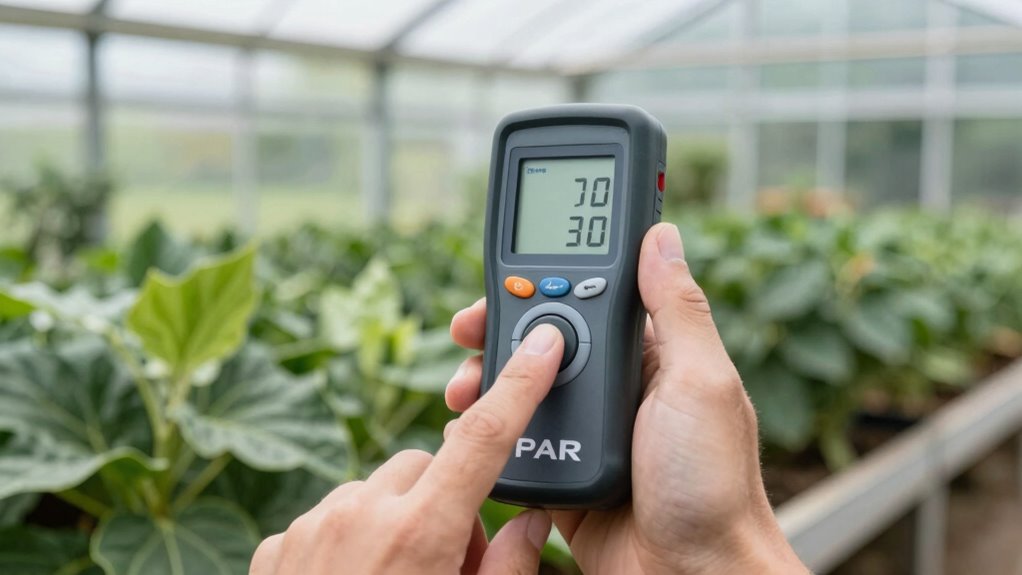
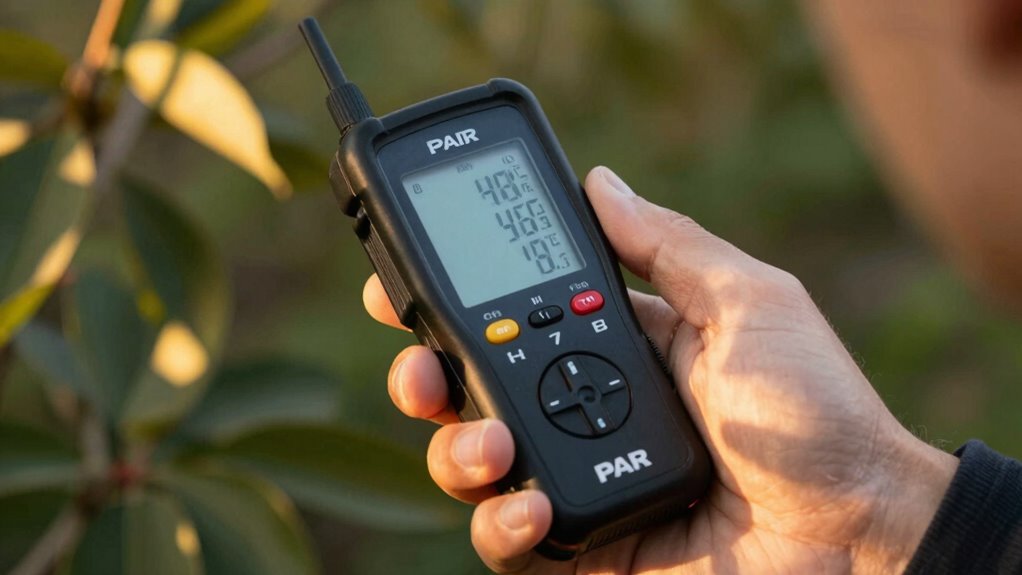
Using a PAR meter is straightforward once you understand the basic steps. First, turn on the device and calibrate it using the recommended calibration techniques, ensuring accurate readings across the light spectrum. Position the sensor at the target measurement point, keeping it flat and facing the light source directly. Avoid shadows or obstructions that could skew results. Record the readings displayed on the meter, which reflect the light intensity in micromoles per square meter per second. For consistency, take multiple readings at the same spot and average them. Always verify your calibration periodically to maintain precision. Proper light measurement ensures you gather reliable data to optimize your plant growth environment. Additionally, understanding light spectrum characteristics can help you select the right lighting for your needs. Being aware of appliance power consumption can also contribute to energy-efficient setups in grow rooms or controlled environments. Conducting regular instrument maintenance can prolong the lifespan of your PAR meter and ensure sustained accuracy. By following these steps, you’ll confidently measure the light spectrum your plants receive, making your light management more precise and effective.
When and Where to Measure PAR for Best Results
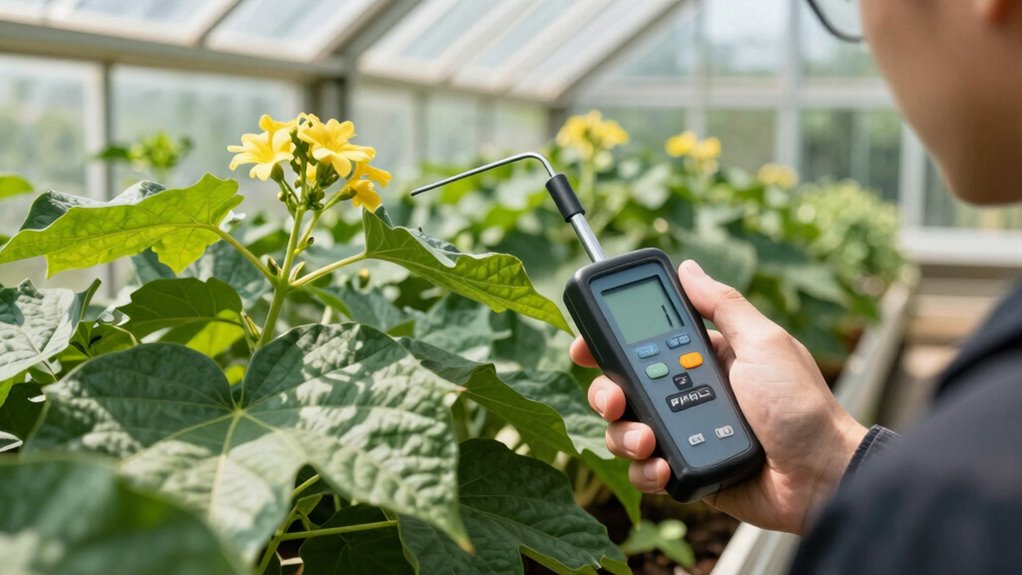
Timing and location are essential for obtaining accurate PAR measurements that truly reflect the light your plants receive. Measure when your plants are most active, typically during the middle of their lighting schedules, to observe their true response to light levels. Choose measurement spots that represent the plant canopy, avoiding shaded or overly bright areas to get a realistic reading. Visualize your setup with:
- The direct beam of your grow lights illuminating the canopy
- Bright spots where plants absorb maximum light
- Shaded corners where light might be insufficient
Understanding the overall light distribution in your grow area can help you make better adjustments for optimal plant growth and ensure your lighting setup supports healthy development. Additionally, being aware of light measurement tools and how they function can improve your accuracy and confidence in your readings. Properly understanding your light environment also involves considering light uniformity, which ensures consistent light coverage across your plants. Recognizing potential lighting inconsistencies can help prevent uneven growth and maximize your setup’s effectiveness.
How to Read PAR Data and Adjust Your Lights
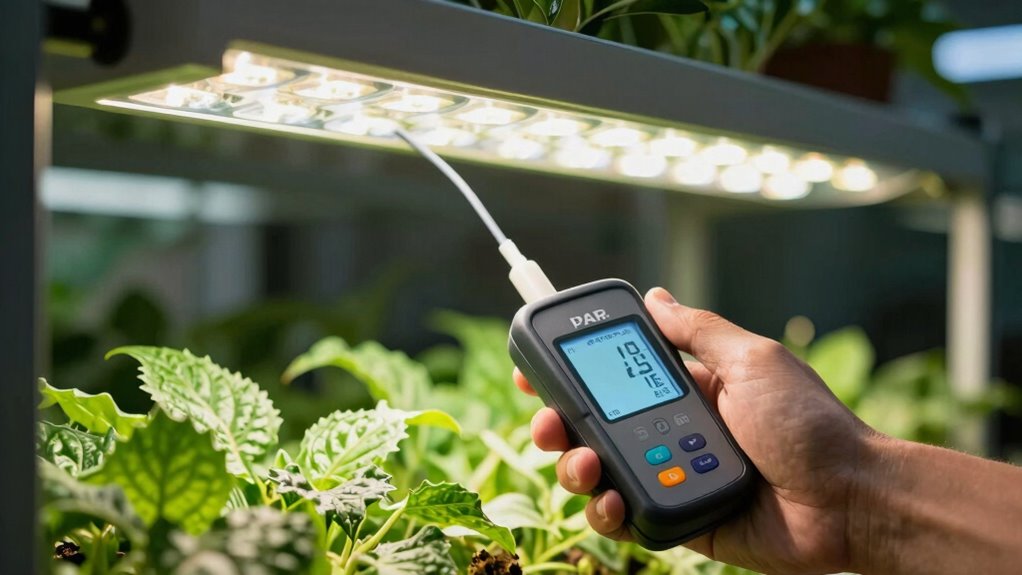
Once you’ve taken your measurements, you need to interpret the PAR values to see if your plants are getting enough light. Adjust the light intensity accordingly to reach ideal levels, making sure your readings stay consistent over time. Keeping your readings steady helps guarantee your plants receive uniform light for healthy growth. Understanding light requirements for your specific plants can further optimize your setup. Monitoring solar energy can also provide insights into natural light availability and help you adjust artificial lighting more effectively. Being aware of light fluctuation throughout the day can assist in maintaining consistent lighting conditions for optimal plant development. Additionally, tracking light distribution ensures that all areas of your plants receive appropriate illumination for balanced growth. Recognizing spectral quality can enhance photosynthesis efficiency and promote better plant health.
Interpreting PAR Values
Understanding PAR values is essential for maximizing your grow lights because they directly indicate the amount of usable light your plants receive. When interpreting PAR data, focus on the light spectrum, as certain wavelengths benefit plant growth more than others. Confirm your sensor is properly calibrated; inaccurate readings can lead to misjudging your lighting needs. Visualize the data as a snapshot of your grow space:
- Bright spots where plants thrive
- Dim areas needing more light
- Variations indicating uneven distribution
This information helps you identify areas that need adjustment, whether it’s adding more lights or repositioning existing ones. Remember, consistent sensor calibration is key to reliable readings, and understanding the light spectrum guides your decisions for ideal plant development.
Adjusting Light Intensity
To effectively adjust your light intensity, start by analyzing your PAR readings to identify areas that are either too dim or receiving excessive light. Consider the light spectrum, guaranteeing your plants get the right balance of wavelengths for ideal growth. Use calibration procedures to verify your PAR meter’s accuracy, as improper calibration can lead to misleading data. Once you know which zones need more or less light, adjust your light sources accordingly—either by dimming, increasing, or repositioning your fixtures. Keep in mind that different growth stages require different light intensities, so regularly checking your PAR levels helps maintain proper light distribution. Fine-tuning your setup based on precise PAR data ensures your plants get the right light, promoting healthy and vigorous growth. Additionally, understanding light measurement techniques can help you interpret your data more effectively.
Ensuring Consistent Readings
Accurate PAR readings depend on consistent measurement practices and proper interpretation of the data. To maintain light consistency, you need dependable readings each time. Use calibration techniques regularly to guarantee your PAR meter provides precise measurements. Always measure at the same spot, angle, and height to reduce variability. Keep your device clean and store it properly to prevent drift. Consider establishing a baseline by measuring your lights under ideal conditions, then compare subsequent readings to detect inconsistencies. When readings fluctuate, recalibrate or adjust your lights accordingly. Consistency ensures your plants receive the intended light levels and prevents over- or under-lighting. Additionally, understanding the performance of your PAR meter can help you troubleshoot and improve measurement accuracy. By following these steps, you’ll achieve reliable data, allowing you to fine-tune your setup for excellent growth and healthy plants.
Common Mistakes to Watch Out for When Using a PAR Meter
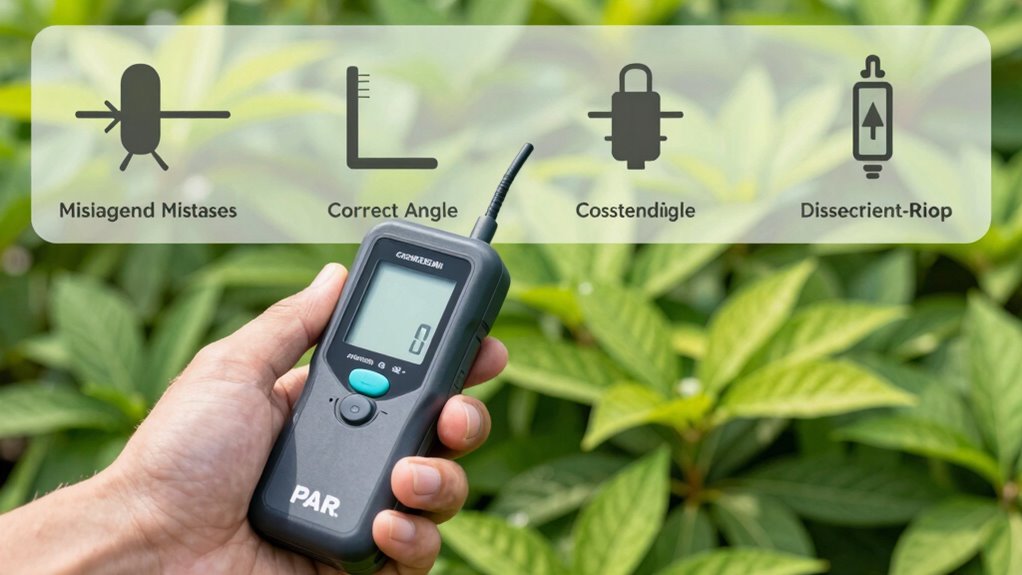
Even experienced growers can make mistakes when using a PAR meter, which can lead to inaccurate readings and affect your crop’s health. One common error is neglecting sensor calibration; if your device isn’t properly calibrated, your measurements won’t be reliable. Always verify calibration regularly to guarantee precision. Environmental interference also poses a problem—external factors like reflective surfaces, nearby light sources, or electromagnetic interference can skew your readings. Avoid taking measurements near windows, metallic objects, or electronic devices that emit electromagnetic waves. Additionally, make sure to shield the sensor from sudden light changes and avoid holding it in positions that reflect or block light. Being mindful of these issues helps you get accurate, consistent readings essential for optimal plant growth.
Tips to Keep Your PAR Meter Accurate Over Time
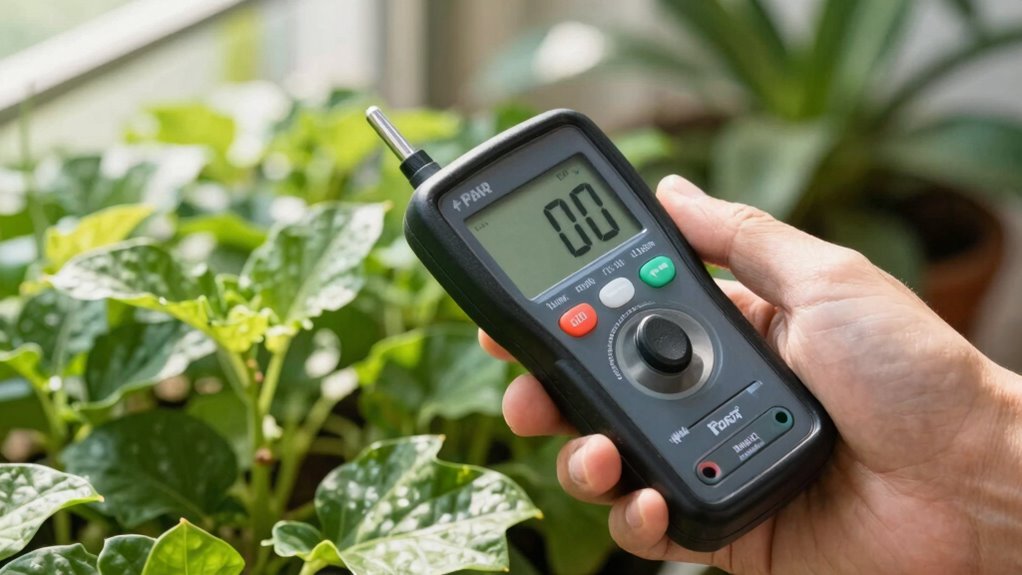
Maintaining your PAR meter’s accuracy over time requires consistent attention and proper care. Regular sensor calibration is essential to ensure measurements remain reliable. Keep your meter in a stable environment to prevent fluctuations caused by temperature or humidity shifts. To help with this, consider:
- Storing your meter in a protective case to minimize sensor exposure to dust and damage
- Calibrating periodically, especially after drops or rough handling
- Keeping it away from direct sunlight and extreme temperatures for environmental stability
Frequently Asked Questions
Can I Use a PAR Meter Outdoors or Only Indoors?
Yes, you can use a PAR meter outdoors for sunlight measurement and outdoor lighting. It’s effective for evaluating light levels in natural environments, helping you optimize plant growth or outdoor setups. Just make certain your PAR meter is designed for outdoor use, and you might need to shield it from direct sunlight or weather conditions to get accurate readings. Using it outdoors gives you precise data for natural and artificial lighting conditions.
How Often Should I Calibrate My PAR Meter?
You should calibrate your PAR meter at least once a month! Environmental influences like temperature changes, humidity, and dust can throw off your readings faster than you’d believe. Regular calibration ensures your measurements stay accurate and reliable, preventing costly mistakes. Don’t wait for your readings to become wildly inconsistent—make calibration a routine, so your light measurements remain precise and trustworthy, no matter the environment.
What Is the Ideal PAR Range for Different Plant Stages?
For ideal photosynthesis efficiency, aim for specific PAR ranges at each plant stage. During the vegetative stage, keep light intensity thresholds around 400-600 µmol/m²/sec to promote healthy growth. In flowering, increase PAR to 600-900 µmol/m²/sec to maximize yield. Adjust based on plant response, but always stay within these ranges to avoid light stress and guarantee your plants get the right amount of light for each growth phase.
Are There Different Types of PAR Meters for Specific Plants?
You might wonder if different PAR meters suit specific plants. While most measure overall light, some are tailored for LED grow lights or UV spectrum, offering precise readings for particular needs. Imagine comparing a standard tool to one designed for delicate UV light; each enhances your ability to optimize plant growth. These specialized meters help you fine-tune light levels, ensuring your plants get exactly what they need, whether it’s broad-spectrum or targeted UV exposure.
How Do Environmental Factors Affect PAR Readings?
Environmental factors like light pollution and temperature fluctuations can substantially affect your PAR readings. Light pollution from nearby artificial lights can cause higher readings, making your measurements less accurate for natural conditions. Temperature swings can influence the performance of your PAR meter, leading to inconsistent results. To get the most precise readings, measure in controlled conditions, avoid direct artificial light sources, and keep your meter at a stable temperature.
Conclusion
So, now that you’re officially a PAR meter pro, go ahead—measure like a scientist and impress your plants with your newfound knowledge. Just remember, if your readings are off, don’t blame the meter; maybe your grow space is secretly auditioning for a horror movie. Keep calibrating, stay vigilant, and soon you’ll be the lighting genius everyone envies. Because nothing screams “professional grower” like obsessively perfect light levels—and maybe a little bragging.