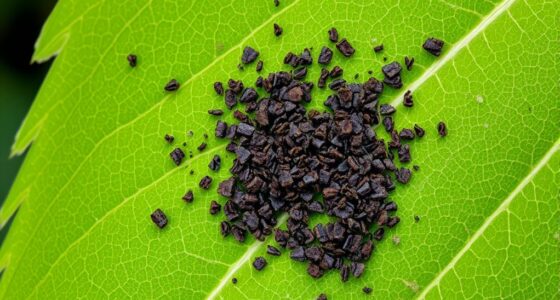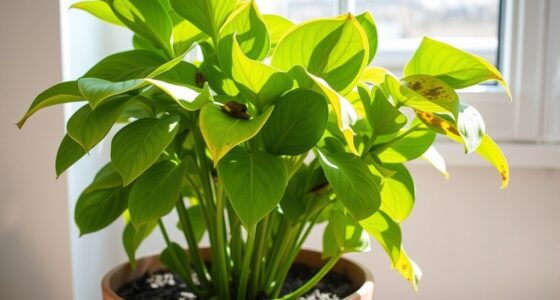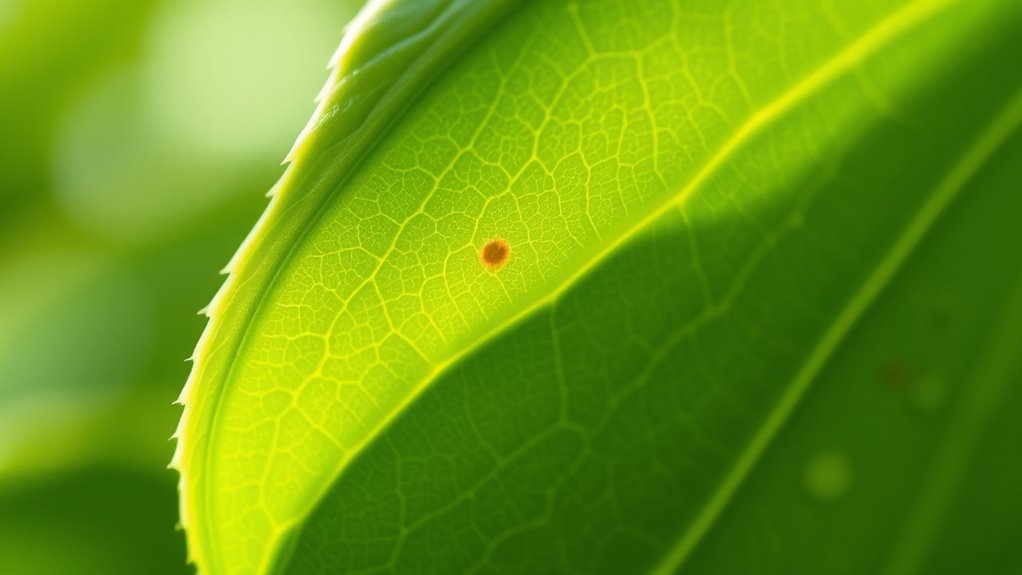

To photograph plants for diagnosis, focus on capturing detailed images of affected areas like leaves, stems, and roots, highlighting symptoms such as spots, discoloration, or wilting. Use natural light, preferably in early morning or late afternoon, and avoid harsh midday sun. Keep your camera steady, focus sharply on the affected parts, and take multiple angles for context. By combining good technique with knowledge of plant physiology, you’ll gather clear images that reveal essential signs of disease—more helpful tips follow.
Key Takeaways
- Focus on capturing clear, high-quality images of affected areas, including leaves, stems, and roots, to reveal symptoms.
- Use natural diffuse light and steady camera techniques to ensure sharp, well-lit photos without shadows.
- Take multiple shots from different angles and distances, including close-ups and overall plant views for context.
- Highlight abnormal features like spots, discoloration, wilting, or lesions by focusing precisely on affected parts.
- Incorporate knowledge of the plant’s normal appearance to identify and document subtle disease symptoms effectively.

Capturing clear, detailed photographs of plants is essential for accurate diagnosis of diseases and pests. When you photograph a plant, focus on capturing the disease symptoms in their true form. Look for spots, discoloration, wilting, or abnormal growth patterns, as these signs can reveal a lot about the underlying issues. Pay close attention to the affected areas, whether it’s leaves, stems, or roots, because these are where disease symptoms often manifest most clearly. High-quality images allow you or a plant health expert to analyze the signs thoroughly, making it easier to identify the problem accurately.
High-quality plant photos reveal disease symptoms clearly for accurate diagnosis.
To get the most useful photos, you need to understand the plant’s physiology. Different plants have unique structures and growth habits, so knowing what is normal for the species helps you spot abnormalities faster. For example, some plants naturally have variegated leaves or specific leaf arrangements, so be familiar with what healthy growth looks like before photographing. When disease symptoms appear, they may alter the plant’s normal physiology—such as curling, spotting, or lesions—so capturing these changes in detail is essential. Make sure to photograph from multiple angles, including close-ups that highlight specific symptoms and wider shots that show the overall plant condition. This extensive approach provides context and detail that can help pinpoint the cause of the issue.
Lighting plays a crucial role in plant photography. Use natural light whenever possible, ideally during the early morning or late afternoon when the light is softer and less harsh. Avoid direct midday sun, which can create shadows and wash out details. If you’re indoors or in low-light conditions, use a bright, diffuse light source to illuminate the plant evenly. A steady hand or tripod helps prevent blurry images, especially when capturing close-ups of tiny disease symptoms like spots or specks. Focus sharply on the affected areas, ensuring the disease features are crisp and clear. Proper focus highlights the texture, color variations, and structural changes that are key clues for diagnosis.
Additionally, understanding the different growth stages of plants can help in identifying early signs of disease before they become severe. Finally, take multiple shots of each area, adjusting angles, zoom levels, and focus points. This not only increases the chances of capturing the best possible image but also provides a variety of perspectives for analysis. When reviewing your photos, compare them to healthy plant images to spot subtle differences that might otherwise go unnoticed. By combining knowledge of plant physiology with careful attention to disease symptoms, your photographs will serve as invaluable tools in diagnosing plant health problems efficiently and accurately.
Frequently Asked Questions
What Equipment Is Best for Close-Up Plant Photography?
You should use a macro lens for close-up plant photography, as it captures fine details essential for diagnosis. Pair it with a sturdy tripod to guarantee stability and sharp images, especially in low light conditions. Keep your camera steady and focus precisely on the affected areas. Using these tools, you’ll get clear, detailed photos that help accurately identify plant issues. Remember, good equipment makes a significant difference in your results.
How Do I Capture Images in Low Light Conditions?
Think of your camera as a lighthouse shining through fog. To capture clear images in low light, use lighting techniques like a portable LED or reflectors to illuminate your plant. Adjust your camera settings with a wider aperture, higher ISO, and slower shutter speed to let in more light. This way, your photos will be sharp and detailed, even when the environment isn’t naturally bright.
Should I Photograph Plants From Multiple Angles?
Yes, you should photograph plants from multiple angles to guarantee thorough image coverage. Different plant angles reveal various symptoms and details, which helps in accurate diagnosis. Consistent image quality across angles also improves image comparison and analysis. By capturing close-ups and wider shots from various perspectives, you provide a complete view of the plant’s condition, making it easier to identify issues and track changes over time.
How Do I Handle Moving or Wind-Blown Plants?
In an era where instant communication is king, handling wind-blown plants for diagnosis requires quick thinking. Use stabilization techniques like gently supporting the plant with your hand or a stake, and employ wind mitigation strategies such as waiting for calmer moments or shielding the plant with a diffuser. These methods help you capture clear, detailed images, ensuring accurate diagnosis even when nature’s gusts threaten to blur your shot.
Can Smartphone Cameras Produce Quality Diagnostic Images?
Smartphone cameras can produce quality diagnostic images if you understand their limitations. Use a macro lens attachment to capture close-up details, which are essential for identification. Make sure you stabilize your phone to avoid blur, especially in low light. Good lighting and steady hands help improve clarity. While smartphones have limitations compared to professional equipment, with the right accessories and technique, you can achieve clear, useful images for plant diagnosis.
Conclusion
So, next time you think snapping a quick photo will do, remember that capturing plants for diagnosis isn’t just about pretty pictures. It’s about revealing hidden problems that might go unnoticed. Ironically, your casual shot might be the key to saving your plant’s life—if you know what to look for. So, put a little extra effort, zoom in, and take your time. After all, tiny details can make a huge difference in plant health.