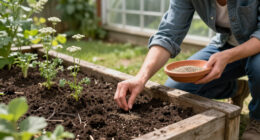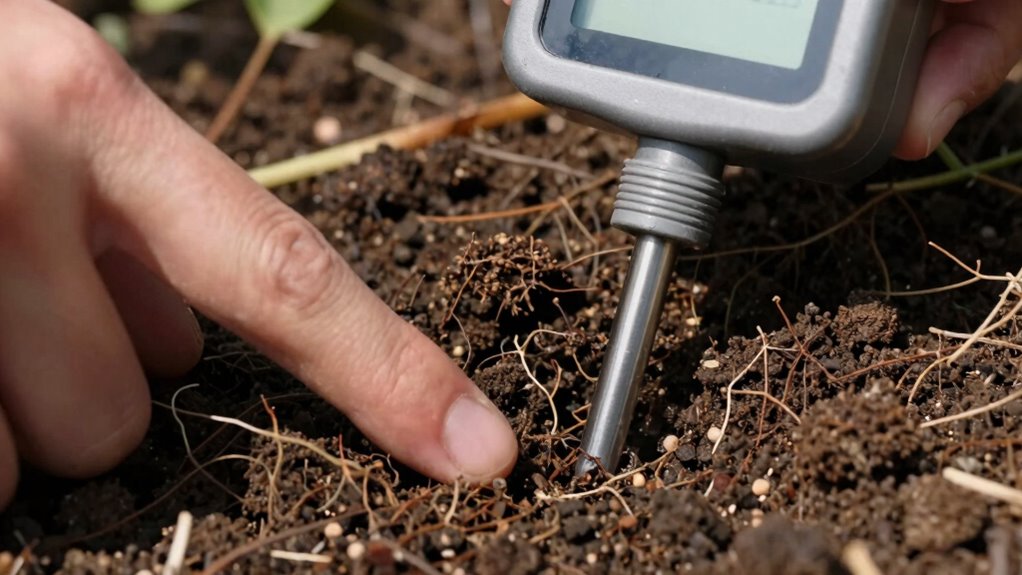

Soil moisture meters can give different results than your finger test because soil types like sand or clay affect moisture retention and transmission. Moisture meters rely on electrical signals, which can be influenced by soil texture, organic matter, and calibration. Your finger test is subjective and can be misleading, especially in soils with uneven moisture or quick drainage. To understand why these methods differ and how to improve accuracy, keep exploring the details.

Get garden gear delivered free with Prime
- Fast, free delivery on millions of items
- Prime Video, Amazon Music and more included
- Member-only deals all year
Key Takeaways
- Soil texture variations, like sandy or clay soils, affect moisture retention, causing discrepancies between methods.
- Improper calibration of moisture meters leads to inaccurate readings compared to the finger test.
- Soil heterogeneity and uneven moisture distribution can produce conflicting results from both tests.
- The subjective nature of the finger test makes it less reliable, especially in soils with inconsistent moisture levels.
- Moisture meters may provide misleading data if not calibrated for specific soil types or conditions.
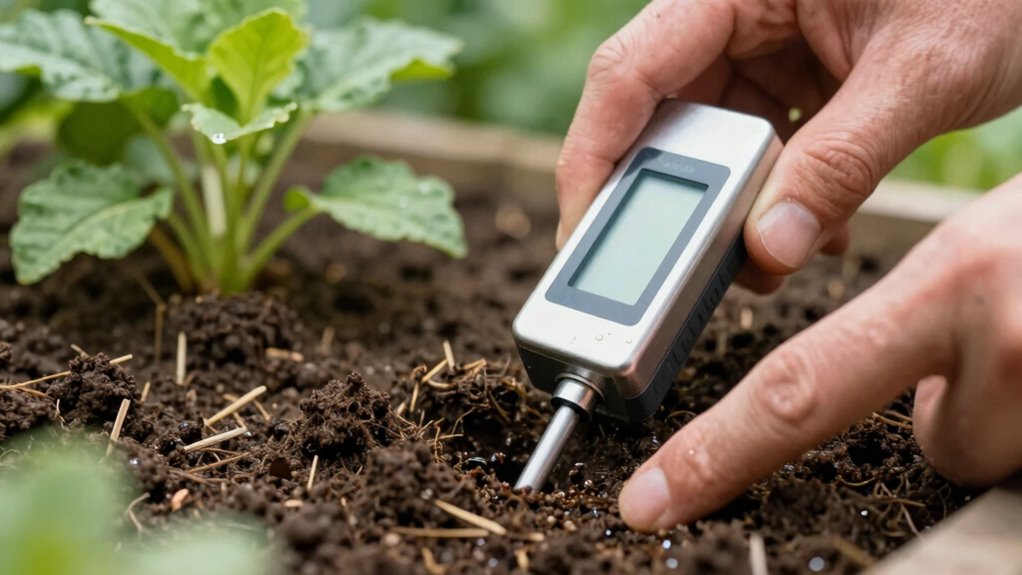
When it comes to watering your plants effectively, you might wonder whether to rely on a soil moisture meter or simply use the finger test. Both methods aim to tell you when your plants need water, but they often give conflicting results. This discrepancy often stems from differences in soil composition and how each method interacts with it. Your finger test is subjective; you insert your finger into the soil to gauge moisture based on touch. It’s quick and doesn’t require tools, but it can be unreliable because soil varies widely in texture and moisture retention. For instance, sandy soils drain quickly, so the finger might feel dry even if the plant needs water. Conversely, clay soils retain moisture longer, making the finger test indicate wetness even when the roots are beginning to dry out. This variability makes it challenging to get consistent results with the finger method alone.
Soil moisture meters, on the other hand, provide more data-driven readings. They work by measuring electrical conductivity or resistance, which correlates with moisture content. However, these devices can also give misleading readings if they aren’t properly calibrated to your specific soil composition. Calibration techniques are essential here; failing to calibrate your meter correctly might cause it to interpret moisture levels inaccurately. You need to understand your soil’s unique properties—its texture, organic matter, and mineral content—to adjust the meter’s settings accordingly. For example, a meter calibrated for sandy soil may not give accurate readings in clay or loamy soils. Regular calibration ensures the device accounts for soil variability, improving its accuracy over time. Additionally, soil testing can help you better understand these properties and optimize your calibration process, ensuring more reliable readings.
The disagreement between your finger test and soil moisture meter often boils down to these factors. Soil composition influences how moisture is held and transmitted. Sandy soils are fast-draining and dry out quickly, making the finger test seem less reliable. Clay soils retain water, but the moisture may be unevenly distributed, confusing both methods. Proper calibration of your moisture meter helps it adapt to these conditions, but it still doesn’t eliminate the need for understanding your soil’s specific characteristics. Additionally, soil texture plays a crucial role in moisture retention and transmission, further impacting the accuracy of both testing methods. Knowing the soil’s properties allows for better interpretation of your readings and more precise watering schedules. Understanding the soil’s structure and how it interacts with water can help you make more informed decisions and avoid over- or under-watering. Recognizing soil variability can also help you develop a more tailored watering approach, preventing common mistakes. Combining both methods—using a calibrated moisture meter alongside your finger test—can give you a more comprehensive picture of when your plants need watering. Ultimately, understanding your soil’s composition and regularly calibrating your tools will help you water more accurately, keeping your plants healthy and thriving.
soil moisture meter for sandy soil
As an affiliate, we earn on qualifying purchases.
As an affiliate, we earn on qualifying purchases.
Frequently Asked Questions
How Do Soil Types Affect Moisture Meter Accuracy?
Soil types considerably impact moisture meter accuracy because different soil compositions vary in moisture retention. Sandy soils drain quickly, often giving false dry readings, while clay soils hold moisture longer, leading to higher readings. Your moisture meter reacts to these differences, so it may not always match your finger test. To improve accuracy, calibrate your meter for specific soil types, and consider soil composition and moisture retention properties when interpreting readings.
Can Weather Conditions Influence Finger Test Results?
Absolutely, weather variability and humidity effects can totally mess with your finger test. When humidity’s high, your skin might feel wetter, making the soil seem drier than it really is. Conversely, dry weather can deceive you into thinking the soil’s too moist. So, next time your finger’s giving inconsistent results, blame the weather—your own little moisture meter’s unpredictable cousin. Nature loves to keep you guessing!
Are There Specific Plants That Require Different Moisture Levels?
Yes, some plants need specific hydration levels, which affects how you check moisture. For example, succulents prefer drier root zone moisture, while ferns thrive in more consistently moist soil. You should adjust your watering based on these plant-specific hydration needs, considering the root zone moisture. Using a soil moisture meter helps you monitor accurately, especially if the plant’s moisture requirements differ from the general guidelines, ensuring healthy growth.
How Often Should I Calibrate My Soil Moisture Meter?
You should calibrate your soil moisture meter at least once a season to guarantee sensor calibration and maintain moisture consistency. Regular calibration accounts for soil changes and sensor drift, giving you accurate readings. If you notice inconsistent results or significant weather changes, calibrate more frequently. Proper calibration helps prevent overwatering or underwatering, ensuring your plants stay healthy. Keep track of calibration dates to maintain reliable and precise moisture measurements.
Do Soil Moisture Meters Work in Rocky or Sandy Soil?
Think of soil moisture meters as your trusty compass—they work well in most terrains, but rocky soil and sandy soil can throw them off. I once tested a meter in sandy soil, and it read dry when I knew it was moist. Rocky soil’s uneven surface can hinder proper contact, causing inaccurate readings. So, while they help, you might need to calibrate more frequently or rely on additional methods.
As an affiliate, we earn on qualifying purchases.
Conclusion
So, don’t discount your dirt-detecting device or dismiss your diligent finger test. Each offers a distinct, dependable perspective—one precise, the other practical. By balancing both methods, you boost your gardening know-how and nurture your nature. Remember, mastering moisture measurement isn’t merely a matter of method; it’s about making mindful, meaningful decisions. So, stay savvy, stay soil-smart, and let your gardening grow with guidance and gusto!
As an affiliate, we earn on qualifying purchases.
best soil moisture tester for clay soil
As an affiliate, we earn on qualifying purchases.
As an affiliate, we earn on qualifying purchases.
Halloween Picks
halloween
As an affiliate, we earn on qualifying purchases.