Biochar can boost your garden by improving soil aeration, water retention, and microbial health, which benefits plant growth and resilience. It helps reduce soil compaction and provides habitats for helpful microbes that can fight pests and diseases. However, its effectiveness relies on proper sourcing, application, and mixing with soil or compost. Overuse or improper use might cause nutrient issues. To maximize its potential and avoid pitfalls, explore the detailed benefits and limits further.
Key Takeaways
- Biochar improves soil aeration, water retention, and nutrient availability, promoting healthier plant growth.
- It supports beneficial microbial activity, helping suppress soil-borne pests and diseases.
- Proper activation and application (10-20% of soil volume) enhance biochar’s benefits over time.
- Limitations include potential nutrient lock-up, pH shifts, and dependency on waste source and production process.
- Biochar works best as part of an integrated soil management approach, not as a standalone solution.
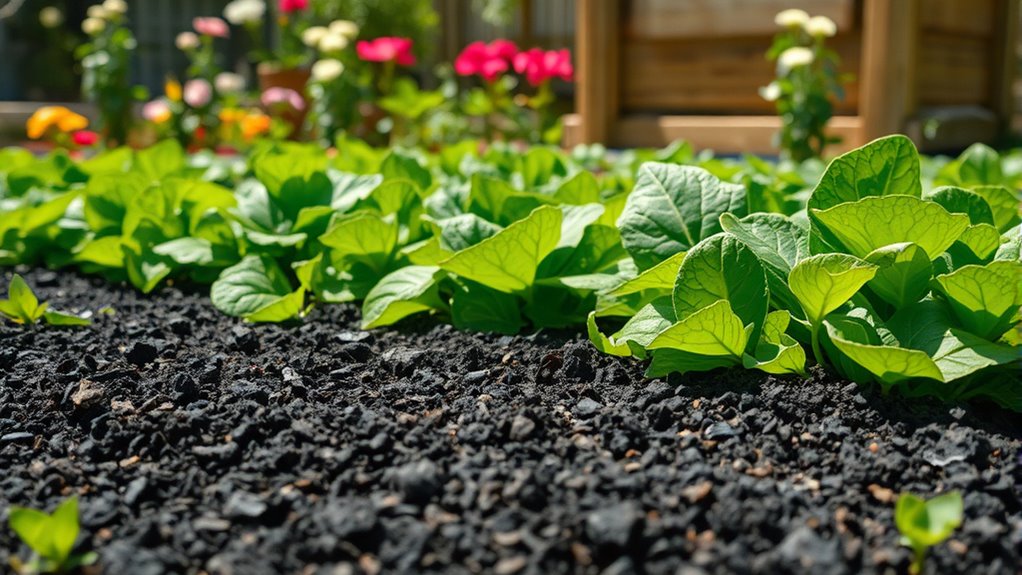
Biochar is gaining popularity among gardeners for its ability to improve soil health and boost plant growth. When you add biochar to your garden, you’re introducing a form of charcoal made from organic waste that’s been heated at high temperatures with limited oxygen. This process creates a highly porous material that can considerably enhance your soil’s structure and fertility. One of the main benefits is soil enhancement: biochar improves aeration and water retention, making your soil less prone to compaction and drought stress. It creates a habitat for beneficial microbes, which helps break down organic matter and releases nutrients slowly over time. This sustained nutrient availability can lead to healthier plants with stronger root systems and increased yields.
In addition to nourishing your plants, biochar offers pest suppression benefits. Its porous structure and high surface area can host beneficial microorganisms that outcompete or inhibit harmful pests and pathogens. When you incorporate biochar into your soil, it can help create a more balanced ecosystem, reducing the likelihood of pest outbreaks. For instance, some gardeners find that pests like soil-borne fungi or root diseases become less problematic because biochar encourages microbial diversity that naturally suppresses these issues. While biochar isn’t a direct pesticide, its role in fostering a healthy soil environment can contribute to fewer pest problems overall.
Using biochar is relatively straightforward, but it’s important to prepare it properly before adding it to your garden. You should activate biochar by soaking it in water or compost for a few days, which helps to load it with beneficial microbes and nutrients. This step improves its effectiveness in soil enhancement and pest suppression. When applying, mix it thoroughly with your existing soil or compost, aiming for about 10-20% of your soil volume. Keep in mind that biochar’s benefits are cumulative over time, so consistent use can lead to noticeable improvements in soil health and plant vigor.
However, it’s essential to understand that biochar isn’t a magic fix. Its effectiveness depends on the type of organic waste used to produce it, the production process, and how well it’s integrated into your soil management practices. Overusing biochar or applying it without proper preparation can lead to imbalances, such as nutrient lock-up or excessive pH shifts. While it offers notable advantages in soil enhancement and pest suppression, biochar works best as part of an all-encompassing gardening approach that includes proper fertilization, watering, and pest control strategies. When used thoughtfully, biochar can be a powerful tool to help your garden thrive sustainably.
Frequently Asked Questions
How Long Does Biochar Last in Garden Soil?
Biochar can last in your garden soil for decades, often up to 500 to 1,000 years, depending on conditions. It enhances soil mineralization and supports microbial activity over time, maintaining its benefits. As microbes break down organic matter, they gradually incorporate biochar, but it remains largely stable, providing long-term soil improvement. Regular soil management helps sustain these benefits, ensuring your garden stays healthy and productive for years.
Can Biochar Be Used With All Plant Types?
Yes, you can use biochar with most plant types, but it’s important to take into account plant compatibility. Some plants thrive better with biochar, while others may need adjustments in application methods. When incorporating biochar, mix it thoroughly into the soil or use it as a top dressing. Always start with small amounts to observe your plants’ response, and tailor your application methods for maximum growth and soil health.
Does Biochar Affect Soil Ph Over Time?
Biochar can influence soil pH over time due to its alkaline nature, potentially causing soil pH changes if used in large quantities. However, its stability varies; over years, it tends to maintain its properties, helping to buffer pH levels. Regular testing helps you monitor these changes, ensuring your soil remains ideal for plant growth. Proper application and considering your soil’s initial pH can prevent any adverse effects.
Is Biochar Safe for Organic Gardening?
Yes, biochar is safe for organic gardening, as it generally meets organic certification standards and offers chemical safety benefits. It’s a natural soil amendment that enhances soil health without introducing harmful chemicals. Just guarantee your biochar is produced without synthetic additives or contaminants. Using certified organic biochar supports your garden’s organic status and promotes sustainable practices, making it a safe, eco-friendly choice for your organic gardening efforts.
How Much Biochar Should I Add per Square Foot?
Imagine your garden as a lush forest, and biochar as magical soil booster. You should add about 1 to 2 cups of biochar per square foot, mixing it thoroughly into your soil. Apply it once or twice a year, depending on your garden’s needs. Regular biochar application frequency helps maintain soil health, ensuring your plants thrive like a thriving woodland, rooted in nutrient-rich, well-aerated earth.
Conclusion
Now that you understand biochar’s powers, imagine transforming your garden into a lush, almost magical paradise where plants grow faster than you can blink and soil holds nutrients like a treasure chest. While biochar can revolutionize your gardening game, remember it’s not a miracle cure—don’t expect it to solve every problem instantly. Use it wisely, and soon your garden will be bursting with life, turning your outdoor space into a vibrant, enchanted oasis beyond your wildest dreams.