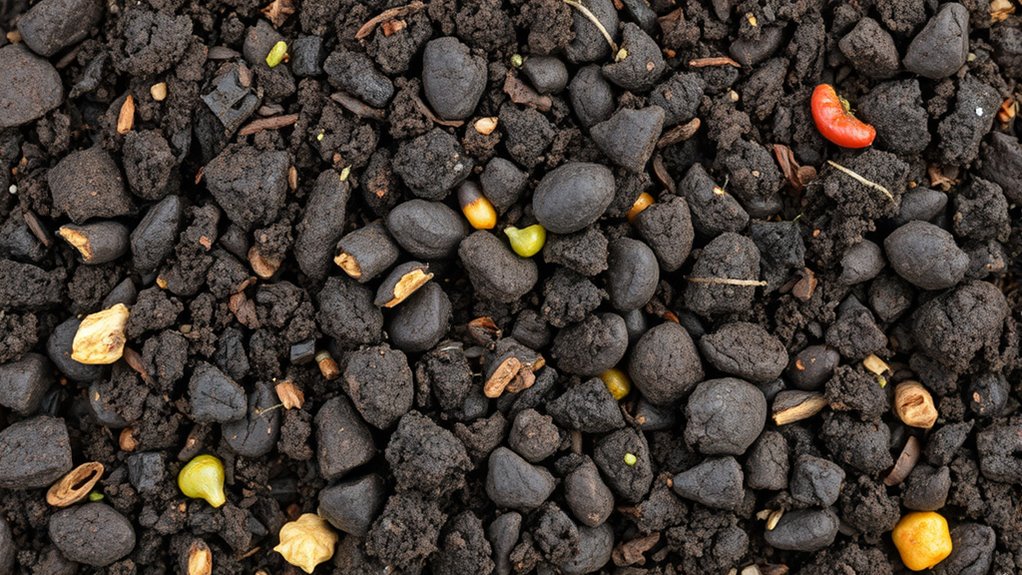

When your compost is truly finished, it should look dark, crumbly, and resemble rich soil. It will have a pleasant, earthy smell and feel lightweight and moist but not wet. You shouldn’t see any recognizable food scraps or foul odors. The temperature will be similar to ambient air, indicating microbial activity has stabilized. If these signs aren’t clear, you might not be quite there yet—keep exploring to verify your compost is perfectly mature for your garden.
Key Takeaways
- Compost is finished when it is dark, crumbly, earthy, and has a pleasant smell without recognizable food scraps.
- The temperature has returned to ambient levels, indicating microbial activity has stabilized.
- It feels lightweight, breaks apart easily, and has a soil-like texture, signifying maturity.
- It should pass the squeeze test: moist but not soggy, with no foul odors.
- Mature compost supports healthy plant growth and shows no signs of ongoing decomposition.
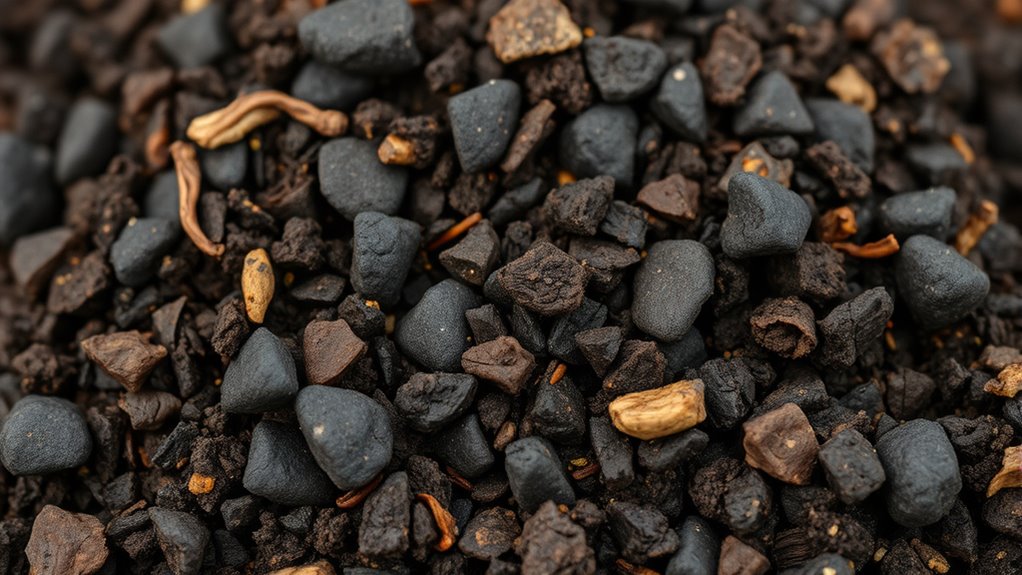
Understanding compost maturity is essential for ensuring your compost is safe and effective for use. When you know what finished compost looks like, you can confidently add it to your garden, knowing it will benefit your soil health and support ideal nutrient cycling. Mature compost has distinct visual and physical signs that set it apart from unfinished material. It typically appears dark, crumbly, and earthy, with a pleasant smell. If your compost still smells sour or like rotten food, it indicates it hasn’t fully matured yet. The texture should be crumbly and moist but not wet or muddy. When you pick up a handful, it should feel lightweight and break apart easily, revealing a texture similar to rich soil.
Mature compost is dark, crumbly, earthy, with a pleasant smell and breaks apart easily when touched.
One of the key indicators of compost maturity is the temperature. During the active composting process, temperatures rise due to microbial activity, but once the compost is finished, the temperature drops to ambient levels. If you still notice heat coming from your compost pile, it suggests ongoing microbial activity and that the compost hasn’t fully matured. Additionally, the presence of recognizable food scraps or plant material indicates incomplete decomposition. Mature compost, on the other hand, looks uniform without identifiable pieces of original materials, signaling that decomposition has advanced sufficiently to support healthy plant growth.
Another critical aspect of finished compost is its ability to support soil health. When compost is mature, it contains a balanced microbial community that promotes nutrient cycling. This means nutrients are readily available for plant roots, and the compost actively contributes to building soil structure and fertility. You might notice that plants respond well after you incorporate mature compost, showing improved growth and resilience. The process of nutrient cycling is enhanced because mature compost contains stabilized organic matter, which slowly releases nutrients, preventing leaching and ensuring sustained plant nourishment. Properly matured compost also exhibits a decreased microbial activity, indicating that it has reached the ideal stage for use in gardening.
To determine if your compost is truly finished, you can perform a simple test: squeeze a handful of compost. It should feel moist but not soggy, and when you open your hand, it shouldn’t clump together in a wet ball. Also, check for a rich, earthy aroma—this scent indicates that microbial activity has stabilized, and the compost is ready to use. Using immature compost can lead to issues like nutrient imbalances or plant diseases, so patience and careful observation pay off. When your compost meets these signs, you can be confident that it’s matured enough to enhance your garden’s soil health and support effective nutrient cycling, giving your plants a strong foundation for healthy growth.
Frequently Asked Questions
How Long Does Compost Typically Take to Reach Maturity?
It typically takes 3 to 6 months for compost to reach maturity. You should perform compost testing to check for maturity indicators like consistent temperature, dark color, and earthy smell. Keep turning the pile and monitoring moisture levels. When tests show stable pH, low nitrogen, and a crumbly texture, your compost is finished and ready to use. Patience and regular testing guarantee you get the best nutrient-rich compost.
Can Immature Compost Harm Plants or Soil?
Surprisingly, immature compost might seem harmless, but it can actually harm your plants and soil health. Think of it as giving your plants a jittery boost instead of a steady meal. If you use it too early, you risk introducing pathogens or excess nitrogen that can burn roots. To guarantee plant safety and promote healthy soil, always wait until your compost is fully matured—it’s the best way to protect your garden’s future.
What Are Common Signs of Over-Mature Compost?
You’ll notice over-mature compost has a sour or strong smell, indicating it’s broken down too much. The color may turn darker or even black, showing advanced decomposition. You might also see a loss of recognizable organic material, with a more uniform, soil-like texture. If these signs appear, your compost is over-mature, and it may not provide ideal nutrients for plants. Use it cautiously or mix it with fresher compost for better results.
How Do Temperature and Moisture Affect Compost Maturity?
You should monitor microbial activity, which is influenced by compost temperature and moisture. When compost reaches ideal temperature (around 135-160°F), microbial activity peaks, speeding up maturity. Too high temperatures can kill microbes, slowing progress, while too low temperatures indicate inactivity. Maintaining adequate moisture levels keeps microbes active, ensuring even composting. Regularly checking these factors helps you achieve a well-matured, finished compost efficiently.
Is There a Way to Speed up Compost Maturity?
They say “strike while the iron’s hot,” and the same goes for compost. To speed up compost maturity, you should focus on proper compost aeration and effective layering. Turn your compost regularly to introduce oxygen, which accelerates microbial activity. Layer browns and greens properly to maintain ideal moisture and temperature. These steps help speed up decomposition, turning your compost into finished, ready-to-use soil faster.
Conclusion
Once your compost looks dark, crumbly, and earthy—like the rich soil of a Victorian garden—you know it’s finished. You’ll notice the absence of strong odors and the presence of a balanced mix of textures. Remember, even if you feel like a modern alchemist, patience is key. Wait until it’s truly mature, and you’ll have a perfect, ready-to-use amendment for your plants, making your garden thrive just like a well-tended estate from days gone by.