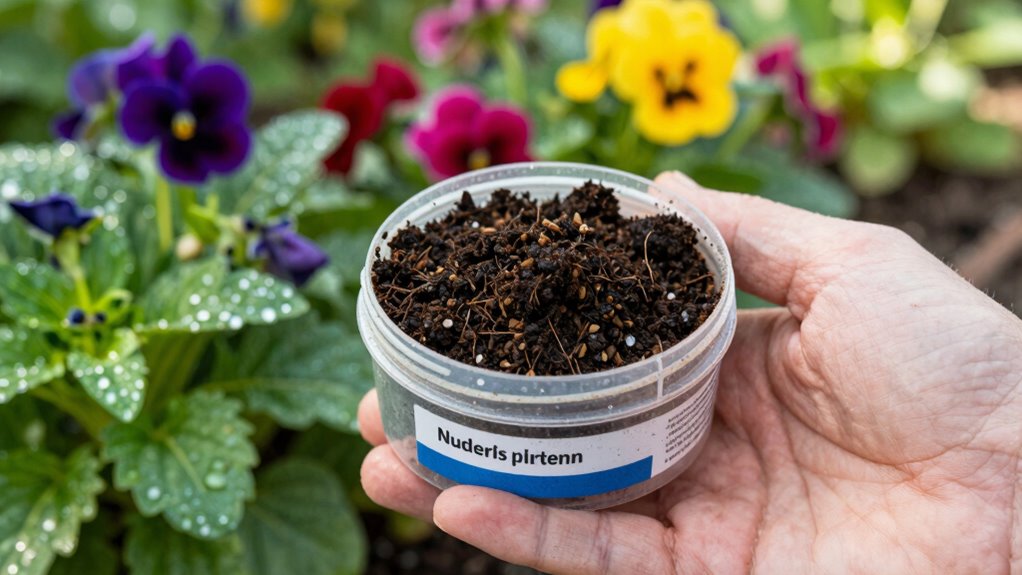

Soil tests matter more than fertilizer labels because they give you a clear picture of your garden’s actual nutrient and pH levels. Fertilizer labels mainly focus on macronutrients and can be misleading if your soil needs more micronutrients or has an imbalanced pH. By testing your soil, you can make informed decisions that improve plant health and save money. Keep exploring how soil analysis can help you grow stronger, healthier plants.
Key Takeaways
- Soil tests reveal pH and micronutrient levels that fertilizer labels often overlook, ensuring more effective nutrient management.
- They provide a comprehensive view of soil health, guiding targeted amendments rather than relying solely on fertilizer nutrient content.
- Understanding soil chemistry through testing prevents over-fertilization and reduces environmental impact.
- Soil analysis identifies deficiencies or toxicities, enabling precise interventions for optimal plant growth.
- Relying on fertilizer labels alone can be misleading; testing ensures tailored, long-term soil fertility solutions.
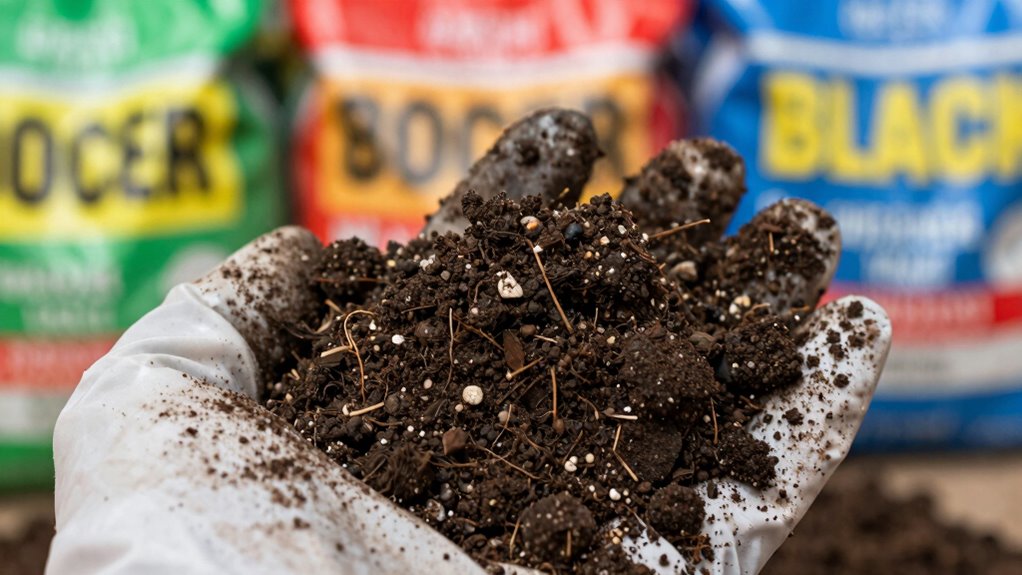
While fertilizer labels can seem like a quick fix for boosting your garden’s growth, they often don’t tell the whole story. Labels tend to focus on macronutrients—like nitrogen, phosphorus, and potassium—without addressing the more subtle but equally important factors that influence plant health. One of these is pH balance, which determines how well your soil can absorb nutrients. If your soil is too acidic or alkaline, even the most balanced fertilizer won’t deliver the results you want. A soil test reveals the actual pH level, showing you whether you need to adjust it to optimize nutrient availability. Without this knowledge, you might be wasting money on fertilizers that don’t work because your soil’s pH isn’t right for your plants. Additionally, soil tests can identify microbial activity levels that influence nutrient availability and soil health. Micronutrients, such as iron, manganese, zinc, and copper, are essential in small amounts but are crucial for plant functions like enzyme activation and chlorophyll production. If these nutrients are deficient, your plants can suffer from poor growth, yellowing leaves, or weak stems, regardless of how much fertilizer you apply. Soil tests can identify deficiencies or toxicities in micronutrients, allowing you to tailor your amendments precisely. This targeted approach ensures your plants receive what they need, avoiding over-fertilization that can harm the environment and your garden. By relying solely on fertilizer labels, you risk overlooking the unique conditions of your soil. Every garden has its own pH, micronutrient levels, and other characteristics that influence how plants absorb nutrients. A comprehensive soil analysis provides a detailed snapshot of these factors, guiding you to correct imbalances before planting. It also helps you understand the importance of soil microbiome diversity in supporting healthy plant growth. Recognizing the impact of soil chemistry on plant health can lead to more effective gardening practices. Moreover, understanding the soil nutrient cycle can help you maintain long-term soil fertility and plant vitality. It’s a proactive step that saves you money, reduces guesswork, and promotes healthier, more resilient plants. When you understand your soil’s specific needs, you can choose the right amendments and fertilizers, applying them at the right time and in the right amounts. In essence, soil tests matter more because they give you the complete picture. Fertilizer labels can be misleading if you don’t consider your soil’s pH and micronutrient levels. Taking the time to test your soil empowers you to make informed decisions, leading to more vigorous plants and a garden that thrives.

Rapitest Soil Test Kit for Gardens, Vegetables, Flowers and Lawns. USA designed and assembled soil tester completely, quickly and accurately measures/analyzes soil pH acidity and garden nutrients.
- Quick at-home soil pH testing: Measures soil pH, Nitrogen, Phosphorous, Potash
- Easy-to-use capsule system: Innovative and inexpensive testing method
- Includes 20 tests: 5 tests each for pH, N, P, K
As an affiliate, we earn on qualifying purchases.
As an affiliate, we earn on qualifying purchases.
Frequently Asked Questions
How Often Should I Have My Soil Tested?
You should have your soil tested every 2 to 3 years to maintain ideal health. Regular testing intervals help you monitor nutrient levels and pH, ensuring your soil stays balanced for healthy plant growth. If you notice changes in plant health or suspect issues, consider testing more frequently. Consistent soil testing guides proper fertilization and amendments, saving you money and preventing over- or under-fertilizing.
Can Soil Tests Predict Long-Term Crop Yields?
Soil tests can give you a good idea of long-term crop yields by revealing the soil’s nutrient balance and microbial activity. While they don’t predict exact yields, they help you understand nutrient deficiencies or excesses that impact crop health over time. By adjusting fertilization based on soil test results, you promote better microbial activity and balance nutrients, ultimately supporting sustained, productive yields year after year.
Are DIY Soil Test Kits Reliable Enough?
A stitch in time saves nine, and the same goes for DIY soil test kits. While they’re convenient, their accuracy isn’t foolproof, and test limitations can lead to misleading results. If you want reliable data, don’t rely solely on DIY kits; professional testing offers more precise insights. Use them as a helpful starting point, but remember, thorough soil analysis is key to healthy, productive crops.
Do Soil Tests Recommend Specific Fertilizers?
Soil tests do recommend specific fertilizers based on their nutrient analysis. When you get a soil test, it provides detailed fertilizer recommendations tailored to your soil’s unique needs. This helps you apply the right amount of nutrients, avoiding over- or under-fertilizing. By following these recommendations, you guarantee better plant growth and healthier soil. Always trust a professional soil test for accurate fertilizer advice, rather than relying solely on general labels.
How Do Soil pH Levels Affect Plant Growth?
Soil pH levels can make or break plant growth—think of it as the difference between a thriving jungle and a barren wasteland. When soil is too acidic or alkaline, it hampers plant nutrition, preventing roots from absorbing essential nutrients. Maintaining proper soil acidity guarantees your plants get the right balance of nutrients, promoting healthy growth. Regular soil testing helps you adjust pH levels, giving your plants the best chance to flourish.

SONKIR Soil pH Meter, MS02 3-in-1 Soil Moisture/Light/pH Tester Gardening Tool Kits for Plant Care, Great for Garden, Lawn, Farm, Indoor & Outdoor Use (Green)
- Multi-function Soil Tester: Tests moisture, pH, and sunlight levels
- No Batteries Required: Operates without batteries for convenience
- Note for Use: Cannot test liquids; water dry soil before testing
As an affiliate, we earn on qualifying purchases.
As an affiliate, we earn on qualifying purchases.
Conclusion
So, skip the guesswork and trust your soil tests—they’re your secret weapon against disastrous plant failures! Ignoring them is like trying to win a race blindfolded; you’re doomed to stumble. Fertilizer labels? They’re just wild guesses in disguise. When you know exactly what your soil needs, you’ll turn your garden into a lush paradise so stunning, even the flowers will gasp in awe. Don’t settle for less—test and conquer!
Rapitest Soil Test Kit for Gardens, Vegetables, Flowers and Lawns. USA designed and assembled soil tester completely, quickly and accurately measures/analyzes soil pH acidity and garden nutrients.
- Quick at-home soil pH testing: Measures soil pH, Nitrogen, Phosphorous, Potash
- Easy-to-use capsule system: Innovative and inexpensive testing method
- Includes 20 tests: 5 tests each for pH, N, P, K
As an affiliate, we earn on qualifying purchases.
As an affiliate, we earn on qualifying purchases.
Rapitest Soil Test Kit for Gardens, Vegetables, Flowers and Lawns. USA designed and assembled soil tester completely, quickly and accurately measures/analyzes soil pH acidity and garden nutrients.
- Quick at-home soil pH testing: Measures soil pH, Nitrogen, Phosphorous, Potash
- Easy-to-use capsule system: Innovative and inexpensive testing method
- Includes 20 tests: 5 tests each for pH, N, P, K
As an affiliate, we earn on qualifying purchases.
As an affiliate, we earn on qualifying purchases.