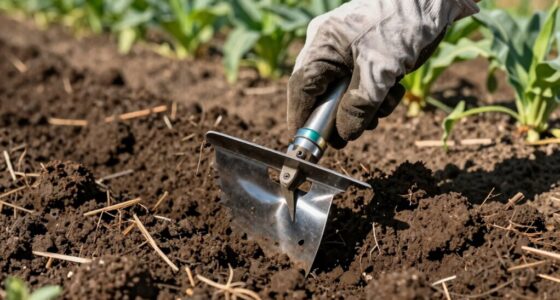
To kill weed seeds and pathogens effectively, aim to keep your compost between 130°F and 160°F. Maintaining this temperature range for at least three days ensures most weed seeds are destroyed and harmful organisms are eliminated. Monitoring temperature regularly and turning the pile helps sustain these high heat levels. Properly managing heat, moisture, and aeration is essential for safe, effective composting—continue to explore how to get these conditions just right.
Key Takeaways
- Maintain compost temperatures between 130°F and 160°F (55°C to 70°C) for effective weed seed and pathogen destruction.
- Sustaining at least 131°F (55°C) for 3 days ensures the majority of weed seeds are killed.
- Hot composting should last 72 hours or longer to reliably eliminate weed seeds and harmful microbes.
- Regular turning and monitoring help keep temperatures within the ideal range for thorough sterilization.
- Proper moisture and aeration support microbial activity, maintaining consistent heat for safe composting.
Why Hot Composting Is Key to Killing Weed Seeds and Pathogens

Hot composting is essential for effectively destroying weed seeds and harmful pathogens. Achieving high temperatures depends on proper compost bin design, which ensures good airflow and insulation. A well-constructed bin promotes rapid decomposition and maintains heat, critical for killing resilient weed seeds. Incorporate appropriate soil amendments, like nitrogen-rich materials, to boost microbial activity and heat generation. Turning the compost regularly helps distribute heat evenly, preventing cold spots where seeds and pathogens could survive. The right bin design also allows you to monitor temperature and adjust your process accordingly. Using a compost thermometer can help you track heat levels accurately. Additionally, selecting the appropriate compost bin materials can influence heat retention and airflow, further enhancing pathogen destruction. By focusing on these elements, you increase the chances of reaching temperatures that neutralize weed seeds and harmful microorganisms, making your compost safer for your garden and more effective as a soil amendment. Ensuring optimal temperature control is vital for maximizing compost safety and effectiveness.
What Is the Ideal Temperature Range for Hot Composting?

The ideal temperature for hot composting is between 130°F and 160°F, which effectively kills weeds and pathogens. To stay within this range, you need to monitor temperatures regularly and adjust your compost pile accordingly. Using strategies like turning the pile and managing moisture helps maintain consistent heat levels. Incorporating energy-efficient equipment can further optimize composting processes while reducing energy consumption. Additionally, understanding the temperature range is essential to ensure that the compost remains hot enough to achieve these goals. Knowing the Youngster Choice can also provide insights into sustainable and eco-friendly composting practices. Moreover, employing advanced temperature regulation techniques can help maintain optimal heat levels with minimal effort, supported by proper compost management tools to simplify the process.
Optimal Temperature Range
Maintaining the right temperature is essential for effective hot composting, as it accelerates decomposition and kills pathogens. The ideal temperature range is between 130°F and 160°F (55°C to 70°C). Within this range, compost acidity remains balanced, promoting microbial activity. Consistently staying in this zone ensures weed seeds and harmful bacteria are effectively destroyed. Proper compost layering helps regulate temperature by providing insulation and preventing overheating. Avoid adding too much nitrogen-rich material at once, which can cause temperature spikes outside the ideal range. Monitoring temperature regularly helps you keep the compost within this ideal window. Using a compost thermometer is a reliable way to track this critical parameter and make adjustments as needed. When kept within this range, you’ll see faster breakdown of organic matter and a safer, nutrient-rich final product. Additionally, understanding hot composting principles can help optimize the process for better results. Recognizing the influence of microbial activity on temperature fluctuations can further enhance compost management and efficiency.
Temperature Maintenance Strategies
To keep compost temperatures steady within the ideal range of 130°F to 160°F (55°C to 70°C), you should actively monitor and adjust your pile as needed. Check the compost color regularly; dark, rich compost indicates active decomposition, while a dull color suggests cooling. Keep the compost size manageable—ideally about 3 feet in each dimension—to promote even heat distribution. Turning the pile helps maintain consistent temperatures by aerating and redistributing heat. If the temperature drops below 130°F, add fresh, nitrogen-rich materials to boost activity. Conversely, if it exceeds 160°F, turn the pile more frequently to prevent overheating. Consistent monitoring and strategic adjustments ensure your compost remains within the suitable temperature range for killing weeds and pathogens. Additionally, understanding hot compost temperatures is essential for effective composting that destroys weed seeds and harmful microorganisms. Maintaining proper temperature management strategies can help optimize compost health and safety, especially when incorporating AI-based monitoring tools for precise control. Properly managing these factors reduces the risk of compost contamination and ensures a safer, more effective composting process.
How to Reach Hot Compost Temperatures Safely and Effectively
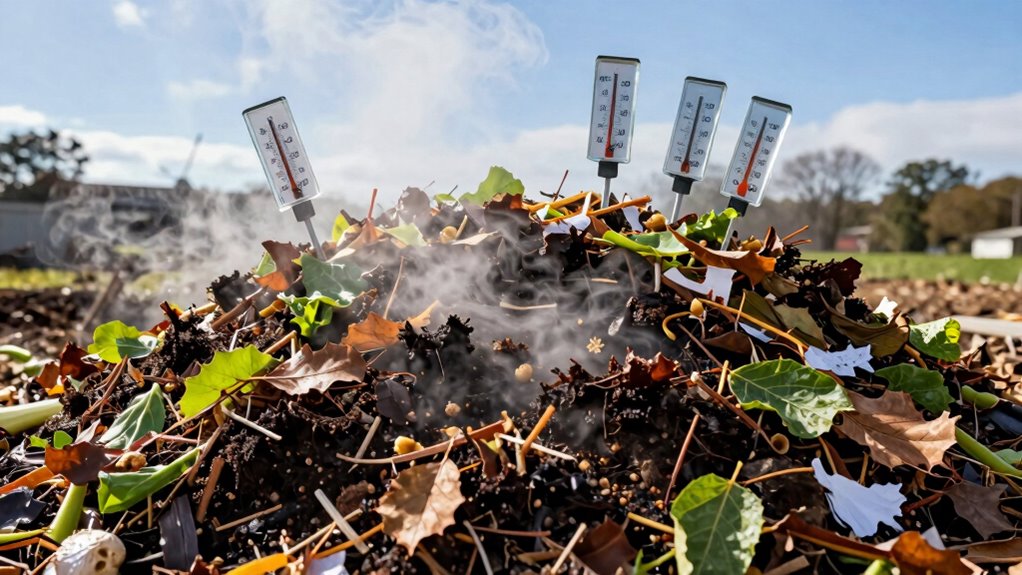
To reach hot compost temperatures safely and effectively, you need to regularly monitor the temperature to track progress. Make sure to maintain proper aeration by turning the pile often, and keep moisture levels balanced to support microbial activity. These steps help create ideal conditions for consistent, safe heating. Additionally, avoiding contamination from non-compostable items and understanding proper piercing care and hygiene can help prevent unwanted infections in compost materials. Incorporating modern kitchen technology such as digital thermometers and automated moisture controls can further optimize the process for better results. Being aware of composting safety practices ensures you handle materials correctly and avoid hazards during the process. Proper Gold IRA market knowledge can also guide you in choosing the best composting materials and techniques for optimal health and safety. Maintaining awareness of environmental sustainability principles is also essential for eco-friendly composting practices.
Monitor Temperature Regularly
Monitoring the temperature of your compost regularly is essential to achieving and maintaining hot compost conditions safely and effectively. Use a reliable thermometer to verify accuracy, as inaccurate readings can mislead your management efforts. Insert the thermometer into various spots within your compost, especially near different layers, to get a thorough view. Proper compost layering helps maintain consistent heat, so monitor these layers to prevent cold spots. Track temperature changes daily, noting if it stays within the ideal range of 135°F to 160°F. Use the table below to identify best temperature zones and actions needed:
| Temperature Range | Action Needed |
|---|---|
| Below 130°F | Turn compost, add nitrogen-rich material |
| 130-135°F | Maintain current conditions |
| 135-160°F | Hot composting zone, do not disturb |
| Above 160°F | Cool down with aeration |
| Over 170°F | Prevent overheating, reduce moisture |
A good understanding of compost temperature and how it impacts microbial activity can enhance your composting success.
Maintain Proper Aeration
it prevents foul odors, reduces moisture buildup, and keeps microbes active. Incorporate these practices:
- Turn the compost pile every few days to boost oxygen flow
- Use a pitchfork or compost turner to evenly aerate the material
- Avoid compacting the pile, ensuring it remains loose and airy
- Using a temperature monitor can help track the heat levels and ensure optimal composting conditions.
- Monitoring compost temperature regularly allows you to adjust your aeration practices for the best results.
- Ensuring sufficient oxygen supply supports microbial activity and efficient heat generation.
- Additionally, maintaining proper aeration helps achieve the high temperatures needed to kill weed seeds and pathogens effectively.
Manage Moisture Levels
Ensuring the right moisture level is crucial for achieving and maintaining hot compost temperatures safely and effectively. Proper moisture control guarantees your compost remains consistently hydrated without becoming waterlogged, which can hinder aeration and slow microbial activity. Aim for compost hydration that feels like a damp sponge—moist but not soaked. If it’s too dry, microbes can’t thrive, and temperature drops; if too wet, oxygen levels decrease, risking anaerobic conditions. To manage moisture levels, regularly check your compost’s dampness and add water or dry materials as needed. Covering your pile helps retain moisture and prevents excessive drying from wind or sun. Maintaining optimal moisture ensures active decomposition, reaching those high temperatures needed to kill weed seeds and pathogens.
Best Tools and Techniques to Monitor Compost Temperature
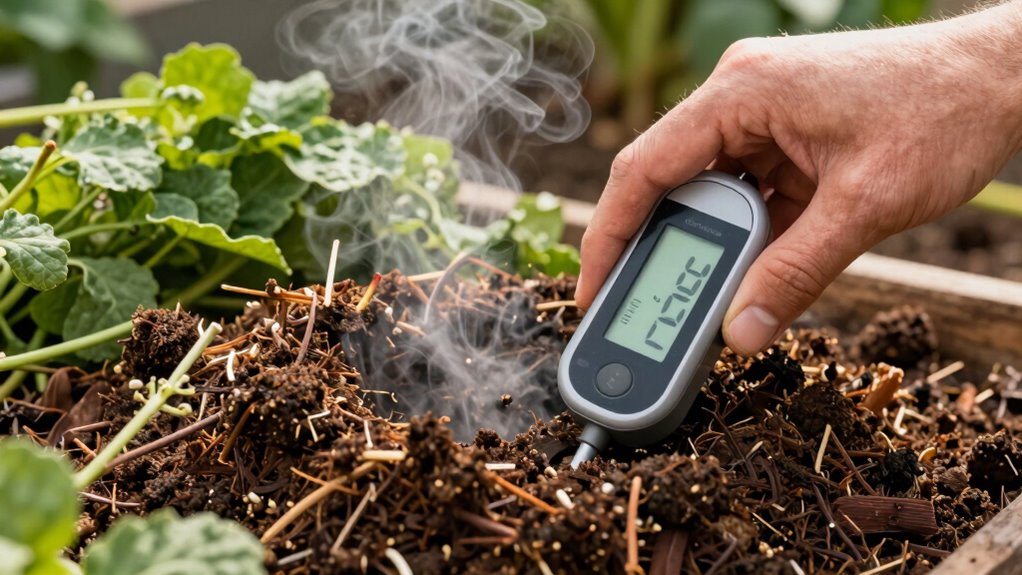
To keep your compost pile reaching and maintaining the ideal temperatures, choosing the right tools and techniques is essential. Start by selecting a reliable thermometer—probe thermometers are best for accurate readings at different depths. Proper compost bin placement also matters; place the bin in a sunny, sheltered spot to help retain heat. To monitor temperatures effectively, consider these techniques:
- Insert the thermometer into the center of the pile for a representative reading
- Check temperatures regularly, especially during active composting phases
- Use a compost thermometer with a long probe for deep, accurate measurements
These methods help you track heat levels precisely, ensuring your compost hits the temperature range needed to kill weeds and pathogens. Proper monitoring keeps your compost active and effective.
Common Mistakes That Keep Your Compost From Heating up

Even if you have the right tools to monitor your compost temperature, mistakes in managing the pile can prevent it from heating up properly. One common error is adding too much of the same ingredient, which reduces ingredient diversity and slows microbial activity. Poor aeration can cause compost odor and inhibit heat buildup. Also, neglecting moisture levels—too dry or too wet—deters microbes from thriving, keeping your compost cool. Remember, a balanced mix of greens and browns is essential. Here’s a quick overview:
| Mistake | Effect | Solution |
|---|---|---|
| Low ingredient diversity | Slows microbial activity, reduces heat buildup | Mix varied compost materials |
| Poor aeration | Causes odor, stunts temperature rise | Turn pile regularly |
| Incorrect moisture | Damps microbial activity, cools compost | Keep moisture balanced |
How Long Should Compost Stay Hot to Kill Weed Seeds?

For compost to effectively kill weed seeds, it needs to stay hot enough for a sufficient amount of time. Typically, maintaining temperatures above 131°F (55°C) for at least 3 days is recommended. During this period, you should regularly turn your compost to ensure even heat distribution and break seed dormancy.
Key points to keep in mind:
- Frequent compost turning helps maintain consistent temperatures and exposes seeds to lethal heat.
- Staying hot for at least 72 hours ensures most weed seeds are destroyed.
- Longer durations, around 2-3 weeks, provide extra assurance, especially if seed dormancy is high.
Benefits of Proper Hot Composting for a Weed-Free Garden
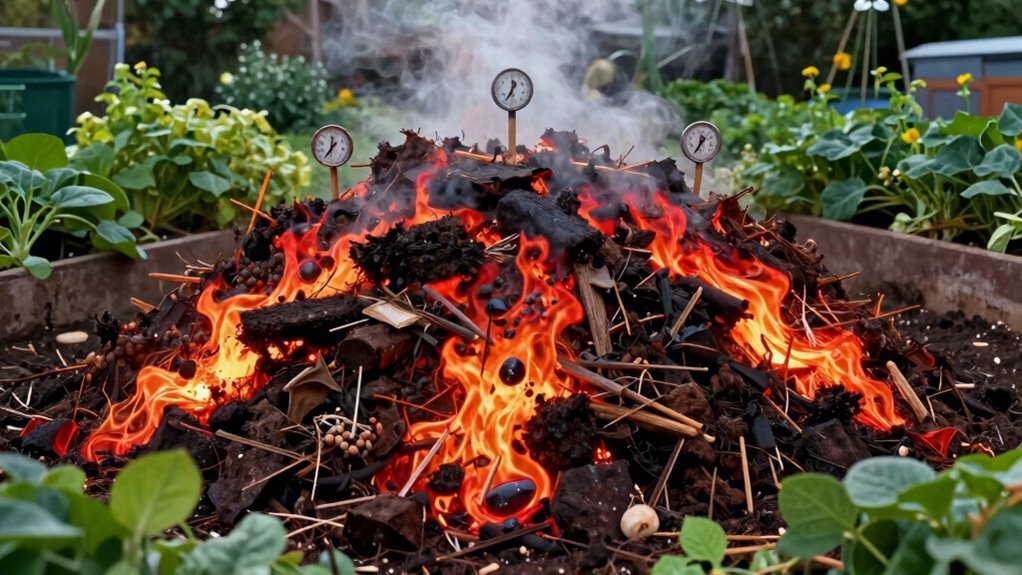
Proper hot composting offers a reliable way to keep your garden weed-free by destroying persistent weed seeds and unwanted pathogens. When you maintain the right temperatures, you effectively neutralize compost pests that could otherwise infest your plants. This process ensures your soil amendments are safe and nutrient-rich, promoting healthy plant growth. Hot composting also reduces the risk of introducing weed seeds back into your garden, saving you time and effort in weed control. By carefully managing heat levels, you create a sterilized compost that acts as a natural weed barrier. This method enhances soil health without chemicals, making your garden more sustainable. Ultimately, proper hot composting boosts your garden’s resilience and productivity by delivering cleaner, healthier soil amendments free of weeds and pests.
Frequently Asked Questions
Can Compost Temperatures Harm Beneficial Soil Microbes?
Yes, compost temperatures can harm beneficial soil microbes if they exceed the ideal range. High temperatures, especially during compost sterilization, can reduce microbial diversity by killing off many helpful microbes. However, maintaining proper temperature control ensures you kill weed seeds and pathogens without damaging essential microbes. So, aim for a balanced composting process to preserve beneficial soil life while still achieving sterilization goals.
How Does Compost Size Affect Heat Retention?
Smaller compost piles cool down quickly, losing heat due to less insulation, while larger ones retain heat longer because of their mass. Proper compost aeration and moisture control are essential; they help maintain consistent temperatures, no matter the size. When you manage these factors well, you can optimize heat retention, ensuring weed seeds and pathogens are effectively killed, and beneficial microbes thrive, creating a healthy, balanced compost environment.
What Are Signs That Compost Is Too Hot or Too Cold?
If your compost is too hot, it may emit a strong, earthy smell and cause heat fluctuation, signaling it’s overheating. You’ll notice compost cooling if temperatures drop markedly, slowing microbial activity and causing a sluggish decomposition process. To maintain ideal conditions, turn your compost regularly, monitor temperature with a thermometer, and guarantee proper aeration. Staying attentive helps prevent extreme heat or cold, keeping your compost healthy and effective.
Is There an Expiration Date for Compost to Be Effective?
Compost doesn’t have an exact expiration date, but its effectiveness can decline over time due to reduced microbial activity. To maximize compost longevity, use it within a year or two, especially if stored properly in a cool, dry place. As microbial activity slows, nutrients diminish. Regular turning and proper moisture help maintain its quality. Trust your senses—fresh, rich compost indicates active microbes and good quality.
Can Adding Amendments Influence Compost Temperature?
Adding amendments can dramatically influence compost temperature, almost like flipping a switch on compost chemistry. You might see a sudden spike or drop that impacts the entire process. Amendments rich in nitrogen or carbon can intensify microbial activity, pushing temperatures higher or stabilizing them. So, yes, amendments profoundly affect compost temperature, and understanding their effects helps you control the heat needed to kill weed seeds and pathogens efficiently.
Conclusion
So, here’s the irony—despite all your effort to keep that compost hot enough to kill weeds and pathogens, sometimes it’s just the patience that’s the hardest part. You meticulously monitor temperatures, only to find the real magic happens when you let nature do its thing. Keep your compost heated for the right amount of time, and you’ll be surprised how easily a weed-free garden becomes your reality—bonus points for saving time and effort!