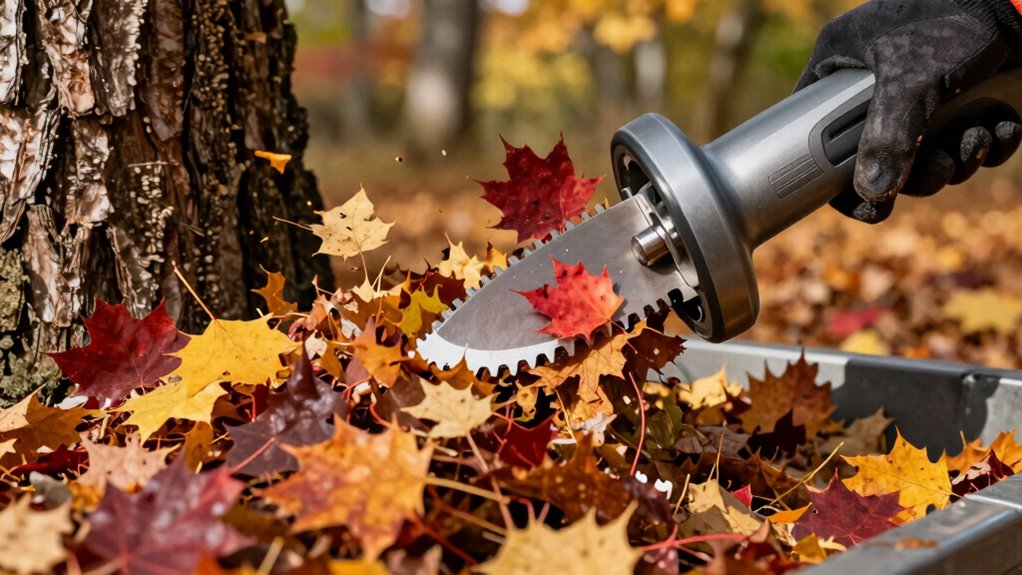

Shredding leaves is a simple way to speed up your composting process. When you break leaves into smaller pieces, they decompose faster and create a finer, nutrient-rich soil more quickly. It also helps maintain the right moisture level and reduces pests hiding in damp, unprocessed leaves. Regular shredding and turning improve airflow and microbial activity. Keep going, and you’ll discover even more tips to turn your garden waste into vibrant, healthy soil efficiently.

Get garden gear delivered free with Prime
- Fast, free delivery on millions of items
- Prime Video, Amazon Music and more included
- Member-only deals all year
Key Takeaways
- Shredding leaves accelerates decomposition by increasing microbial activity and creating a finer, nutrient-rich compost layer.
- It reduces garden waste volume and prevents pests, leading to cleaner, faster composting.
- Proper shredding promotes better airflow and moisture balance, speeding up compost maturation.
- Shredded leaves help suppress weeds and minimize pest hiding spots, enhancing overall compost quality.
- Regular shredding and turning create darker, earthier compost in less time, improving garden soil quickly.
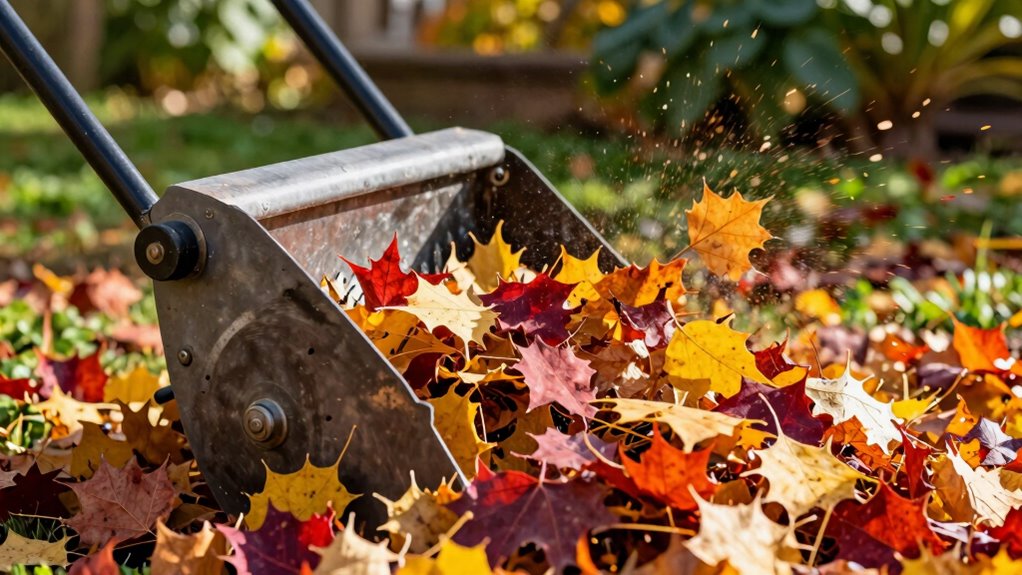
As autumn leaves fall, shredding them can markedly speed up your composting process. When you break down large, bulky leaves into smaller pieces, they decompose faster, allowing you to see results sooner. Shredded leaves create a finer layer within your compost bin, which encourages microbial activity and accelerates the breakdown of organic material. Plus, shredded leaves help maintain the right moisture balance, ensuring your compost doesn’t become too soggy or dry. This simple step makes your compost more efficient and produces richer, nutrient-dense soil in less time. Incorporating shredded leaves also helps encourage beneficial microbes**, creating a healthier compost environment. While shredding leaves, you should also pay attention to garden pest control. Large, unprocessed leaves can sometimes harbor pests or disease spores, which might transfer into your compost and eventually your garden. By shredding and properly managing your leaf waste, you reduce the likelihood of pests finding a cozy hiding spot. Proper compost bin maintenance becomes even more vital during this process. Regularly turning your compost, removing any unwanted pests, and ensuring the bin has good airflow all promote healthy decomposition. Maintaining your compost bin isn’t just about adding scraps; it’s about creating an environment that supports beneficial microbes and discourages pests. Shredding leaves also benefits your overall garden health. It reduces the volume of garden waste, making it easier to manage and less likely to become a breeding ground for pests or mold. When your compost is rich and well-maintained, it provides essential nutrients for your plants, boosting growth and resilience. This means less reliance on chemical fertilizers, which can harm beneficial insects and soil health over time. Additionally, shredded leaves are less likely to blow away or clutter your garden beds, helping you keep everything tidy and pest-free. Incorporating shredded leaves into your compost bin is a straightforward way to improve compost quality and speed. It’s a cost-effective, eco-friendly practice that offers immediate visual feedback—your compost will look darker, smell earthier, and break down faster. Keep in mind, regular maintenance of your compost bin, including turning and monitoring pests, is key to making the most of shredded leaves. In addition, shredded leaves help reduce garden waste, making your gardening process more sustainable. Using shredded leaves can also help prevent weed growth by creating a denser, less hospitable environment for weeds to sprout. As you refine your process, you’ll notice faster composting times, healthier plants, and a more manageable garden overall. Shredding leaves isn’t just about speed; it’s about creating a sustainable and efficient system that benefits your entire garden ecosystem. A well-managed compost system can also help support soil biodiversity, further enriching your garden’s health and resilience. Proper shredding techniques can also help minimize pest harboring**, promoting a cleaner compost environment.
leaf shredding garden compost bin
As an affiliate, we earn on qualifying purchases.
As an affiliate, we earn on qualifying purchases.
Frequently Asked Questions
How Often Should I Shred Leaves for Optimal Composting?
You should shred leaves every few weeks during the fall season to promote ideal composting. Regular shredding accelerates leaf decomposition by increasing surface area, which helps break down materials faster. When compost layering, shredded leaves blend more easily with other organic matter, enhancing airflow and nutrient exchange. Shredding frequently guarantees your compost breaks down efficiently, resulting in rich, healthy soil faster. Keep up this routine for the best composting results.
What Tools Are Best for Shredding Leaves?
You grab a lawn mower with a bag, a leaf shredder, or pruning shears—tools that turn whole leaves into fine mulch, speeding up compost layering. Use a mulching mower to shred leaves directly onto your garden beds or gather them for composting, creating a rich, fluffy mix. These tools help you effortlessly transform leaf waste into nutrient-rich compost, making your garden flourish faster and healthier.
Can Shredded Leaves Be Used Directly in Garden Beds?
Yes, you can use shredded leaves directly in your garden beds. They work well as leaf mulch, providing insulation and moisture retention. Shredded leaves also help prevent pests by covering the soil and hiding food sources. Spread a few inches of shredded leaves around your plants, and you’ll boost soil health while keeping pests at bay. Just make sure to keep the mulch loose for proper airflow and decomposition.
Do Shredded Leaves Attract Pests?
Shredded leaves typically don’t attract pests if you practice pest prevention. They break down quickly and don’t produce strong leaf odors that draw insects. To keep pests away, turn the shredded leaves regularly and avoid leaving large piles. If you notice pests, add a layer of compost or mulch on top, which helps mask leaf odors. Properly managed, shredded leaves won’t invite pests and will decompose efficiently in your garden.
How Long Does Shredded Leaf Compost Take to Be Ready?
Shredded leaf compost typically takes about 3 to 6 months to be ready, depending on conditions. You want to monitor leaf decomposition and balance compost nitrogen to speed the process. Stirring regularly and maintaining moisture helps accelerate decomposition, ensuring nutrients break down efficiently. As you watch your shredded leaves transform, you’ll see how proper management turns leaf decomposition into rich, ready-to-use compost for your garden.
As an affiliate, we earn on qualifying purchases.
Conclusion
Think of your compost pile as a garden’s secret treasure chest, waiting to be opened. Leaf shredding acts as the master key, breaking down barriers and speeding up the journey. Without it, your compost is like a slow-moving river—beautiful but leisurely. With shredded leaves, you’re guiding a rushing stream, vibrant and alive. Embrace this simple step, and watch your compost transform into rich soil faster, revealing the true magic of your garden’s potential.
As an affiliate, we earn on qualifying purchases.
As an affiliate, we earn on qualifying purchases.
Fall yard work Picks
leaf blowers
As an affiliate, we earn on qualifying purchases.