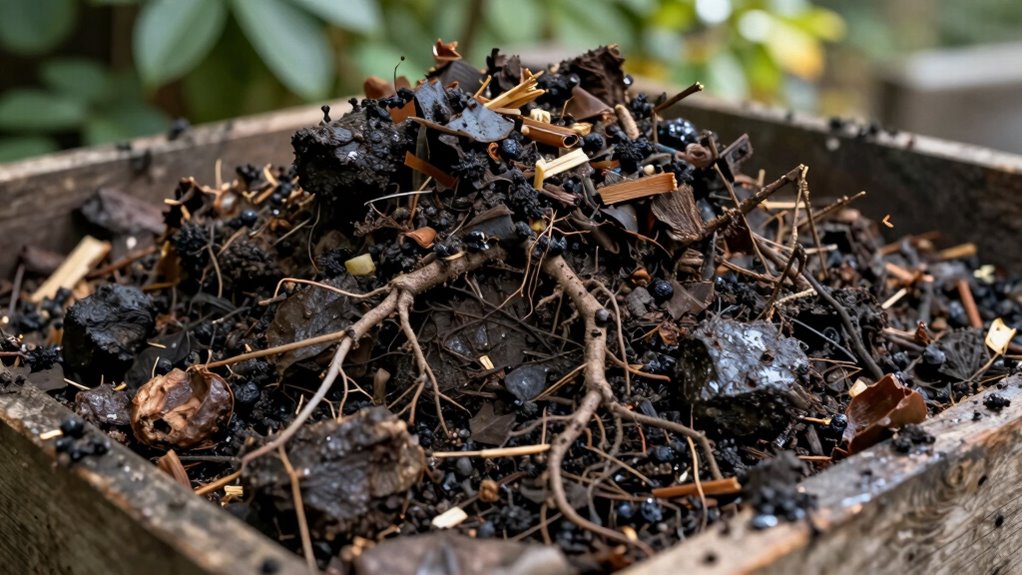

Adding unfinished compost to your garden might seem helpful, but it can hide hidden costs. It can cause nutrient imbalances, weakening your plants and delaying growth. Pests like flies and rodents stay attracted, risking disease spread. Excess moisture and gases can create waterlogged soil and fungal issues. Plus, weed seeds and pathogens may survive, competing with your garden’s plants. These hidden impacts can increase your effort later. Keep going to discover how to avoid these costly pitfalls.

Get garden gear delivered free with Prime
- Fast, free delivery on millions of items
- Prime Video, Amazon Music and more included
- Member-only deals all year
Key Takeaways
- Unfinished compost can cause nutrient imbalances, leading to plant deficiencies or toxicities.
- It attracts pests and pests, increasing risks of disease and garden infestations.
- Incomplete decomposition may result in waterlogged soil and fungal issues.
- Weed seeds and pathogens surviving in unfinished compost can spread diseases and unwanted plants.
- Using unprocessed compost can hinder healthy plant growth, increasing long-term garden management efforts.
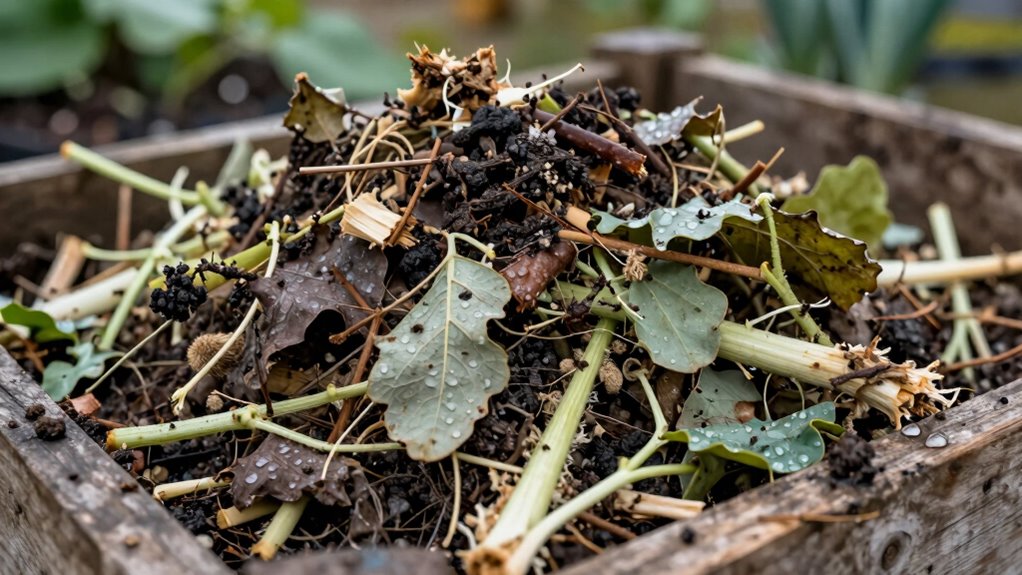
Adding unfinished compost to your garden might seem like a quick way to boost nutrients, but it can come with hidden costs. When you toss incomplete compost onto your soil, you risk creating a nutrient imbalance that can hinder your plants’ growth. Unfinished compost often contains high levels of certain elements like nitrogen or carbon that are not in the proper ratios. This imbalance can lead to deficiencies or toxicities, making it harder for your plants to absorb the nutrients they need. Instead of nourishing your garden, it might weaken your plants or delay their development, forcing you to spend more time and effort correcting the problem later.
Unfinished compost can cause nutrient imbalances, weakening plants and delaying growth in your garden.
Another problem you might not immediately see is pest attraction. Unfinished compost can attract pests like flies, rodents, or ants, which are drawn to the decaying organic matter. These pests not only create a nuisance but can also introduce diseases to your garden. For instance, flies laying eggs in the compost can lead to an increase in maggots and other unwanted insects that might spread to your plants or nearby areas. Rodents, attracted to the smell of fermenting material, may chew on roots or even invade your storage spaces. The presence of pests can quickly turn a seemingly harmless addition to your soil into a major headache, requiring extra pest control measures that could have been avoided. Additionally, pest attraction can contribute to disease transmission and further complicate your gardening efforts. Improper composting techniques can also exacerbate these issues, making it more difficult to manage the health of your garden.
Moreover, unfinished compost releases a considerable amount of moisture and gases during decomposition. If applied improperly or in large quantities, it can create waterlogged patches that suffocate plant roots. This not only hampers growth but also encourages fungal diseases and root rot. The smell of decomposing organic matter can also become overwhelming, making gardening less enjoyable and potentially attracting more pests or animals seeking the source of the odor. Additionally, adding incomplete compost may hinder proper decomposition and delay the stabilization process, increasing the likelihood of these issues. Using compost that isn’t fully finished can also cause the release of harmful substances that may harm your plants. Furthermore, the presence of weed seeds or pathogens surviving the composting process can lead to unwanted growth and disease in your garden.
By adding compost that isn’t fully finished, you also risk spreading weed seeds or pathogens that survived the initial composting process. These can take hold in your garden, competing with your plants and complicating your gardening efforts. The longer you rely on unfinished compost, the more likely you are to encounter these issues, which can set back your garden’s progress considerably. Proper composting techniques and waiting until compost is fully stabilized can mitigate these risks and promote healthier plant growth.
In short, while unfinished compost might seem like a cost-effective shortcut to richer soil, the hidden costs—nutrient imbalance, pest attraction, disease spread, and plant stress—can outweigh any perceived benefits. It’s better to wait until compost is fully broken down and stabilized, ensuring your garden gets the safe, balanced nutrients it needs without the added risks.
Products Worth Considering

Traeger Woodridge Pro Wood Pellet Grill and Smoker, 970 sq. in., WiFIRE

Rachio 3 Smart Sprinkler Controller, 16 Zones

Traeger Pro 22 Wood Pellet Grill and Smoker, 572 sq. in.
As an affiliate, we earn on qualifying purchases.
Frequently Asked Questions
How Can I Tell if Compost Is Truly Finished?
You can tell if compost is truly finished by checking for a neutral odor—no strong, foul smell—indicating it’s mature. Look for dark, crumbly material that resembles soil. Microbial activity slows down when compost is ready, so if it feels cool and steady, it’s done. Also, if you see minimal to no recognizable organic material, and it smells earthy, your compost has fully finished.
What Are Signs of Unfinished Compost in My Garden?
You might notice your compost’s subtle hints, like lingering odors or visible, unbroken materials—signs it’s still maturing. To confirm, use a compost thermometer; if it’s below 135°F, it suggests unfinished work. High worm activity often indicates the compost is still breaking down. When these signs appear, give your pile more time, turning it regularly to help speed up the process and guarantee it’s truly finished before use.
Does Adding Unfinished Compost Affect Plant Growth Long-Term?
Adding unfinished compost can negatively impact your plant growth long-term. When compost isn’t fully broken down, its temperature remains high, which can harm young roots. Plus, low microbial activity means nutrients aren’t adequately released, limiting plant access. Over time, this can lead to weaker plants and reduced yields. To avoid this, wait until your compost cools and microbial activity increases, ensuring it’s fully finished and safe for your garden.
How Long Should Compost Typically Take to Fully Mature?
Compost typically takes 3 to 6 months to fully mature, depending on conditions. During this time, microbial activity is at its peak, maintaining temperatures between 135-160°F, which helps break down organic material. You’ll know your compost is ready when it’s dark, crumbly, and has an earthy smell. Preserving proper compost temperature and microbial activity guarantees the compost matures evenly, giving your plants the nutrients they need without risking unfinished material.
Can Unfinished Compost Attract Pests or Diseases?
Unfinished compost can attract pests and promote disease proliferation if left exposed or improperly managed. Pests like rodents or insects are drawn to the moist, odorous material, while bacteria and fungi can spread diseases in your garden. To avoid these issues, turn your compost regularly, keep it covered, and guarantee it reaches adequate temperatures to kill pathogens. Properly finished compost minimizes pest attraction and disease risks, keeping your garden healthy.
Conclusion
So, next time you’re tempted to add that unfinished compost, think again. You might be unknowingly inviting pests, mold, or nutrient imbalances into your garden—a hidden cost that’s harder to see than the compost itself. Ironically, what seems like a quick fix could end up costing you more time and effort later. Sometimes, patience truly pays off. Don’t rush the process; your garden will thank you for it in the long run.