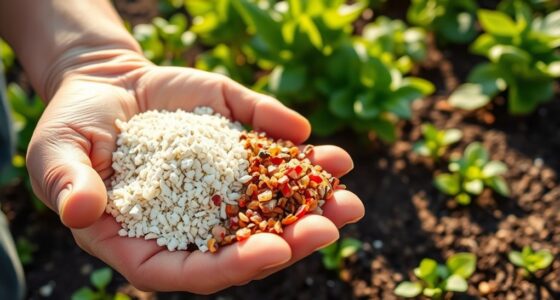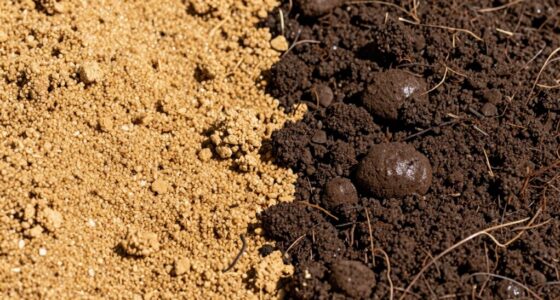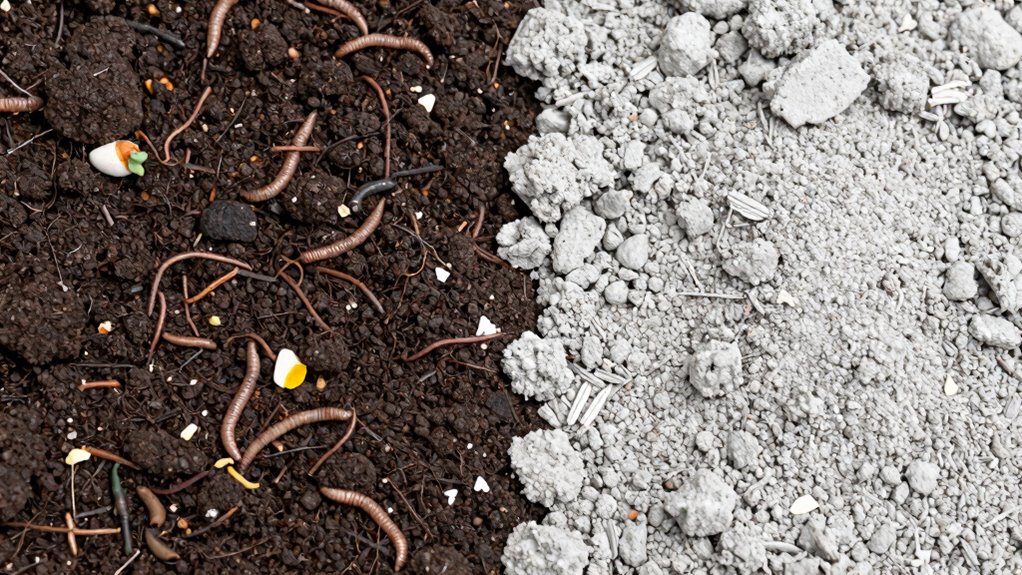

Adding organic matter to soil boosts microbial activity, which helps break down nutrients into plant-absorbing forms and promotes a healthy, resilient ecosystem. Unlike chemical fertilizers, organic matter improves soil structure, increases water retention, and supports long-term nutrient cycling. It builds stable humus that lasts for years, making your soil more fertile and resilient over time. If you want to discover how these benefits develop and sustain your soil’s health, keep exploring the details.

Get garden gear delivered free with Prime
- Fast, free delivery on millions of items
- Prime Video, Amazon Music and more included
- Member-only deals all year
Key Takeaways
- Organic matter enhances soil microbial activity, promoting ongoing nutrient cycling beyond the immediate effects of fertilizer.
- It improves soil structure and aggregation, leading to better water retention and aeration over the long term.
- Organic inputs build stable humus, which persists and maintains soil fertility independently of chemical fertilizers.
- Organic matter supports resilient soil ecosystems that can withstand droughts, erosion, and nutrient depletion.
- Unlike fertilizers, organic matter fosters a living soil environment that continuously regenerates and sustains plant growth.
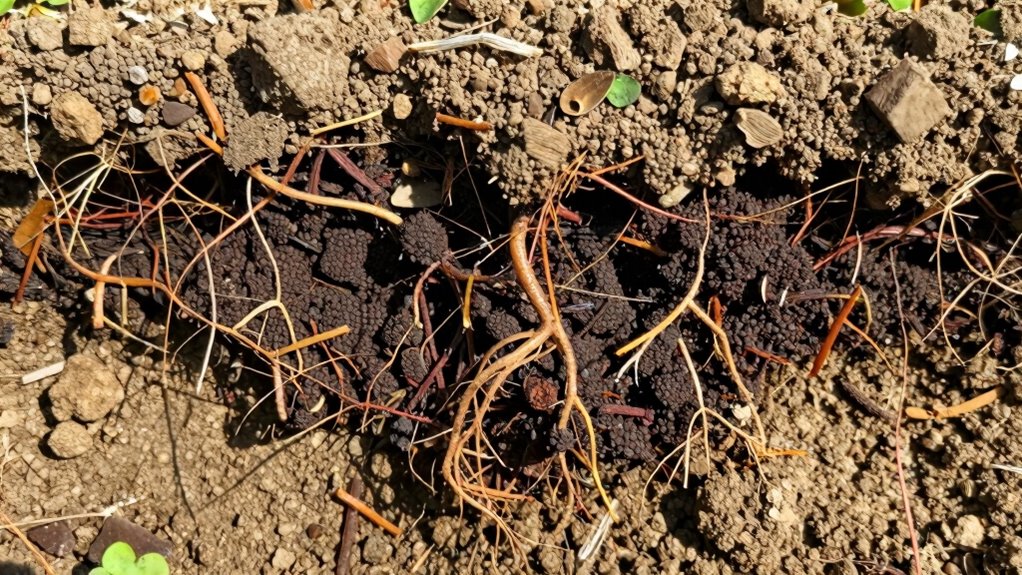
Adding organic matter to soil triggers significant changes that enhance its health and productivity. When you incorporate organic materials like compost, crop residues, or manure, you’re not just feeding plants directly—you’re fundamentally transforming the soil’s ecosystem. One of the key ways organic matter improves soil health is by boosting soil microbial activity. These tiny organisms, including bacteria and fungi, thrive on organic inputs and play an essential role in nutrient cycling. As microbes break down organic matter, they release essential nutrients in forms that plants can readily absorb. This process creates a more dynamic and resilient soil environment compared to relying solely on chemical fertilizers, which often supply nutrients in static, immediate forms.
Adding organic matter boosts microbial activity, enriching soil and supporting sustainable plant growth.
By fostering a healthy soil microbial community, organic matter encourages continuous nutrient cycling. Instead of nutrients leaching away or becoming locked up in unavailable forms, they remain in circulation, available to plants over time. This steady supply supports sustained plant growth and reduces the need for frequent fertilization. Additionally, the microbial activity enhances soil structure by producing substances like glomalin and organic polysaccharides, which help bind soil particles into aggregates. These aggregates improve soil aeration, water retention, and drainage—all essential for healthy root development. When roots grow in well-structured soil, they access nutrients more efficiently, creating a positive feedback loop that benefits your entire garden or crop system.
Organic matter also influences the soil’s physical properties, helping to increase its capacity to retain moisture while reducing erosion. As microbes break down organic inputs, they generate humus—a stable form of organic material that persists in the soil for years. Humus acts as a sponge, holding onto water and nutrients, making them available during dry spells or nutrient shortages. This resilience is especially valuable if you’re trying to build sustainable, long-term soil fertility. Unlike fertilizers that provide quick but short-lived boosts, organic matter promotes long-term improvements, fostering a living, breathing soil that regenerates itself over time. Incorporating diverse organic inputs can further support the development of beneficial soil fungi and bacteria, which contribute to a robust soil ecosystem. Building a diverse soil microbiome is crucial for maintaining soil health and resilience.
In essence, adding organic matter creates a virtuous cycle. It energizes the soil microbial community, enhances nutrient cycling, and builds a healthier soil structure. All of these factors contribute to a more productive, resilient soil system that can sustain plant growth far beyond what chemical fertilizers alone can achieve. You’re not just feeding your plants—you’re nurturing the soil itself, ensuring its vitality for years to come.
As an affiliate, we earn on qualifying purchases.
Frequently Asked Questions
How Quickly Can Organic Matter Improve Soil Health?
Organic matter can improve your soil health within a few months, especially regarding soil structure and nutrient retention. When you add compost or mulch, it enhances soil’s ability to hold nutrients and water, promoting healthier plant growth. Consistent organic matter application builds up over time, leading to more resilient soil. While immediate effects are noticeable, lasting improvements develop gradually, making your soil more fertile and better at supporting robust plant life.
Can Organic Matter Replace All Types of Fertilizers?
Organic matter can’t substitute all types of fertilizers because it mainly improves nutrient retention through organic decomposition, releasing nutrients slowly over time. While it enhances soil health and supports long-term fertility, you still need specific fertilizers for immediate nutrient needs. Organic matter builds a strong foundation, but for quick nutrient boosts, combining it with targeted fertilizers ensures your soil stays healthy and productive.
Does Organic Matter Affect Soil pH Levels?
You might think organic matter doesn’t affect soil pH, but it actually plays a key role through pH buffering and organic stabilization. Organic matter helps stabilize soil pH by neutralizing acids or bases, maintaining a healthier environment for plants. This buffering capacity prevents drastic pH swings, making your soil more resilient. So, adding organic matter can subtly but considerably influence soil acidity or alkalinity over time, supporting long-term soil health.
How Does Organic Matter Influence Soil Microbial Activity?
Organic matter boosts soil microbial activity by enhancing soil nutrient dynamics and fostering microbial diversity. As you add organic matter, you create a richer environment that supports a variety of microbes, which break down organic materials and release essential nutrients. This active microbial community improves soil health, promotes nutrient cycling, and helps plants access nutrients more effectively, ensuring your soil remains fertile and productive over time.
Is Organic Matter Equally Effective in All Soil Types?
You know what they say, “Don’t put all your eggs in one basket.” Organic matter isn’t equally effective in all soil types, as organic diversity and soil structure vary. In some soils, organic matter enriches microbial activity and improves aeration, but in others, it may decompose faster or not integrate well. Recognizing your soil’s unique characteristics helps you maximize organic matter’s benefits, tailoring your approach for healthier, more productive soil.
soil microbial activity enhancer
As an affiliate, we earn on qualifying purchases.
As an affiliate, we earn on qualifying purchases.
Conclusion
By adding organic matter, you improve your soil more effectively than relying on fertilizer alone. Organic amendments boost microbial activity, increase nutrient retention, and enhance soil structure over time. Did you know that soils enriched with organic matter can hold up to 50% more water? This means healthier plants and less drought stress. So, incorporating organic matter isn’t just a quick fix—it’s a sustainable way to build fertile, resilient soil that supports your garden’s long-term health.
long-lasting humus soil amendment
As an affiliate, we earn on qualifying purchases.
As an affiliate, we earn on qualifying purchases.
As an affiliate, we earn on qualifying purchases.
Halloween Picks
halloween
As an affiliate, we earn on qualifying purchases.