To add lime without overshooting pH, start by testing your soil to determine its current level and how much lime is needed. Apply lime gradually using a spreader or shovel, and incorporate it into the soil with tilling or raking. Do this in fall or early spring to give the soil time to adjust. Regularly check the pH after application to avoid over-correcting. Keep these tips in mind, and you’ll find how to balance your soil’s pH effectively.

Get garden gear delivered free with Prime
- Fast, free delivery on millions of items
- Prime Video, Amazon Music and more included
- Member-only deals all year
Key Takeaways
- Always conduct a soil test to determine current pH before applying lime.
- Apply lime gradually in small amounts, then re-test pH before additional applications.
- Use proper application techniques, like even spreading and incorporation into soil.
- Time lime application in fall or early spring to allow pH adjustment before planting.
- Regularly monitor soil pH post-application to prevent overshooting and adjust accordingly.
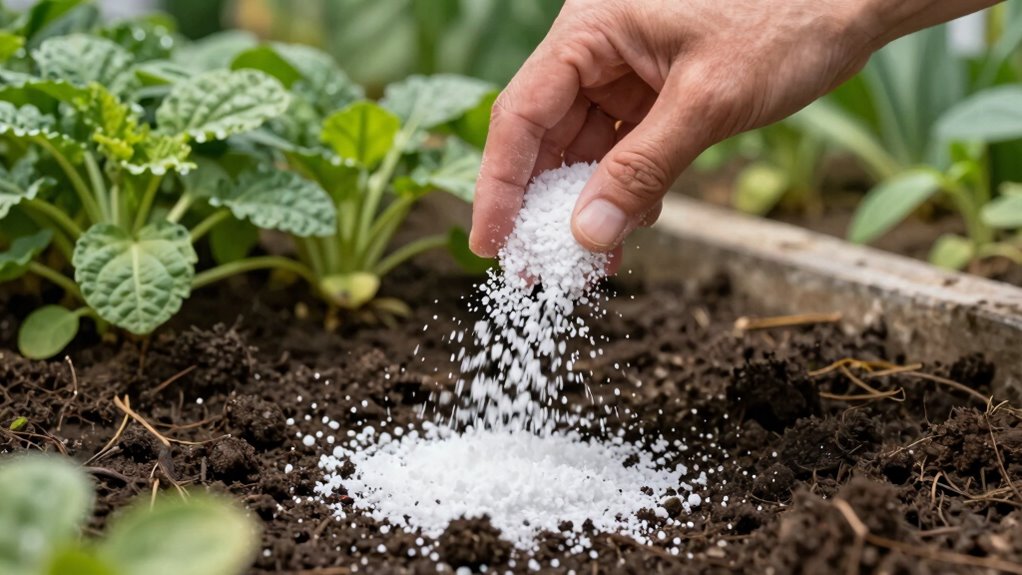
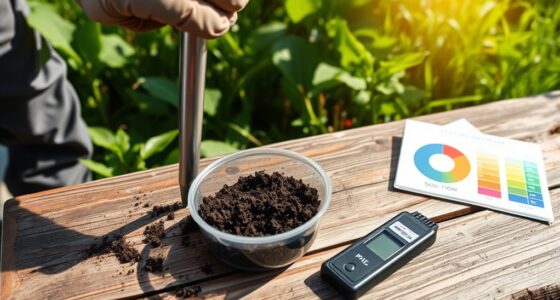
Adding lime to adjust soil pH can be tricky because it’s easy to overshoot and make the soil too alkaline. To avoid this, you need to start with thorough soil testing. Soil testing provides accurate pH levels, so you know exactly how much lime is necessary. Without testing, you risk applying too much, which can harm your plants and disrupt nutrient availability. Once you have your soil test results, you’ll know if lime is needed and how much to add. Remember, the goal is to reach a balanced pH that suits your specific plants.
Start with soil testing to accurately adjust pH and avoid over-liming.
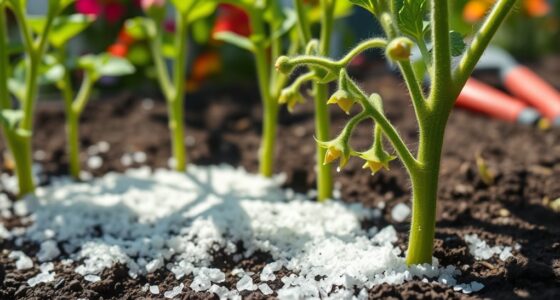
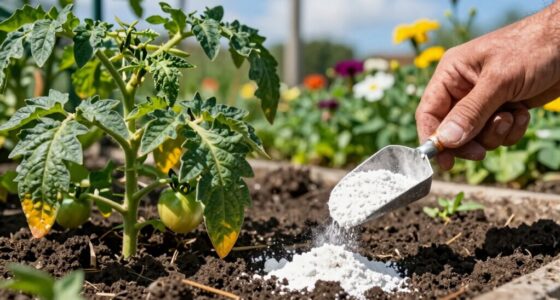
Next, focus on proper lime application techniques. Uniform distribution is key to avoiding localized over-alkalinity. Use a spreader or shovels to evenly distribute the lime across the soil surface. If you’re working with a small garden, hand-sprinkling can work, but for larger areas, mechanical spreaders are more efficient. After spreading, incorporate the lime into the soil by tilling or raking. This ensures the lime contacts the soil particles directly, promoting better pH adjustment. Surface application alone is less effective, especially if you want a consistent pH change. Additionally, understanding soil chemistry can help you better anticipate how your soil will respond to lime treatment.
Timing also matters when applying lime. It’s best to lime in the fall or early spring, giving the soil time to adjust before planting. Applying lime right before planting can lead to uneven pH changes, which might stunt plant growth. Keep in mind that lime reacts slowly with soil, so patience is essential. It can take several months for the pH to stabilize after application, especially if large amounts are needed. Furthermore, knowing soil buffering capacity can help you predict how quickly your soil will respond to lime and plan accordingly. Monitoring your soil’s pH after applying lime is vital. Soil testing should be repeated every six months or so to track changes and prevent overshooting. If you notice the pH has become too alkaline, you might need to take steps to lower it, such as adding sulfur or other acidifying agents. Regular testing also helps you fine-tune your lime application in future seasons, avoiding unnecessary over-application.
As an affiliate, we earn on qualifying purchases.
Frequently Asked Questions
Can I Use Lime for All Types of Soil?
You can use lime for most types of soil, but it’s crucial to evaluate soil acidity and lime compatibility first. For acidic soils, lime helps raise pH levels effectively. However, some soils, like those already alkaline or with specific mineral content, might not benefit from lime and could even be harmed. Always test your soil’s pH and consult local guidelines to ensure lime application suits your soil type and avoids overshooting the desired pH balance.
How Long Does It Take for Lime to Affect Soil pH?
Did you know lime can take anywhere from a few days to several months to impact soil pH? Lime effectiveness depends on soil type, application rate, and weather conditions. Typically, you’ll see pH changes within 2 to 4 weeks, but full stabilization can take up to 6 months. To guarantee soil pH stability, test your soil regularly and add lime gradually, avoiding overshooting your target pH.
Is It Better to Add Lime Gradually or All at Once?
It’s better to add lime gradually rather than all at once. Lime application benefits from your soil’s buffering capacity, which helps resist sudden pH changes. By applying in small amounts, you give your soil time to adjust, reducing the risk of overshooting the desired pH. Regular testing guides your application, ensuring the pH levels stay balanced. Patience and incremental lime application promote a healthier, more stable soil environment.
What Are Signs of Over-Liming in Soil?
You notice your plants struggling, with yellowing leaves or slowed growth, signaling over-liming. Excess lime disrupts your soil nutrient balance, causing deficiencies like magnesium or potassium shortages. To prevent this, use proper lime application techniques, such as testing soil pH first and applying lime gradually. Over-liming often results in a soil pH that’s too high, making nutrients less available and stressing your plants.
Can I Test pH Frequently During Liming?
Yes, you can test pH frequently during lime application. Regular pH testing helps you monitor your soil’s response and avoid overshooting the desired pH level. Use a reliable soil test kit or a pH meter, especially after each lime application. This way, you can make precise adjustments, ensuring you don’t add too much lime. Consistent testing keeps your soil pH balanced and promotes healthy plant growth.
As an affiliate, we earn on qualifying purchases.
Conclusion
Remember, patience is a virtue when adjusting your soil’s pH. Add lime gradually, test often, and give your soil time to react. Rushing can lead to overshooting and more trouble down the line. As the saying goes, “Haste makes waste.” By taking small steps and monitoring carefully, you’ll achieve the perfect pH balance without frustration, ensuring healthy plants and a thriving garden. Happy gardening!
As an affiliate, we earn on qualifying purchases.
As an affiliate, we earn on qualifying purchases.
Fall yard work Picks
leaf blowers
As an affiliate, we earn on qualifying purchases.