TL;DR

Get garden gear delivered free with Prime
- Fast, free delivery on millions of items
- Prime Video, Amazon Music and more included
- Member-only deals all year
A Homes & Gardens report highlights watering—not the particular fertilizer—as a key step when applying granular lawn feed in fall. Rain or sprinklers can wash granules from grass blades and help move nutrients into the soil; the right amount depends on conditions and the product label.
Watering after application, rather than choosing a particular brand of feed, is the central advice in a Homes & Gardens report on fall lawn fertilizing. The article says water can wash granular fertilizer off grass blades and carry nutrients into the soil, helping limit the risk of yellow or brown damage when homeowners feed lawns before winter.
The report focuses on granular fertilizer, which can remain on the grass if it is not watered in. It warns that dry granules left on blades may dehydrate plant tissue. According to the article, synthetic granular feeds can begin causing damage within 24 to 48 hours if they are not watered after application; the source does not specify that this timing applies to every product or lawn condition.
Water also helps activate fertilizer and move nutrients toward the root zone, where grass can use them. If granules stay on the blades or are blown away, the report says, some of the product may be wasted. Applying fertilizer at the rate stated on its label and following its watering directions remain important; the article’s advice does not replace product instructions.
Homeowners can use forecast rain or a sprinkler to water the product in. Lawn expert Chris McIlroy, identified by the article as a technical product lead at The Grass People, recommends applying fertilizer ahead of a forecast wet day. The report suggests looking for about an inch of rain and applying roughly 24 hours before it is expected, while noting that a sprinkler can make up for limited rainfall.
Watering Can Prevent Fertilizer Damage
The practical point matters because fall feeding is intended to support grass as it recovers from summer and prepares for winter. But applying feed without enough water may work against that aim: granules left on blades can cause visible injury, while nutrients that do not reach the soil may not benefit the roots as intended.
The recommendation also offers a way to reduce avoidable product waste. Using rainfall when the forecast supports it may limit the need for sprinkler watering. If rain is uncertain or insufficient, the report advises checking how much water a sprinkler actually delivers rather than relying on a fixed run time alone.
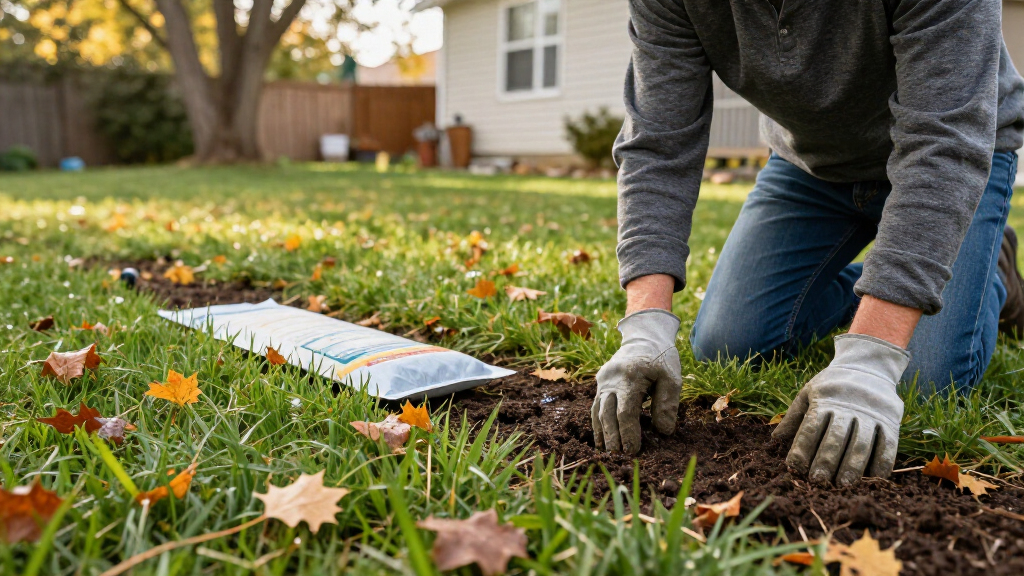
granular lawn fertilizer with watering instructions
As an affiliate, we earn on qualifying purchases.
As an affiliate, we earn on qualifying purchases.
Fall Feeding Follows Summer Stress
The Homes & Gardens article describes fall as a period when lawns may be recovering from summer heat and dry conditions. It says grass produces less top growth as the season changes and puts more energy into root development ahead of cold weather. The report presents fall fertilizing as one possible part of seasonal lawn care, not as a guarantee that a lawn will return in a particular condition.
Before feeding, the article recommends considering scarifying and aeration. Removing thatch can help moisture reach the soil, while aeration can make water and nutrients more able to penetrate compacted ground. It also says fertilizing without aerating is possible, though compacted soil may reduce how effectively water and nutrients reach roots. These steps are advice from the report, not requirements for every lawn.
“To prevent grass blade burn or scorching after applying any lawn feed, it is really important to water off granular fertilizer from the grass blades to avoid damaging the existing grass.”
— Chris McIlroy, technical product lead and in-house lawn seed expert at The Grass People, as quoted by Homes & Gardens
As an affiliate, we earn on qualifying purchases.
Rainfall and Lawn Conditions Vary
The source does not provide a publication date, a formal study, or comparative test results for fertilizer products. Its claims about fall feeding and faster spring greening are presented as expert guidance, not as guaranteed outcomes. The reported 24-to-48-hour damage window is attributed to the article and may depend on the feed, weather, grass, and application.
It is also unclear how much water any particular lawn needs: sprinkler output, soil type, slope, rainfall, and the fertilizer’s instructions can differ. The article suggests using a tuna can to measure sprinkler delivery, but readers should follow the product label and local watering rules. The supplied source material ends mid-sentence in its final section, so it does not establish any additional advice beyond the guidance summarized here.
As an affiliate, we earn on qualifying purchases.
Check the Label and Forecast
For homeowners planning a fall application, the report’s next step is to check the fertilizer label and local forecast before spreading granules. If suitable rain is expected, the article advises timing the application ahead of it; if not, sprinklers can be used, with a container placed on the lawn to gauge how much water has been delivered.
Readers should monitor the lawn after application and avoid assuming that one schedule fits every product or yard. The source provides no further announcement or follow-up test; its advice remains seasonal guidance rather than a new change in regulation or lawn-care standards.
As an affiliate, we earn on qualifying purchases.
Key Questions
What is the main advice for fertilizing a lawn in fall?
The Homes & Gardens report says to water granular fertilizer into the lawn so it does not sit on grass blades and nutrients can reach the soil. Follow the specific product label for application and watering directions.
Can rain water in fall lawn fertilizer?
Yes, the report recommends using forecast rain when it is expected to provide enough water. It suggests looking for about an inch of rain, but actual needs and label instructions may vary.
What if rain is not forecast?
The article says a sprinkler can be used and suggests measuring delivery with a tuna can placed on the lawn. Its suggested sprinkler run time is 30 to 60 minutes, but output varies, so measure water and follow the fertilizer label.
Can fertilizer burn grass if it is not watered in?
The report says dry granular feed left on grass blades can dehydrate plant tissue and cause yellow or brown patches. It cites a possible 24-to-48-hour period for synthetic granules to start causing damage, but that timing should not be treated as universal.
Do you have to aerate before applying fall fertilizer?
No. The article says fertilizing without aerating is possible, although compacted soil may limit how efficiently water and nutrients reach roots. It recommends considering aeration and thatch removal as part of lawn preparation, depending on the lawn’s condition.
Source: rss
Fall Picks
fall essentials
As an affiliate, we earn on qualifying purchases.