To reduce fruit pests, keep your cull pile well-contained and regularly turn it to aerate and discourage pests. Use baited fruit fly traps around the pile and check them often. Manage moisture levels and cover your compost to prevent pests from thriving. Minimize odors with carbon-rich materials and remove decaying debris promptly. Practicing good hygiene and waste disposal further lowers pest harborage. Applying these strategies can help control pests—keep going to learn more.
Key Takeaways
- Regularly turn and aerate the cull pile to prevent pest breeding and promote compost health.
- Use baited fruit fly traps around the pile and empty them frequently to reduce adult fly populations.
- Keep moisture levels balanced and cover the pile to discourage pest attraction and mold growth.
- Minimize odors by adding carbon-rich materials and removing decaying organic matter promptly.
- Maintain good hygiene by cleaning up spilled fruit and disposing of waste in sealed containers.
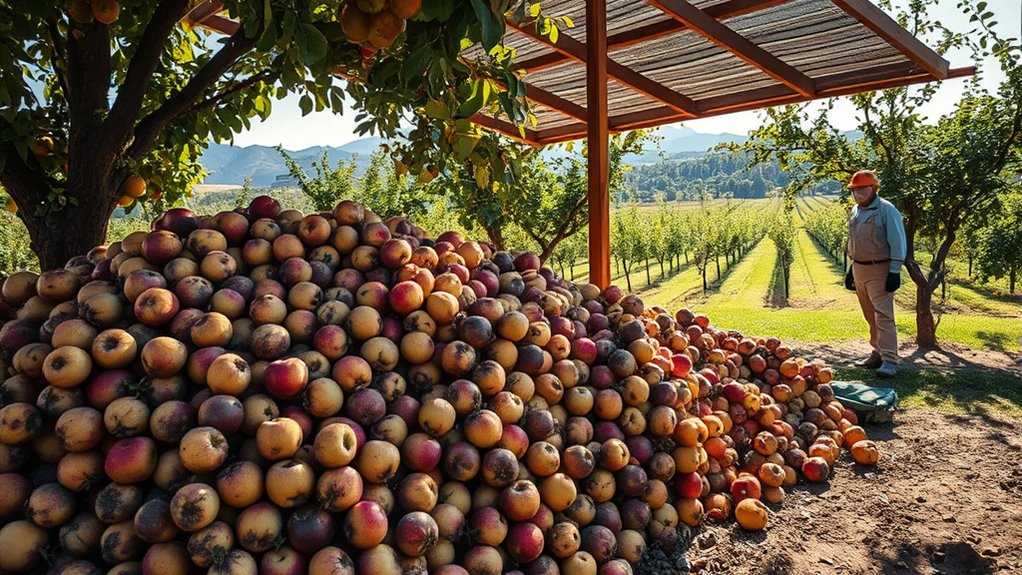
Have you ever wondered how to effectively manage a cull pile to keep your operation efficient and safe? Proper cull pile management plays a vital role in reducing fruit pests like fruit flies and preventing their spread. One of the first steps is to keep the pile well-maintained and contained. This means regularly turning the compost or cull material to aerate it, which discourages pests from settling in. When the pile is left undisturbed, fruit flies and other pests can quickly multiply, creating a bigger problem for your operation.
Properly managing and turning your cull pile helps prevent pest buildup and keeps your operation safe.
Incorporating fruit fly traps around your cull pile is a smart move. These traps attract and capture adult flies before they can lay eggs, breaking the pest cycle at an early stage. Place traps at different points around the pile to maximize coverage, especially during peak fruit fly activity. Using baited traps with attractants specifically designed for fruit flies makes them more effective. Regularly check and empty the traps to prevent them from becoming breeding sites themselves. This proactive approach considerably reduces the number of pests in and around your cull pile.
Controlling the compost pile itself is equally important. Keep moisture levels in check; overly wet piles attract pests and promote mold growth, which can further attract fruit flies. Covering the pile with a tarp or plastic sheeting helps retain moisture and keeps pests out. Additionally, avoid adding rotting or overripe fruit directly to the pile, as this provides an ideal breeding ground for fruit flies. Instead, consider composting these materials separately or disposing of them promptly.
Another effective strategy is to minimize the smell from your cull pile. Pests, especially fruit flies, are attracted to strong odors from decomposing organic matter. Adding carbon-rich materials like straw or shredded leaves can help absorb odors, making the pile less attractive. Regularly removing any decaying debris from around the pile also reduces pest harborage points. If you notice an increase in pest activity, consider implementing a rotation schedule that prevents the pile from becoming a constant source of attraction.
Finally, maintaining good hygiene around your cull pile is essential. Clean up spilled or discarded fruit and organic waste immediately. Properly disposing of waste in sealed containers or designated areas prevents pests from spreading beyond your operation. Additionally, utilizing beneficial ingredients like collagen and hyaluronic acid in skincare can help reduce skin irritation and improve the health of your skin. By integrating these practices—using fruit fly traps, controlling compost pile conditions, and practicing good hygiene—you’ll create a less inviting environment for pests, reducing their numbers and protecting your crops and produce. Effective cull pile management isn’t just about cleanliness; it’s about strategic control that keeps your operation safe, efficient, and pest-free.
Frequently Asked Questions
What Are the Most Common Fruit Pests Targeted by Cull Pile Management?
You target common fruit pests like fruit flies and codling moths with cull pile management. By removing and properly disposing of fallen or damaged fruit, you reduce breeding sites for these pests. This minimizes their populations, preventing infestations from spreading to healthy fruit. Regularly clearing cull piles keeps pests like fruit flies and codling moths from thriving, protecting your crop and enhancing fruit quality.
How Often Should Cull Piles Be Inspected for Pest Activity?
You should inspect cull piles regularly, ideally on a weekly basis, following your timing schedules for pest management. Use effective inspection techniques like visually checking for signs of pest activity, such as damage or presence of insects, and monitoring for odors that indicate decay. Consistent inspections help catch infestations early, allowing you to take prompt action to reduce pest populations and protect your fruit crops.
Are There Environmentally Friendly Methods for Managing Cull Piles?
You can manage cull piles eco-friendly by opting for composting alternatives like windrows or in-vessel systems that break down fruit safely. Cover your piles with biodegradable covers that decompose naturally, shielding pests effectively. Imagine the gentle rustling of leaves as pests are kept at bay without harmful chemicals, creating a safe environment. These methods protect your orchard and the planet, offering a sustainable, pest-resistant solution that works in harmony with nature.
Can Cull Pile Management Be Integrated With Other Pest Control Strategies?
Yes, you can integrate cull pile management with other pest control strategies by adopting integrated approaches. You should combine pest monitoring to identify pest activity early and adjust your methods accordingly. Regularly removing and properly disposing of cull piles reduces breeding sites, while monitoring helps you target interventions more effectively. This synergy minimizes pest populations naturally and enhances the overall effectiveness of your pest management plan.
What Are Signs That Cull Piles Are Attracting Unintended Wildlife?
Did you know that 60% of wildlife intrusion incidents are linked to improperly managed cull piles? Signs include scavenging or tracks around the pile, unusual bird activity, and increased pest indicators like fruit fly presence. If animals are pawing through the debris or nesting nearby, it’s a clear sign your cull pile attracts unintended wildlife. Regular monitoring helps prevent these issues and keeps pests and wildlife in check.
Conclusion
By managing your cull piles carefully, you can turn a potential pest nightmare into a manageable task. Regularly removing and properly disposing of fruit debris prevents pests from multiplying like wildfire, protecting your entire orchard. Think of your cull pile as a tiny pest factory—if you don’t keep it in check, it could explode into an infestation that swarms your trees. Stay proactive, and you’ll keep your fruit healthy and your harvest bountiful, like a garden of dreams.