Pear psylla pests feed on your tree’s sap, producing sticky honeydew that drips onto leaves and fruit. This honeydew fosters sooty mold, a black fungus that blocks sunlight and hampers photosynthesis, weakening your tree and reducing fruit quality. Managing this issue involves monitoring pests early and promoting natural predators or applying targeted controls. Stay with us to uncover effective strategies for controlling pear psylla and keeping your orchard healthy.

Get garden gear delivered free with Prime
- Fast, free delivery on millions of items
- Prime Video, Amazon Music and more included
- Member-only deals all year
Key Takeaways
- Pear psylla feeds on sap, producing honeydew that drips onto leaves and fruit.
- Honeydew promotes sooty mold development, which blackens surfaces and hampers photosynthesis.
- Sooty mold causes tree and fruit to appear dirty, reducing orchard aesthetic and health.
- Managing pear psylla with biological predators and targeted insecticides helps control honeydew and mold.
- Regular monitoring and maintaining tree vigor are essential for preventing severe honeydew and sooty mold issues.

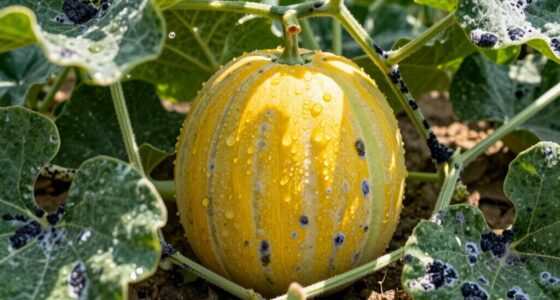
The pear psylla is a tiny insect that poses a vital threat to pear trees. These pests feed on the sap of the trees, causing stress and damage that can reduce fruit quality and yield. When they feed, they produce a sticky honeydew, which drips onto leaves and fruit, creating an ideal environment for sooty mold to develop. This black fungus covers the surface of the leaves and fruit, impairing photosynthesis and giving your trees a dirty appearance. If left unchecked, heavy infestations can weaken your trees and diminish overall health. Proper pest management strategies are essential to protect your orchard from these damaging pests.
To manage pear psylla effectively, you need a strategic approach that combines biological control and chemical management. Biological control involves introducing or encouraging natural predators that keep psylla populations in check. Beneficial insects like lady beetles, lacewings, and parasitic wasps prey on pear psylla, helping to reduce their numbers naturally. You can promote these helpful insects by avoiding broad-spectrum insecticides that harm beneficial populations and by planting flowering plants nearby that attract them. This eco-friendly approach not only targets the pests but also preserves the overall health of your orchard.
Encourage natural predators like lady beetles and lacewings for eco-friendly pear psylla control.
Chemical management plays a critical role when infestations become severe. Applying insecticidal sprays at the right time, typically just before or during the early stages of egg hatch, can dramatically reduce psylla populations. Use products labeled for pear psylla and follow the instructions carefully to minimize environmental impact and prevent resistance buildup. Timing is essential—early intervention prevents the pest from producing large amounts of honeydew and greatly curtails sooty mold development. Combining chemical treatments with biological controls creates an integrated pest management plan that’s both effective and sustainable.
Monitoring your trees regularly is key to catching infestations early. Look for signs of sticky honeydew, black sooty mold, and the presence of adult psylla or their eggs. Once you notice the first signs, act promptly with the appropriate control measures. Maintaining tree vigor through proper watering and fertilization also boosts resilience against pests. Healthy trees are better equipped to withstand pest pressure and recover quickly from any damage caused.
beneficial insects for pear tree pest control
As an affiliate, we earn on qualifying purchases.
As an affiliate, we earn on qualifying purchases.
Frequently Asked Questions
How Can I Prevent Pear Psylla Infestations?
To prevent pear psylla infestations, you should start with biological control methods like releasing beneficial insects that target psylla. Regularly monitor your trees for early signs of infestation. If needed, apply chemical treatments carefully, following label instructions to minimize impact on beneficials. Combining biological controls with targeted chemical treatments creates an effective, integrated approach that keeps psylla populations in check and protects your pear trees.
Are There Natural Predators for Pear Psylla?
Like knights in shining armor, natural predators battle pear psylla, making biological control a viable strategy. Lady beetles, lacewing larvae, and parasitic wasps are key natural predators that help keep psylla populations in check. By encouraging these beneficial insects through habitat diversification and avoiding broad-spectrum insecticides, you can harness nature’s own defenses to protect your trees effectively. This eco-friendly approach reduces chemical reliance and promotes a balanced orchard ecosystem.
What Are Effective Organic Control Methods?
You can effectively control pear psylla organically by releasing beneficial insects like ladybugs and lacewings, which prey on the pests. Additionally, apply organic sprays such as neem oil or insecticidal soap to disrupt psylla development. Regular monitoring and early intervention are key; combining beneficial insects with organic sprays creates a strong defense, reducing honeydew and sooty mold buildup while keeping your orchard healthy and chemical-free.
How Do I Identify Early Signs of Infestation?
You can spot early warning signs of pear psylla infestation by watching for leaf discoloration, such as yellowing or stippling, which indicates feeding damage. Look closely for tiny, moving insects on the undersides of leaves, especially near new growth. Additionally, check for the presence of honeydew, a sticky substance that can lead to sooty mold. Regular inspections help catch infestations early and enable prompt organic control.
Can Pear Psylla Affect Other Fruit Trees?
Imagine a backyard with apple and cherry trees; pear psylla could jump ship and infest these too. Yes, pear psylla can affect other fruit trees, spreading honeydew and sooty mold. To safeguard your orchard, use additional pest management strategies like beneficial insects and monitor trees regularly. Diversifying your fruit trees helps reduce the risk of widespread infestation. Staying vigilant ensures your fruit trees stay healthy and productive.
As an affiliate, we earn on qualifying purchases.
Conclusion
By staying vigilant about pear psylla, you’re like a gardener steering a ship through stormy waters. Catching honeydew and sooty mold early can save your trees from a cascade of problems. Regular inspections and proper management keep these pests at bay, ensuring your pear orchard remains healthy and productive. Remember, the battle against pear psylla is won one watchful eye at a time—your trees will thank you for your careful stewardship.
organic pest control for orchard
As an affiliate, we earn on qualifying purchases.
As an affiliate, we earn on qualifying purchases.
As an affiliate, we earn on qualifying purchases.
Fall yard work Picks
leaf blowers
As an affiliate, we earn on qualifying purchases.