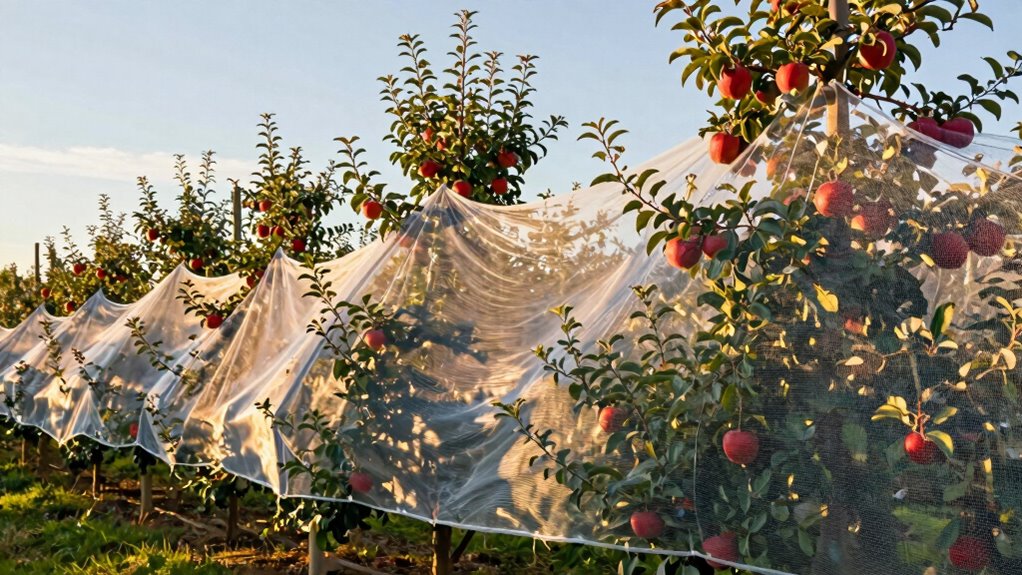
To set up bird netting that protects your crops without trapping birds, choose fine, durable mesh with appropriate size to prevent entrapment, and install it taut with secure anchoring. Regularly inspect and maintain the netting, fixing tears or loose sections promptly. Use visual deterrents alongside netting to enhance protection and minimize bird entrapment risks. Proper installation and ongoing care guarantee safety for wildlife while safeguarding your harvest—discover more ways to achieve this balance below.
Key Takeaways
- Select fine, durable netting with appropriate mesh size to prevent bird entry without trapping or harming them.
- Install netting taut and securely anchored to avoid gaps, sagging, or accidental entrapment.
- Regularly inspect and maintain netting for tears, debris, or looseness, especially after weather events.
- Avoid placing netting near feeding areas or migration paths, and remove or adjust it seasonally.
- Use visual deterrents alongside netting to enhance protection while ensuring bird safety.
Why Use Bird Netting That Protects Both Your Crops and Birds
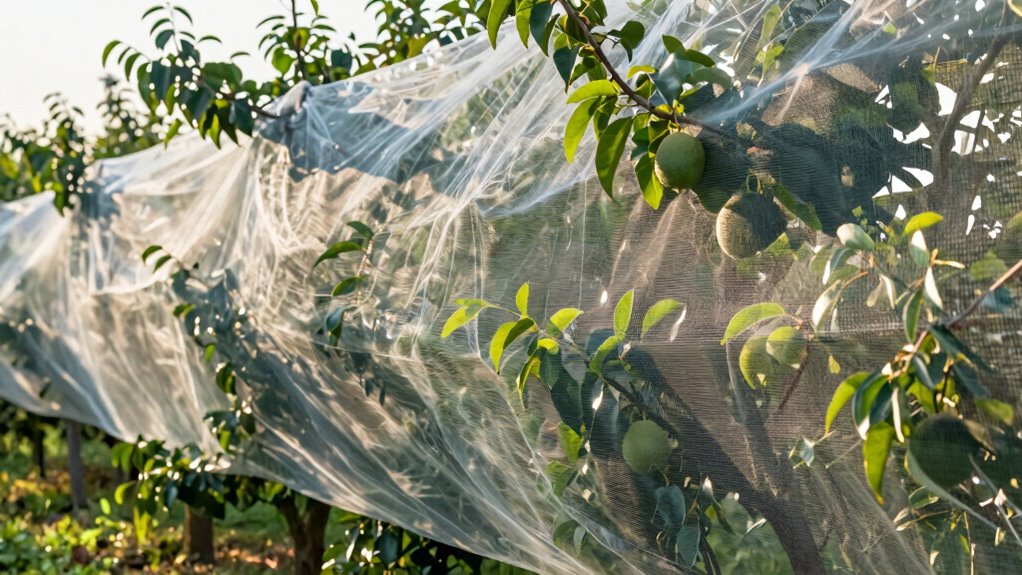
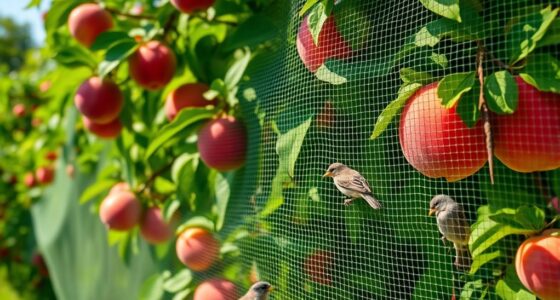
Using bird netting that protects both your crops and the birds themselves is a smart choice because it guarantees your plants stay safe without harming local wildlife. When selecting net material, opt for durable, fine mesh that prevents bird species from becoming trapped or injured. This type of netting creates a physical barrier, deterring birds from pecking at your fruit without causing harm. By choosing the right net material, you support a humane approach that respects local ecosystems while safeguarding your harvest. Protecting bird species from injury or entrapment is essential, and quality netting ensures you do so effectively. Incorporating energy-efficient materials into your netting can further enhance sustainability and reduce environmental impact. Using wildlife-friendly netting supports a harmonious balance between pest control and conservation efforts, making it a responsible and sustainable solution. Additionally, considering cost-effective options can help make the installation more affordable without compromising quality. Incorporating conservation principles into your setup promotes a responsible approach to pest management and wildlife protection.
How to Choose the Right Bird Netting for Your Orchard
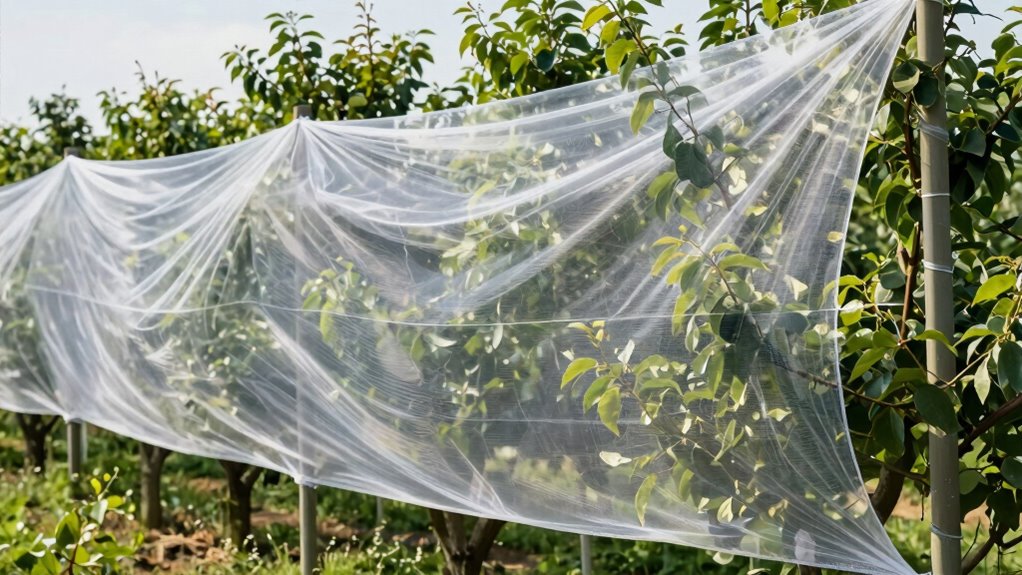
Choosing the right bird netting for your orchard begins with understanding your specific needs and the types of birds you’re aiming to protect against. Different bird species vary in size and behavior, so selecting a net with appropriate mesh size is essential. You’ll want durable netting that withstands weather and pests, ensuring long-term protection. Proper selection also involves considering the Free Floating nature of some bird species, which can influence how you install and maintain your netting. When selecting netting, it’s important to consider the connectivity of equipment, ensuring it is compatible with other smart tools for monitoring and maintenance. Here’s a quick comparison:
| Bird Species | Net Durability Needed |
|---|---|
| Small songbirds | Fine mesh, lightweight net |
| Medium-sized birds | Moderate durability, sturdy mesh |
| Larger birds | Heavy-duty, tear-resistant net |
Pick a net that matches your target species and offers the right balance of flexibility and toughness. Using trustworthy information about netting options can help you make the best choice for your needs.
Installing Bird Netting Safely to Prevent Trapping
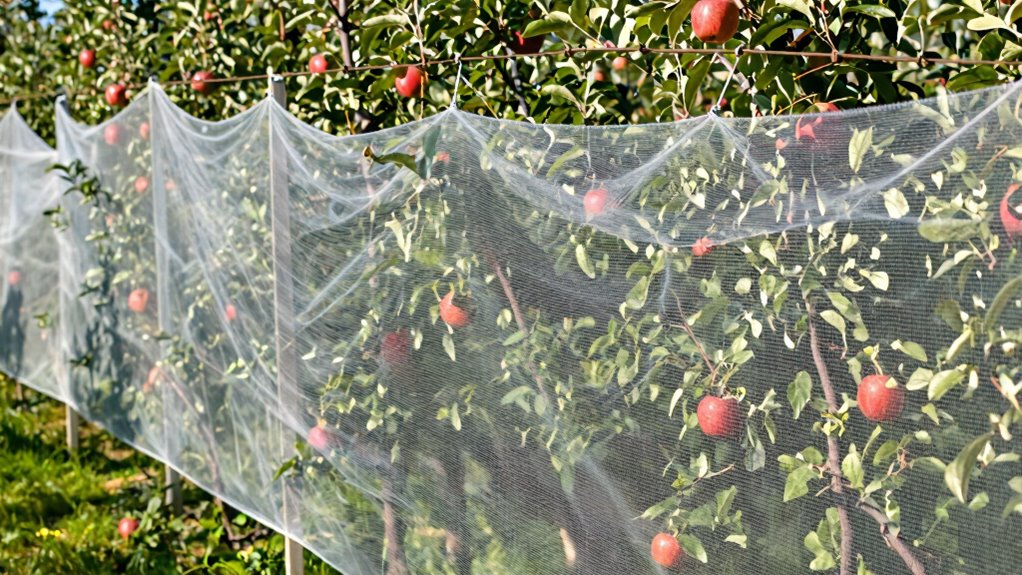
To guarantee your bird netting doesn’t trap unintended wildlife, it’s essential to install it carefully and thoughtfully. Start by selecting durable netting that withstands weather and prevents tears, ensuring long-lasting bird netting durability. When installing, keep the netting taut and avoid sagging, which can create gaps where birds might get trapped. Use proper tools and techniques to minimize damage and ensure the net is securely anchored to prevent movement that could cause entrapment. Be mindful of the costs of installation, balancing quality with affordability, but don’t compromise on safety. Regularly check that the netting remains tight and intact, making adjustments as needed. Proper installation reduces the risk of trapping birds and protects local wildlife while safeguarding your orchard. Additionally, performing seasonal maintenance checks helps maintain the netting’s effectiveness and safety over time. Incorporating safe installation practices ensures that wildlife remains unharmed during and after setup. To further enhance safety, consider integrating wildlife-friendly netting options designed specifically to minimize accidental trapping. Understanding auditory processing can also help in designing environments that are less stressful for sensitive animals in your orchard. Proper training for installers on wildlife conservation principles can significantly reduce accidental harm during setup.
Maintaining and Inspecting Your Bird Netting for Safety and Effectiveness

After installing your bird netting, regular maintenance and inspections are key to keeping it effective and safe for wildlife. Check for tears or holes that compromise netting durability, especially after storms or high winds. Look for areas where the netting may sag or loosen, which can create gaps for birds to enter or escape. Ensure the netting remains taut and secure, avoiding contact with bird-friendly materials that could cause damage. Keep the mesh free of debris, such as leaves or twigs, to prevent deterioration. Regularly inspect for any signs of wear, such as frayed edges or weakened attachment points. Additionally, understanding the importance of wildlife-friendly netting helps ensure your setup remains safe for birds and other animals. Properly installed and maintained bird protection measures help prevent accidental trapping and promote a harmonious coexistence with local wildlife. Regular upkeep also involves checking the aviation regulations that may impact your setup if your orchard is near flight paths. Maintaining these aspects guarantees your netting stays safe, effective, and bird-friendly.
Other Bird Deterrent Methods That Work Well With Netting
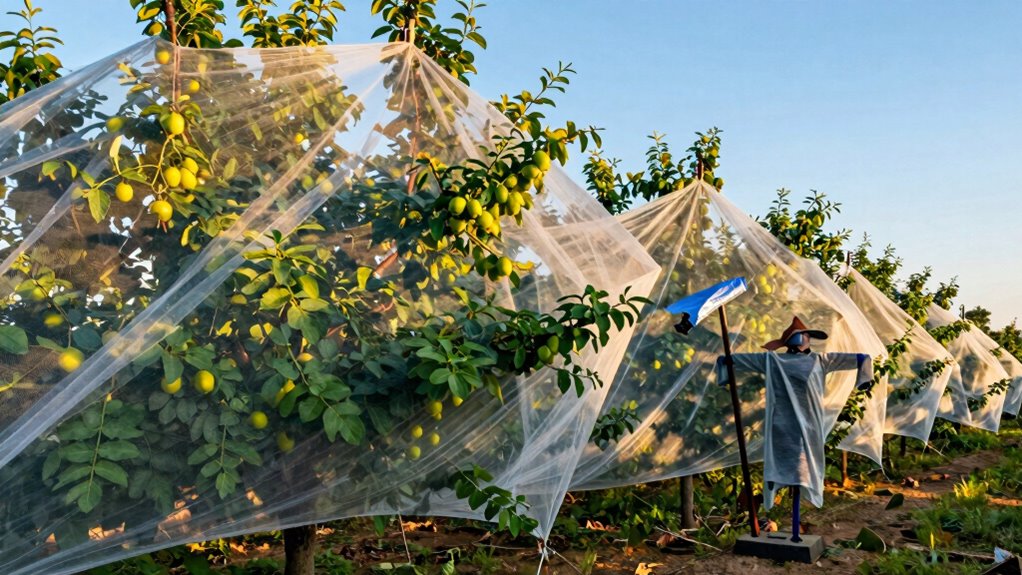
Combining bird netting with other deterrent methods can considerably enhance your bird control efforts. Understanding bird migration patterns helps you identify peak times when birds are most likely to cause damage, allowing you to deploy additional deterrents effectively. Visual scare devices like reflective tapes, predator decoys, or flashing balloons can startle birds and reduce their presence around your orchard. Predator control techniques, such as installing owl or hawk decoys, also work well when used alongside netting, as they tap into natural bird fears. Incorporating effective bird deterrents into your strategy creates multiple layers of deterrence, making your orchard less attractive and less accessible to birds. Additionally, monitoring bird activity patterns can help you optimize the timing of deterrent deployment, increasing their effectiveness. Understanding bird behavior and adapting your tactics accordingly can further improve your success in protecting your crops without trapping or harming the birds. Using integrated pest management practices ensures a more holistic approach to bird control, reducing reliance on any single method. Regularly assessing and adjusting your deterrent strategies based on observed bird responses can lead to more successful and humane bird management. By integrating these strategies, you can protect your crops more reliably without trapping or harming the birds.
Common Mistakes to Avoid When Using Bird Netting in Your Orchard
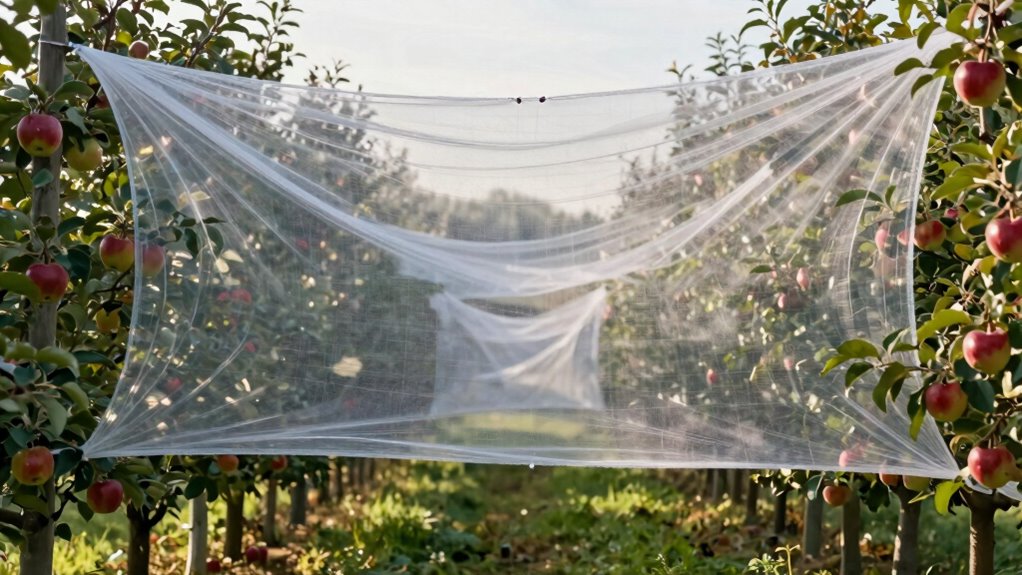
To safeguard your orchard effectively, you need to pay close attention to proper net placement and make certain there are no gaps or loose areas. You also want to regularly check the netting for any signs of bird entrapment or damage. You can use visual inspections to identify potential issues before they become serious, ensuring the safety of the birds and the integrity of the netting. Regularly inspecting your netting helps maintain its effectiveness and prevents accidental harm to local wildlife. Skipping these steps can lead to unintended harm to the birds and reduce the netting’s effectiveness. Additionally, understanding the importance of precious metal investments can help you diversify your financial portfolio and protect your assets during economic uncertainties. Incorporating local automation and routine maintenance can further enhance your netting system’s reliability and longevity. Being aware of potential zodiac traits can also help you identify signs of wear or issues related to your netting setup.
Proper Net Placement
Proper net placement is essential for effectively protecting your orchard from birds, but many overlook common pitfalls that can compromise the net’s effectiveness. Ensuring correct netting height is crucial—too low, and birds can slip underneath; too high, and it becomes unnecessary and cumbersome. Choosing the right netting material matters, as weaker materials may tear or sag over time. When installing, avoid these mistakes:
- Leaving gaps at the edges or stakes
- Not securing the net tightly across all sides
- Using inadequate netting height for the fruit’s reach
- Overlooking tension, causing sagging or tearing
- Selecting flimsy netting material prone to damage
Proper placement, combined with appropriate netting height and durable material, keeps birds out without trapping them, safeguarding both your harvest and local wildlife.
Avoiding Bird Entrapment
Avoiding bird entrapment requires careful attention to how you install and maintain your netting. If your netting is too tight or has gaps, migrating birds may become trapped or injured during their seasonal movement. To minimize this risk, ensure the netting is securely stretched without slack, especially around the edges where birds might land or attempt to pass through. Avoid placing netting near areas where birds congregate for feeding, as this can lead to accidental entrapment. Additionally, be mindful of bird migration patterns—you should install netting well before migration begins and remove it promptly afterward. Proper installation and timing help protect birds during their natural movements, reducing the chances of trapping and ensuring your orchard remains a safe habitat.
Regular Maintenance Checks
Regular maintenance checks are essential to guarantee your bird netting remains effective and safe for wildlife. Over time, weather and bird behavior can cause tears or sagging, reducing netting durability and risking entrapment. Regular inspections help you spot issues early, ensuring birds aren’t caught or harmed. During checks, look for:
- Loose or sagging sections that leave gaps
- Tears or holes in the netting fabric
- Sharp edges or frayed material
- Accumulation of debris weighing down the net
- Signs of chew marks or bird activity near the netting
Maintaining your netting preserves its protective function and minimizes the risk of trapping birds. Consistent checks keep your setup safe, durable, and effective against pests, while respecting local bird behavior.
Frequently Asked Questions
How Long Does Bird Netting Typically Last Before Replacement Is Needed?
Bird netting typically lasts around 5 to 10 years before you need to replace it. The netting’s durability depends on the material and how well you maintain it. High-quality polyethylene or nylon netting can withstand weather and UV exposure longer, extending its lifespan. Regular inspections help spot tears or wear early, ensuring your orchard stays protected. When netting shows significant damage, it’s time for a replacement to keep birds out effectively.
Can Bird Netting Be Reused After Removal?
Yes, you can reuse netting if it remains in good condition. Reusing netting saves money, reduces waste, and maintains your netting durability. Before reusing, inspect for tears, holes, or fraying, and repair any damage. Proper removal, careful handling, and storage help preserve the netting’s strength. When well-maintained, your bird netting can effectively protect your orchard season after season, making it a sustainable and cost-effective solution.
What Are the Environmental Impacts of Different Netting Materials?
You should consider the environmental impacts of different netting materials, as some contribute to plastic pollution if not properly disposed of. Eco-friendly materials like biodegradable or natural fibers reduce plastic waste and lessen your orchard’s carbon footprint. While plastic netting is durable, it can harm wildlife and persist in the environment. Choosing sustainable options helps protect ecosystems, minimizes pollution, and supports a healthier planet for future generations.
How Do I Ensure Netting Doesn’T Interfere With Pollination?
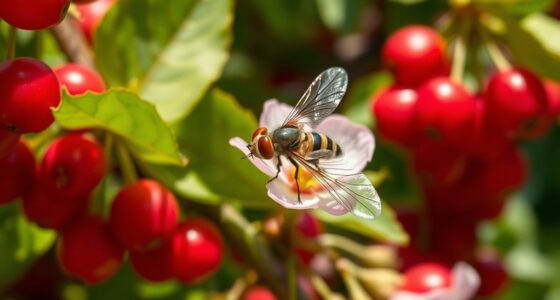
Think of your orchard as a busy dance floor, where pollinators need free movement. To guarantee netting doesn’t interfere with pollination, choose pollination-compatible netting material that allows bees and other insects to pass through. For example, lightweight mesh with appropriately sized gaps lets pollinators move freely while protecting your fruit. Always verify that your netting material choice aligns with the needs of local pollinators to keep your orchard thriving.
Are There Specific Regulations for Installing Bird Netting in Commercial Orchards?
You need to check local regulations for installing bird netting in commercial orchards. Regulatory compliance often requires obtaining installation permits before you start, ensuring your setup meets safety and environmental standards. Contact your local agricultural or environmental agency to clarify specific rules. Following these guidelines helps you avoid fines and legal issues while protecting bird populations and maintaining effective orchard management. Always stay informed about any updates to the regulations.
Conclusion
By choosing the right bird netting and installing it carefully, you become the guardian of your orchard’s harmony—protecting your crops without harm. Regular maintenance and complementary deterrents ensure this balance endures, like a well-tuned symphony. Imagine your orchard as a delicate dance between nature and nurture, where safety and productivity move in perfect step. With mindful practices, you’ll foster a thriving, bird-friendly environment that benefits everyone—your harvest, your orchard, and the feathered friends alike.