San Jose scale is a pest that affects apple and pear trees by attaching to bark, twigs, and fruit, feeding on sap and causing stress, yellowing leaves, and stunted growth. You can manage it through biological controls like Vedalia beetles or by applying dormant oil sprays in late winter to target overwintering eggs. Combining natural predators with targeted chemical treatments and regular monitoring helps keep the pest in check. Keep exploring to learn effective strategies for managing this pest effectively.
Key Takeaways
- San Jose scale attaches to bark, twigs, and fruit, feeding on sap and causing tree stress and yellowing leaves.
- Biological control with Vedalia beetles is effective for managing San Jose scale populations.
- Dormant oil sprays in late winter target overwintering eggs and crawlers, reducing infestations.
- Regular monitoring helps detect early infestations, enabling timely and targeted control measures.
- Combining biological and chemical controls in an integrated approach ensures healthier apple and pear trees.
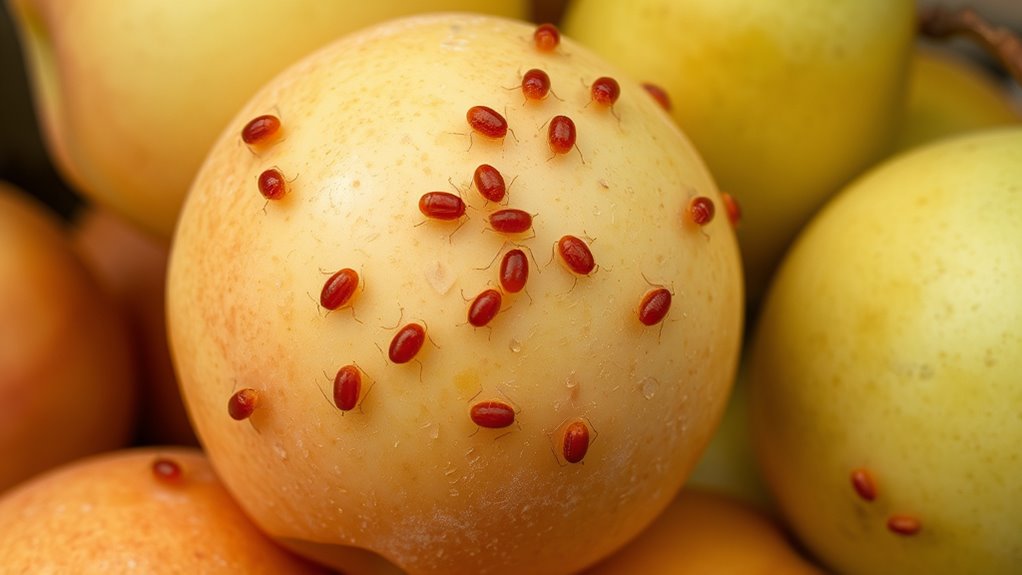
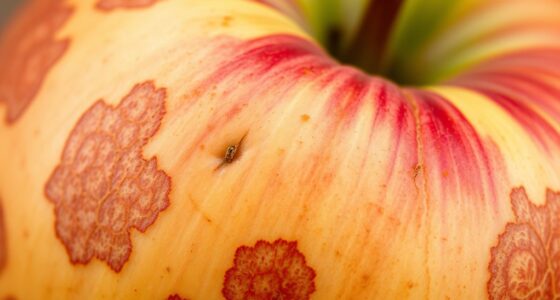
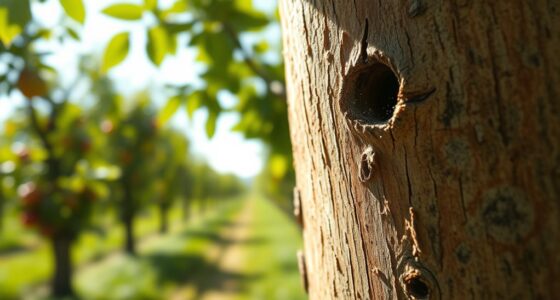
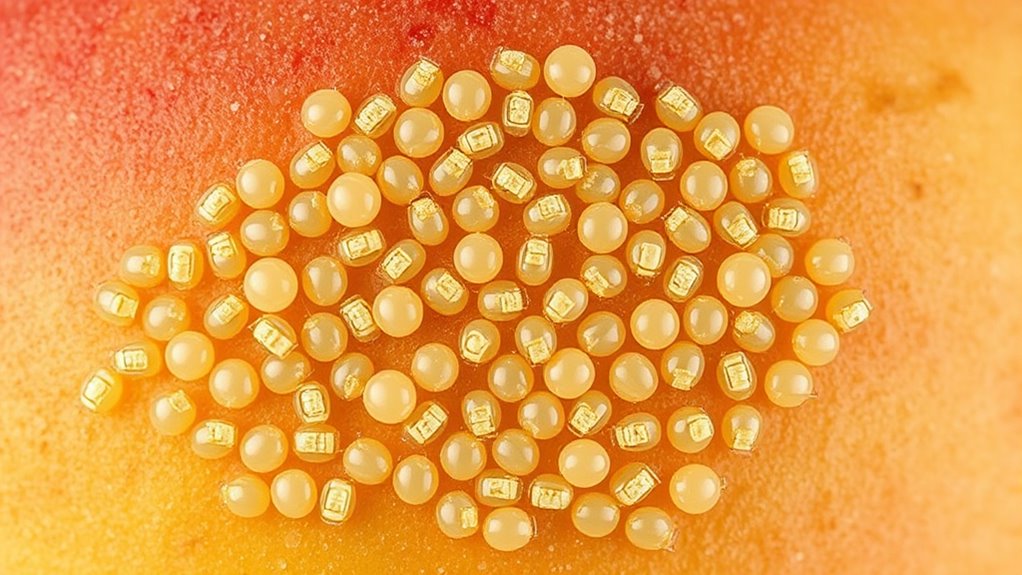
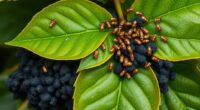
San Jose scale is a common pest that can severely damage apple and pear trees if left unchecked. This tiny, armored insect attaches itself to bark, twigs, and fruit, feeding on sap and weakening the tree’s overall health. If you notice stunted growth, yellowing leaves, or a sticky residue on your trees, you might be dealing with a San Jose scale infestation. To effectively manage this pest, you need a combination of strategies, primarily focusing on biological control and chemical management.
San Jose scale damages trees by feeding on sap, causing stunted growth and yellowing leaves.
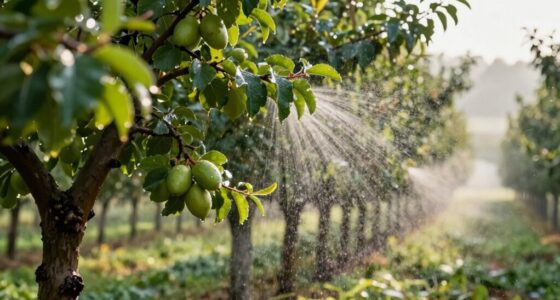
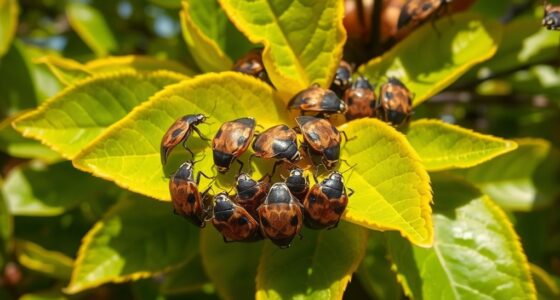
Biological control plays a vital role in controlling San Jose scale populations naturally. Introducing natural predators like lady beetles, specifically the Vedalia beetle, can considerably reduce scale numbers without harming your trees or the environment. These beneficial insects feed on San Jose scale, helping to keep populations in check. You should consider releasing these predators early in the season when scale populations are just beginning to develop. Maintaining healthy, diverse orchard ecosystems encourages the presence of these natural enemies, creating a balanced environment that resists pest outbreaks. Biological control is sustainable and reduces reliance on chemical pesticides, promoting a safer orchard for you and the surrounding ecosystem.
However, biological control alone might not always be enough, especially during severe infestations. This is where chemical management becomes necessary. When applying chemical controls, timing is critical. Typically, dormant oil sprays in late winter or early spring coat overwintering scale crawlers and eggs, suffocating them before they become active. During the growing season, you might need to use insecticides that target the crawling stage of the scale. Always choose products labeled for use on apples and pears, and follow the instructions carefully to minimize impact on beneficial insects. Be mindful of application timing to avoid harming natural predators like Vedalia beetles, especially if you’re relying on biological control as part of your integrated pest management plan.
Combining biological control with judicious chemical management offers the best chance of controlling San Jose scale effectively. Using natural predators first can reduce the need for chemical interventions, but when infestations become severe, targeted insecticide use is essential. Regular monitoring of your trees helps you catch early signs of infestation, allowing you to respond swiftly with the appropriate method. Additionally, understanding the life cycle of San Jose scale can improve your management strategies and ensure more effective control measures. By staying proactive and combining these strategies, you can protect your apple and pear trees from San Jose scale, ensuring healthy fruit production and a thriving orchard.
Frequently Asked Questions
What Are Natural Predators of San Jose Scale?
Natural predators play a key role in biological control of San Jose Scale. You can encourage natural predators like lady beetles, parasitic wasps, and lacewing larvae in your orchard. These beneficial insects hunt and feed on the scale insects, helping to keep their population in check. By promoting these natural predators, you reduce the need for chemical controls and support a more sustainable, eco-friendly approach to managing San Jose Scale.
How Does Weather Affect Infestation Levels?
Weather patterns act like an invisible hand guiding pest migration, making infestations more or less severe. Warm, dry conditions often accelerate San Jose Scale reproduction, leading to quicker buildup, while cooler, wetter weather can slow their movement and development. You’ll notice pest levels fluctuate with changing seasons, so staying vigilant and understanding these weather influences helps you time your treatments better, keeping your fruit healthier and your harvest more bountiful.
Can Organic Methods Effectively Control San Jose Scale?
Yes, organic methods can effectively control San Jose Scale. You should encourage beneficial insects like ladybugs and parasitic wasps to naturally reduce scale populations. Additionally, apply organic sprays such as insecticidal soaps or horticultural oils during early infestation stages. These methods are environmentally friendly, target the pests specifically, and help maintain your orchard’s health without relying on chemical pesticides. Consistent monitoring enhances their effectiveness.
What Is the Life Cycle Duration of the Pest?
Imagine the San Jose Scale as a tiny clock ticking in your orchard. Its life cycle lasts about 6 weeks, from egg to mature crawler. To beat it, you need diligent scale monitoring and timely pest management. Knowing this duration helps you plan your interventions, targeting the vulnerable crawler stage. By staying alert and acting swiftly within this period, you can effectively control the pest before it causes significant damage.
Are There Resistant Apple or Pear Varieties?
You should consider resistant cultivars or pest resistant varieties to manage San Jose Scale effectively. Some apple and pear varieties have been bred to resist this pest, reducing infestation risks and pesticide use. While no variety is completely immune, planting resistant cultivars can markedly lower your pest problems. Check with local nurseries or extension services to find the best resistant options suited for your region and orchard conditions.
Conclusion
If you catch San Jose Scale early, you can save your apple and pear trees from serious damage. For example, a small orchard owner noticed tiny, reddish bumps on their trees and treated them promptly. Soon, their trees recovered, producing healthy fruit again. Remember, regular inspection and timely treatment are key. Don’t wait until it’s too late—being proactive now keeps your trees thriving and your harvest bountiful.