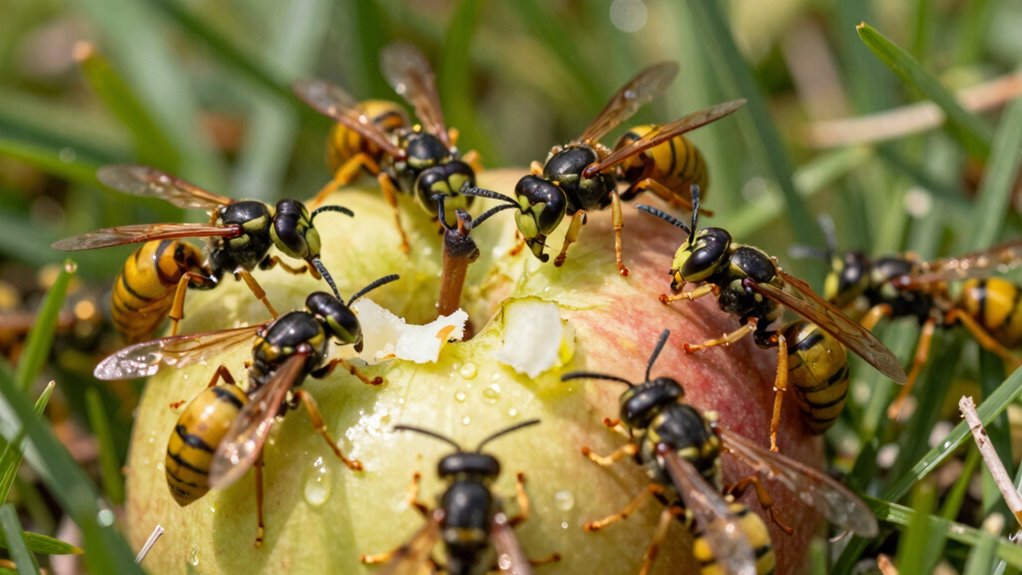

Fallen fruit attracts wasps because it emits strong scents and contains sugars that serve as quick energy sources. During late summer and early autumn, as fruit ripens and ferments, the aroma intensifies, signaling a rich food source. Wasps are scavengers, drawn to decaying fruit for nourishment, and they act quickly to capitalize on this opportunity. If you want to understand how to reduce wasp activity, there’s more to discover below.
Key Takeaways
- Fallen, overripe, or rotting fruit emits strong scents and sugars that attract wasps seeking quick energy sources.
- Wasps are most active around fruit during late summer and early autumn when ripening and fermentation peak.
- Fermentation produces aromatic signals that signal a rich, accessible food source for scavenging wasps.
- Removing fallen or decaying fruit promptly reduces available food, minimizing wasp attraction and activity.
- Managing yard cleanliness and barriers helps prevent large wasp groups from forming around fruit sources.
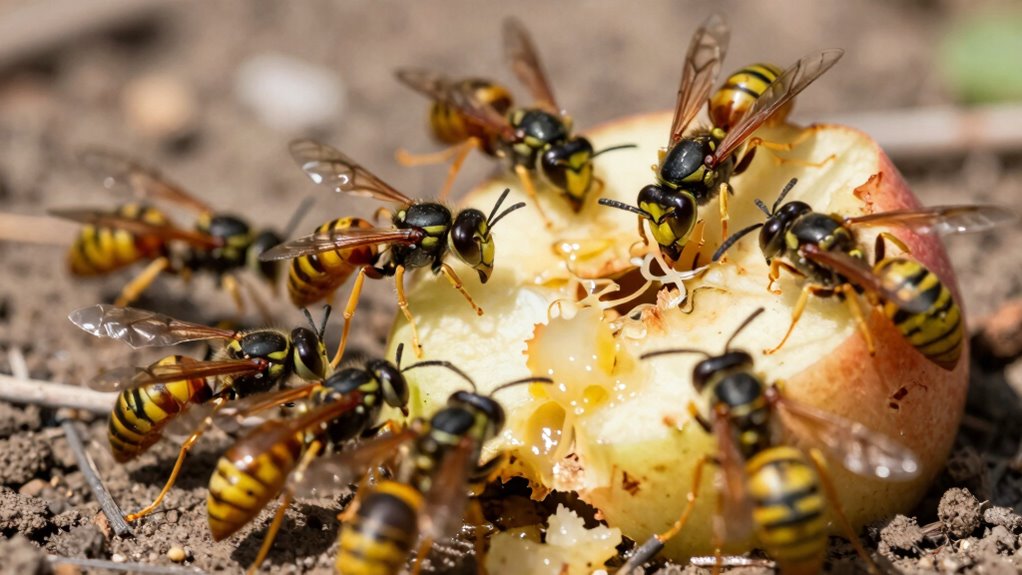
When fruit falls from trees, it often attracts wasps looking for an easy meal. These insects are quick to discover the ripening fruit, which emits strong scents that act like magnets. As the fruit ripening process progresses, natural sugars develop and intensify the aroma, making the fallen fruit even more tempting to wasps. They thrive on the sugars and nutrients found in overripe and rotting fruit, which provide a quick energy boost. Additionally, the enzymes involved in the ripening process break down cell walls, releasing aromatic compounds that further attract these scavengers. You might notice that wasps tend to gather around fallen apples, pears, or berries more during late summer and early autumn. This timing coincides with the peak of fruit ripening, when the sugars are at their highest. The honey bee behavior around flowers and nectar sources differs from wasps’ scavenging habits, but both are driven by the need for carbohydrates. Honey bees gather nectar to produce honey, whereas wasps seek out fermenting or rotting fruit for immediate energy. This distinction explains why wasps are so attracted to fallen fruit—it’s an abundant, accessible source of sustenance during times when other food options might be scarce.
Fallen fruit attracts wasps by releasing strong scents and ripe sugars, making it an easy, tempting energy source.
Understanding the fruit ripening process helps clarify why wasps are so drawn to fallen fruit at specific times. As the fruit matures, enzymes break down cell walls, releasing sugars and aromatic compounds that draw in insects like wasps and other scavengers. Once the fruit is fallen and begins to rot, it produces a fermenting smell that signals a rich food source. Wasps are particularly adept at locating these signals from a distance, and they often arrive in groups to capitalize on the bounty. Recognizing the fermentation process can help you better manage their presence and reduce the likelihood of attracting large groups of wasps to your area. Furthermore, the presence of overripe fruit can inadvertently encourage wasps to nest nearby, increasing their activity around your yard. Keeping your yard clean and promptly removing overripe fruit can significantly decrease the wasps’ food supply, making your space less attractive to these insects. Being aware of fruit ripening stages can also help you anticipate when wasps are most likely to be present, allowing you to take preventive measures in advance.
Your presence near fallen fruit can inadvertently attract these insects, especially if the fruit is overripe or decaying. Wasps are opportunistic feeders, and their behavior around fallen fruit is driven by their instinct to find quick energy. Unlike honey bees, which work methodically to gather nectar from flowers, wasps are more scavengers, and they’re less selective. They don’t hesitate to invade your compost or fruit bowl if they detect the right scent. Recognizing the scavenging behavior of wasps helps in implementing effective control strategies to minimize their visits.
In essence, the wasps around fallen fruit are simply following their natural instincts during the fruit ripening process. Their behavior is a survival strategy, capitalizing on the sugars and fermentation that occur as fruit decomposes. By understanding this, you can better manage their presence—removing fallen fruit promptly or using barriers—reducing the attraction and keeping these insects at bay.

Disposable Wasp Traps Outdoor Hanging 6 Pack
- Effective Wasp and Hornet Trap: Safe, bait-based outdoor hanging trap
- Easy to Use: Simple setup with bait options
- Attracts Multiple Pests: Targets wasps, bees, hornets, yellow jackets
As an affiliate, we earn on qualifying purchases.
As an affiliate, we earn on qualifying purchases.
Frequently Asked Questions
Are Wasps Dangerous to Humans Near Fallen Fruit?
Yes, wasps near fallen fruit can be dangerous to humans. They may become aggressive if they feel threatened or if their nest is nearby, posing Wasp nest threats. Always exercise caution and keep your distance. For Wasp sting safety, wear protective clothing and avoid swatting at wasps. If stung, clean the area and seek medical help if you experience severe reactions. Being cautious helps prevent unnecessary stings and injuries.
How Can I Prevent Wasps From Being Attracted to Fallen Fruit?
You can easily prevent wasps from flocking to fallen fruit by acting early! As fruit ripening begins, promptly pick it up or toss it into the compost. Regularly check for and remove overripe or rotting fruit, which pest behavior attracts these winged invaders. Cover your fruit with a fine mesh or use natural repellents like peppermint oil. Stay vigilant—your quick actions will keep wasps away and your yard peaceful!
Do All Wasp Species Target Fallen Fruit Equally?
Not all wasp species target fallen fruit equally. Wasp behavior varies, with some species more attracted to decaying fruit due to its scent and sugar content. As fruit decays, it releases odors that draw certain wasps, especially those that feed on sugars or seek protein sources. Understanding these differences helps you manage wasps better, as some species are more aggressive and persistent around fallen fruit than others.
When Is the Wasp Season Typically at Its Peak?
You’ll find wasp season peaks in late summer to early fall when their habitat is most active and food sources like fallen fruit are abundant. During this time, wasps become more aggressive, so you should consider effective pest control methods. To protect yourself and your property, remove fallen fruit regularly, avoid sweet scents, and use wasp traps or professional pest control for safe, efficient management.
Can Fallen Fruit Attract Other Pest Insects Besides Wasps?
Yes, fallen fruit attracts other pest insects besides wasps. As fruit decay, it releases strong scents that draw in pests like flies, ants, and beetles. These insects are attracted to the sugars and rotting material, increasing pest attraction around your yard. To prevent this, promptly clean up fallen fruit and manage decaying produce, reducing the chances of attracting unwanted insects and keeping your outdoor space pest-free.

DonSail Fruit Picker Pole Tool with Basket Long Handle, 35-65 Inch Adjustable Apple Orange Picker Pole Tool with Basket for Avocado Acorn Lemon Pear Mango Tree Picker
- Large Fruit Picker Basket: Metal twist-on head with claw design
- Adjustable Length: Extends from 35 to 65 inches
- Durable and Lightweight: Made from thick stainless steel
As an affiliate, we earn on qualifying purchases.
As an affiliate, we earn on qualifying purchases.
Conclusion
So, when you spot wasps around fallen fruit, remember they’re just doing what comes naturally—like bees drawn to nectar. They’re attracted to the sweet, ripe fruit, which provides a quick energy boost. To keep them at bay, clean up fallen fruit regularly and cover any remaining fruit. Think of it as closing the door on uninvited guests, so you can enjoy your yard without unwanted buzzing visitors spoiling the moment.

Colton’s Naturals – Bee and Wasp Repellent Spray – (32 OZ) – Natural, Bee and Wasp Deterrent – Quick and Easy Pest Control – Safe to Spray Around Children
- Natural and Safe Ingredients: Cinnamon and Peppermint oils
- Long-Lasting Effect: Provides extended protection against bees and wasps
- Child and Family Safe: Safe to spray around children and food areas
As an affiliate, we earn on qualifying purchases.
As an affiliate, we earn on qualifying purchases.
DonSail Fruit Picker Pole Tool with Basket Long Handle, 35-65 Inch Adjustable Apple Orange Picker Pole Tool with Basket for Avocado Acorn Lemon Pear Mango Tree Picker
- Large Fruit Picker Basket: Metal twist-on head with claw design
- Adjustable Length: Extends from 35 to 65 inches
- Durable and Lightweight: Made from thick stainless steel
As an affiliate, we earn on qualifying purchases.
As an affiliate, we earn on qualifying purchases.