To identify apple maggots, look for small, sunken holes, discolored spots, and tunnels inside your fruit, especially early in the season. Monitor your apples by placing baited traps or checking for buzzing adult flies, which signal imminent egg-laying. Physical barriers like mesh netting can also help reduce infestation. Staying vigilant and acting quickly can save your harvest from damage. Keep exploring to learn more effective tips for controlling these pests.

Get garden gear delivered free with Prime
- Fast, free delivery on millions of items
- Prime Video, Amazon Music and more included
- Member-only deals all year
Key Takeaways
- Look for small, sunken holes and discolored spots on apples early in the season.
- Use baited fruit fly traps to monitor adult fly activity and detect peak periods.
- Observe buzzing adult flies around ripening or overripe fruit as a sign of potential egg-laying.
- Remove and destroy fallen or damaged fruit to reduce maggot breeding sites.
- Apply insecticides during peak adult activity to prevent eggs from being laid inside apples.
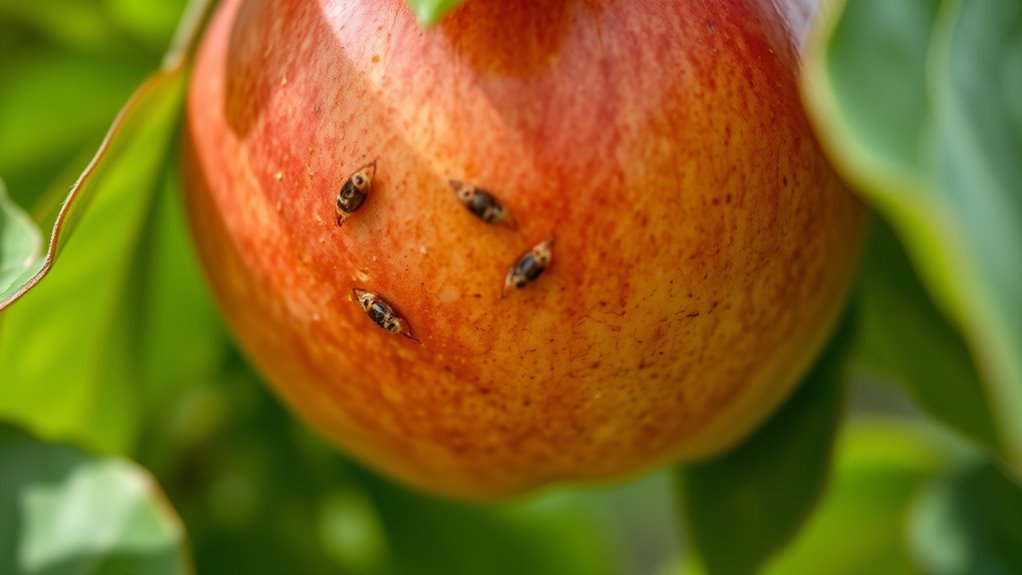
Have you ever noticed small, sunken holes or discolored spots on your apples? If so, you might be dealing with an apple maggot infestation. These pests are notorious for damaging fruit early in the season, and understanding their behavior is key to effective pest control methods. Apple maggots are actually the larvae of a type of fruit fly, which means their behavior closely mirrors that of other fruit flies. They are attracted to ripening and overripe fruit, especially apples, where they lay their eggs just beneath the skin. Once the eggs hatch, the larvae burrow into the fruit, creating tunnels that ruin the apple’s texture and flavor. Recognizing how these pests behave can help you anticipate their activity and implement timely control measures.
Fruit fly behavior is driven largely by odor and visual cues. Apple maggots are attracted to the scent of ripe fruit, which is why they tend to target apples at specific stages of ripeness. They also respond to the visual appearance of fruit, often preferring apples that are slightly damaged or already showing signs of decay. As a gardener or homeowner, you should be alert for these clues, especially during peak fruiting seasons. Monitoring is essential because the presence of adult flies can be a strong indicator that eggs will soon be laid. Once you see adult flies buzzing around your apple trees or orchard, it’s time to start your pest control methods before the larvae cause significant damage. Additionally, understanding the financial aspects of pest control can help you allocate resources effectively, ensuring timely intervention without unnecessary expense.
Implementing pest control methods early can save your harvest and prevent apples from becoming unfit for eating. One effective approach involves monitoring with fruit fly traps, which use baited sticky or liquid traps to catch adult flies. This provides a visual cue of fly activity and helps determine when to escalate your control efforts. Other methods include applying insecticidal sprays at critical times, such as just before or during the peak adult fly activity. Additionally, removing and destroying fallen or infested fruit can reduce breeding sites, as maggots develop inside the fruit and drop to the ground to pupate. Covering fruit with mesh or netting can also serve as a physical barrier, preventing flies from reaching the fruit to lay eggs.
As an affiliate, we earn on qualifying purchases.
Frequently Asked Questions
How Can I Prevent Apple Maggot Infestations Naturally?
To prevent apple maggot infestations naturally, you should practice companion planting with herbs like garlic and marigolds, which repel pests. Use natural repellents such as neem oil or insecticidal soaps on your trees. Additionally, cover your fruit with fine mesh to block flies, eliminate fallen and rotting fruit promptly, and encourage beneficial insects like parasitic wasps that naturally control apple maggot populations.
Are Certain Apple Varieties More Resistant to Apple Maggots?
You’ll find that certain apple varieties, known for cultivar resistance, are less attractive to apple maggots. Varieties like Liberty and Enterprise show natural resistance due to their thicker skins and chemical makeup, which deter egg-laying. Research suggests that planting resistant apple varieties can markedly reduce infestations. So, choosing resistant cultivars is a smart, natural way to protect your orchard without relying heavily on chemical controls.
What Are the Economic Impacts of Apple Maggot Infestations?
You face significant economic damage from apple maggot infestations, including reduced fruit quality and yield. This leads to market loss as consumers reject damaged apples, and your sales decline. The costs of monitoring, control, and potential crop loss add up, impacting your profitability. If you don’t manage infestations effectively, the economic impact worsens, threatening your orchard’s sustainability and your overall income.
Can Apple Maggots Affect Other Fruit Crops Besides Apples?
Like a ripple spreading across a pond, apple maggots can affect other fruit crops beyond apples. They target non-apple hosts such as cherries, peaches, and pears, causing cross crop effects. You might notice damage in these fruits, which can lead to economic losses and increased pest management efforts. Keep an eye on these hosts to prevent infestations, as apple maggots don’t limit themselves to just apples.
How Do Weather Conditions Influence Apple Maggot Populations?
Weather conditions substantially influence apple maggot populations. You’ll notice that temperature fluctuations can speed up or slow down their development, while consistent warmth promotes more generations per season. Rainfall patterns also matter—heavy rain can destroy pupae or reduce fruit exposure, while dry periods allow for easier egg-laying. Keeping an eye on these weather patterns helps you predict maggot activity and manage infestations more effectively.
baited fruit fly traps for apples
As an affiliate, we earn on qualifying purchases.
As an affiliate, we earn on qualifying purchases.
Conclusion
By paying close attention to signs of apple maggots, you can stay one step ahead and protect your orchard. Regular monitoring and early detection are your best tools—don’t wait until it’s too late. Remember, an ounce of prevention is worth a pound of cure, so stay vigilant and act promptly. With proactive efforts, you’ll keep your apples healthy and your harvest bountiful, proving that a little effort goes a long way.
mesh netting for fruit protection
As an affiliate, we earn on qualifying purchases.
As an affiliate, we earn on qualifying purchases.
As an affiliate, we earn on qualifying purchases.
Columbus Day / Indigenous Peoples' Day Picks
long weekend sales
As an affiliate, we earn on qualifying purchases.