To break the fungus gnat cycle in your greenhouse, start by managing moisture carefully—avoid overwatering and improve drainage to reduce breeding sites. Next, introduce biological controls like beneficial nematodes or predatory insects to target larvae. Finally, remove decaying organic material and inspect regularly for signs of infestation. Keeping these steps in mind can effectively control gnats and protect your plants—continue exploring to learn more helpful tips.

Get garden gear delivered free — and shop member deals
- Fast, free delivery on millions of items
- Access to Prime Big Deal Days deals on October 6–7
- Prime Video, Amazon Music and more included
Key Takeaways
- Introduce biological controls like beneficial nematodes or predatory insects to target larvae effectively.
- Manage soil moisture carefully by avoiding overwatering and ensuring good drainage.
- Remove decaying plant debris and organic matter to eliminate breeding sites.
- Use yellow sticky traps to monitor adult gnats and detect early infestations.
- Maintain regular sanitation and inspection routines for proactive prevention and cycle disruption.
beneficial nematodes for fungus gnat control
As an affiliate, we earn on qualifying purchases.
As an affiliate, we earn on qualifying purchases.
What Are Fungus Gnat Infestations and How Do They Start?
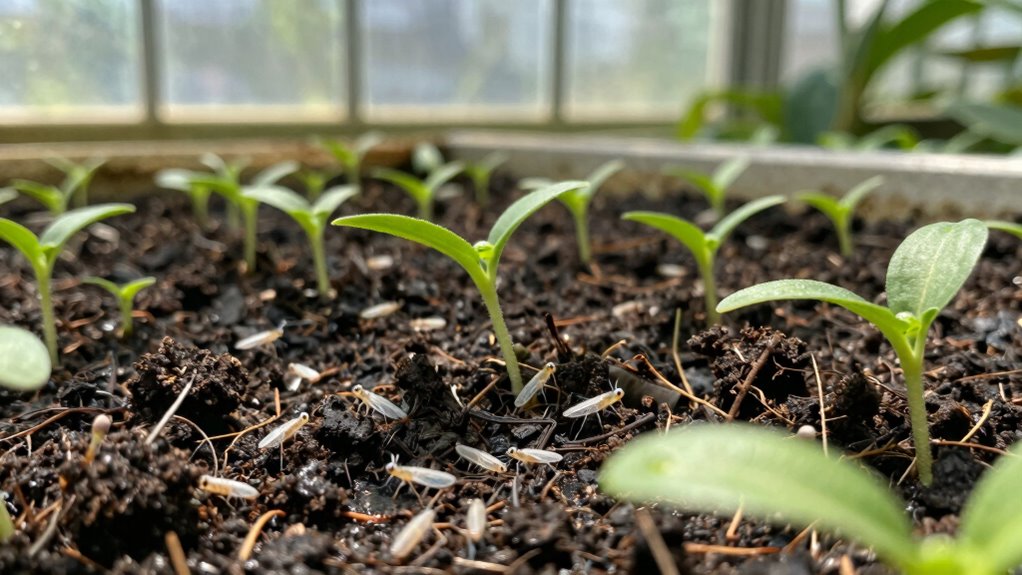
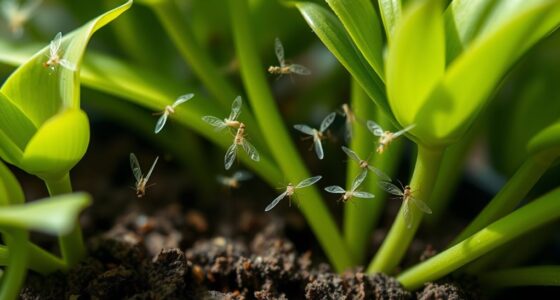
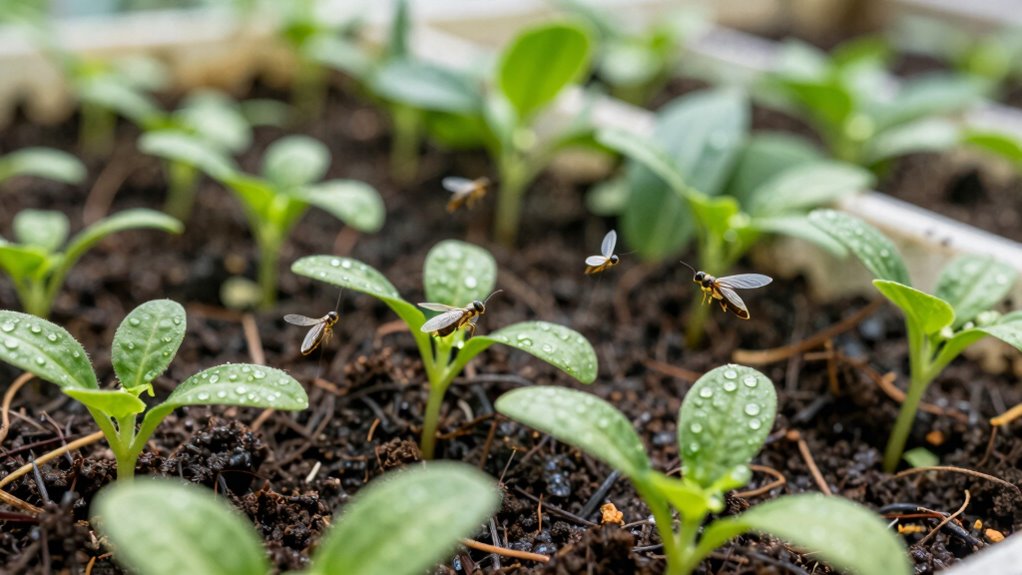
Fungus gnat infestations often begin unnoticed when tiny larvae hatch in the moist, organic-rich soil of your greenhouse. These pests are part of the fungus gnat lifecycle, which includes eggs, larvae, pupae, and adults. As indoor plant pests, they thrive in damp environments where organic matter decomposes, providing food for the larvae. The eggs are tiny and laid near the soil surface, often going unnoticed. When they hatch, the larvae feed on fungi, roots, and decaying organic material, which can damage your plants. Adult fungus gnats are small, dark, and fly around your plants, but their presence is often overlooked until the infestation worsens. Understanding their lifecycle helps you recognize how quickly they can establish themselves in your greenhouse.
yellow sticky traps for greenhouse pests
As an affiliate, we earn on qualifying purchases.
As an affiliate, we earn on qualifying purchases.
How Can You Spot Fungus Gnat Problems in Your Greenhouse?
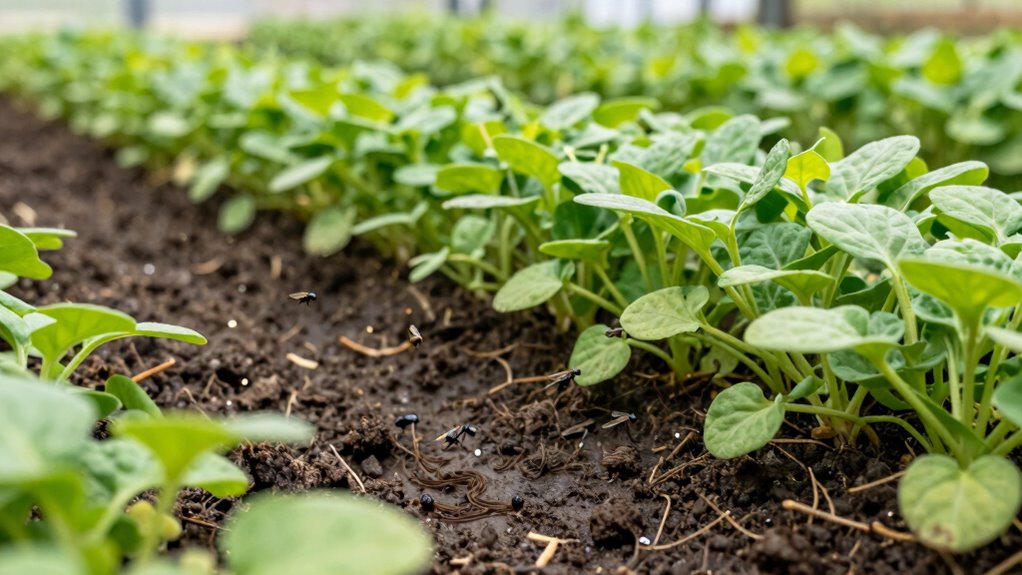
How can you tell if fungus gnats are invading your greenhouse? Look for subtle signs like persistent leaf yellowing, which indicates stressed plants. Use yellow sticky traps around your greenhouse; if you notice an increase in tiny flying insects on these traps, fungus gnats are likely present. Pay attention to the soil surface—if you see a swarm of adult gnats hovering or crawling, it’s a clear sign of an infestation. Additionally, inspect your plants for wilting or stunted growth, as larvae feed on roots. Regular monitoring with sticky traps and observing plant health can help you catch problems early. Early detection allows for timely intervention, preventing a full-scale infestation. Incorporating proper lighting conditions can also help deter fungus gnat activity by reducing favorable breeding environments.
drainage improvement for greenhouse soil
As an affiliate, we earn on qualifying purchases.
As an affiliate, we earn on qualifying purchases.
The 3 Easy Steps to Break the Fungus Gnat Cycle

Breaking the fungus gnat cycle is essential for long-term control, and it starts with three simple steps. First, introduce biological controls like beneficial nematodes or predatory insects to target larvae in the soil. Second, manage moisture carefully—avoid overwatering and ensure proper drainage to eliminate ideal breeding sites. Third, regularly inspect and remove decaying plant material that attracts gnats and provides breeding grounds. These steps work together to disrupt the gnat lifecycle, preventing adults from laying eggs and larvae from developing. Consistent moisture management reduces the humidity and dampness that fungus gnats thrive on. Additionally, understanding the life cycle of fungus gnats helps in timing control measures effectively. Implementing monitoring techniques can help you detect early signs of infestation and act promptly. Using proper sanitation practices can further reduce the likelihood of breeding sites and support overall greenhouse health. Combining biological controls with diligent moisture control creates an inhospitable environment, effectively breaking the cycle and helping keep your greenhouse free of persistent infestations.
biological pest control insects for fungus gnats
As an affiliate, we earn on qualifying purchases.
As an affiliate, we earn on qualifying purchases.
How to Prevent Fungus Gnat Infestations in the Future
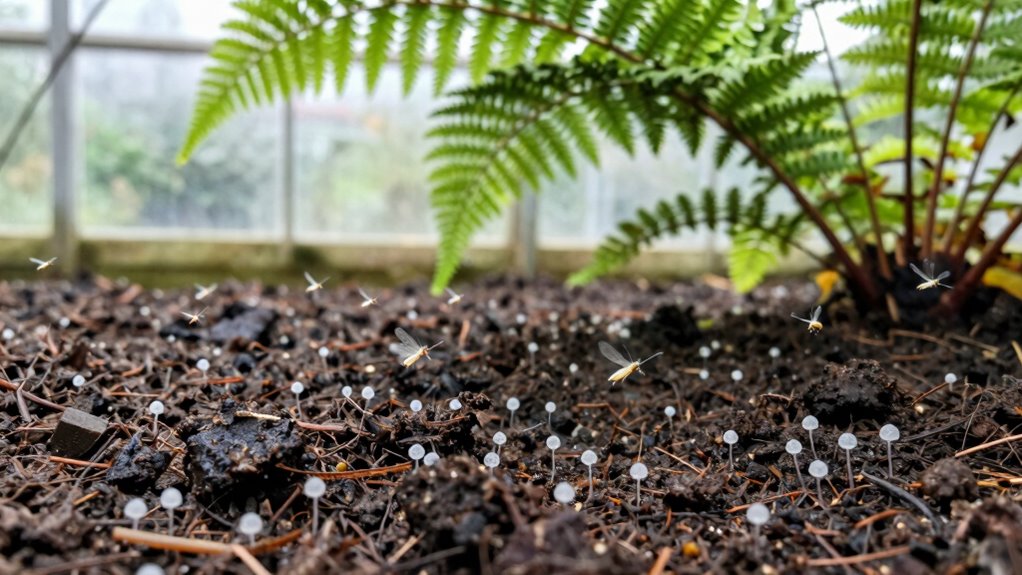
To prevent future fungus gnat infestations, maintaining a proactive approach is essential. Focus on integrating biological control methods and moisture management strategies to keep gnats at bay. Regularly inspect your greenhouse and address damp spots promptly. Use beneficial predators like predatory mites or nematodes to naturally reduce gnat populations. Ensure your watering practices promote ideal moisture levels without oversaturation. Implement proper drainage systems and avoid overwatering plants. Keep the growing environment clean by removing decaying plant material and organic debris. Auditory processing monitoring and early intervention help maintain a healthy, gnat-free greenhouse. Utilizing integrated pest management techniques can further enhance your control efforts. Additionally, understanding the fungus gnat life cycle can help you target key stages of development for more effective control. Recognizing the importance of moisture levels and their impact on gnat proliferation can also aid in developing a comprehensive prevention plan.
Troubleshooting Common Fungus Gnat Challenges
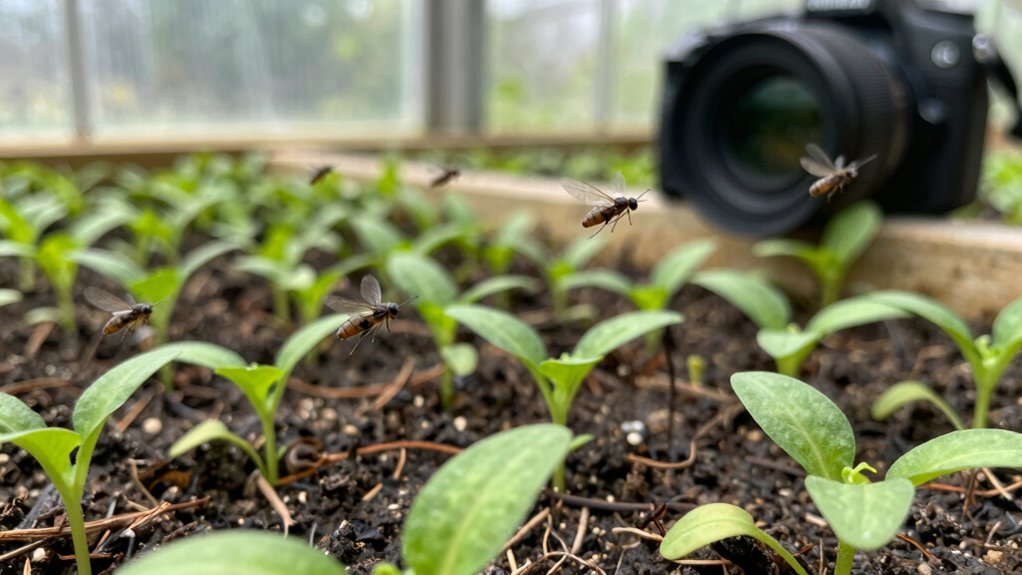
Even with preventive measures in place, you might still encounter persistent fungus gnat issues. When soil moisture levels remain high, it creates ideal breeding grounds for gnats, making it harder to break the cycle. Check your watering habits and make certain you’re not overwatering, which weakens plant health and encourages pests. If you notice adult gnats flying around, inspect the soil for larvae and consider using biological controls like beneficial nematodes or Bacillus thuringiensis. Adjust your watering schedule to keep the soil slightly drier but still healthy for your plants. Remember, healthy plants are more resilient to pests, so maintaining proper soil moisture is key. Understanding the behavior of pests can help you develop more effective strategies. Regularly monitoring soil conditions and adjusting your care routines based on pest activity can prevent infestations from worsening. Proper soil moisture management is essential for pest control and plant health. Monitoring soil conditions regularly can help you catch problems early and prevent infestations from becoming severe. Troubleshooting these challenges quickly minimizes damage and helps restore balance in your greenhouse environment.
Frequently Asked Questions
Are Fungus Gnats Harmful to Indoor Plants Beyond Nuisance?
Fungus gnats can harm your indoor plants beyond just being a nuisance. They can weaken plant health by feeding on roots, leading to stunted growth or even plant death. Additionally, they may transmit pests or diseases from soil to your plants. Staying vigilant and applying effective control measures helps protect your plants’ overall health and prevents pest transmission, ensuring your indoor garden thrives.
How Long Does It Typically Take to Eliminate a Fungus Gnat Infestation?
It usually takes about 2 to 3 weeks to eliminate a fungus gnat infestation, depending on your treatment timeline and how effectively you break their lifecycle duration. You’ll notice fewer gnats within the first week, but complete eradication can take longer if you don’t stay consistent. Keep treating the soil, remove breeding sites, and monitor regularly to guarantee you break the cycle and control the problem efficiently.
Can Natural Predators Effectively Control Fungus Gnats in Greenhouses?
Yes, natural predators can effectively control fungus gnats in greenhouses through biological control. Predators like beneficial nematodes and predatory mites target gnat larvae, reducing populations naturally. Their effectiveness depends on proper application and environmental conditions, but when used correctly, they can markedly lower fungus gnat numbers without chemicals. Incorporate predator releases into your integrated pest management plan for sustainable, eco-friendly control of fungus gnats.
What Environmental Conditions Favor Fungus Gnat Outbreaks?
Think of your greenhouse as a cozy home for fungus gnats, where high moisture levels and abundant organic matter create perfect conditions for them to thrive. When soil stays damp and decays, it’s like inviting these pests to set up residence. You’ll see outbreaks when humidity is high, and organic debris accumulates, giving fungus gnats everything they need to reproduce rapidly. Keeping moisture levels balanced and cleaning organic matter can break their cycle.
Are There Organic Alternatives to Chemical Controls for Fungus Gnats?
Yes, you can use organic alternatives to chemical controls for fungus gnats. Biological controls like beneficial nematodes or predatory mites target gnat larvae effectively. You might also try organic repellents such as neem oil or diatomaceous earth, which disrupt their life cycle. These options are eco-friendly and safe for your plants, helping you manage fungus gnat populations without relying on harsh chemicals.
Conclusion
By following this 3-point plan, you’ll outsmart fungus gnats and keep your greenhouse thriving, just like a seasoned gardener of yore. Remember, patience and consistency are your best allies—don’t let these pests turn your green oasis into a veritable house of horrors. Stay vigilant, act quickly, and don’t be a square—tackle infestations head-on before they take root, and your plants will thank you for it. Now, go forth and conquer those gnats!
Fall yard work Picks
leaf blowers
As an affiliate, we earn on qualifying purchases.