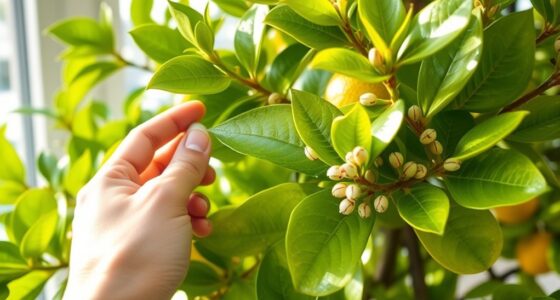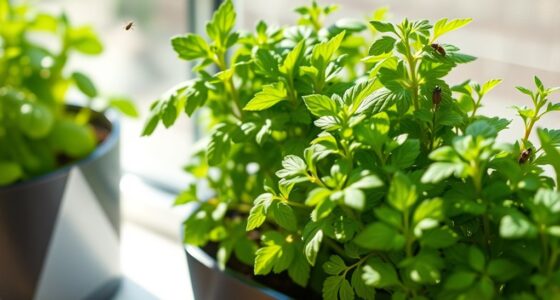
To inspect your houseplants with a hand lens, start by systematically examining each part, including leaves, stems, and soil surfaces. Use the lens to spot tiny pests like spider mites, aphids, or scale, paying special attention to undersides of leaves and leaf veins. Look for signs of disease such as discoloration or soft spots. By checking regularly and thoroughly, you can catch problems early—keep exploring to learn more about keeping your plants healthy.

Get garden gear delivered free with Prime
- Fast, free delivery on millions of items
- Prime Video, Amazon Music and more included
- Member-only deals all year
Key Takeaways
- Use a hand lens to closely examine all plant parts, including undersides of leaves and stems.
- Follow a systematic approach from top to bottom, inspecting each area thoroughly.
- Focus on leaf veins, margins, and soil surface for signs of pests and disease.
- Look for tiny moving pests, webbing, discoloration, or sticky residues as indicators.
- Regularly inspect plants to detect issues early and maintain plant health.
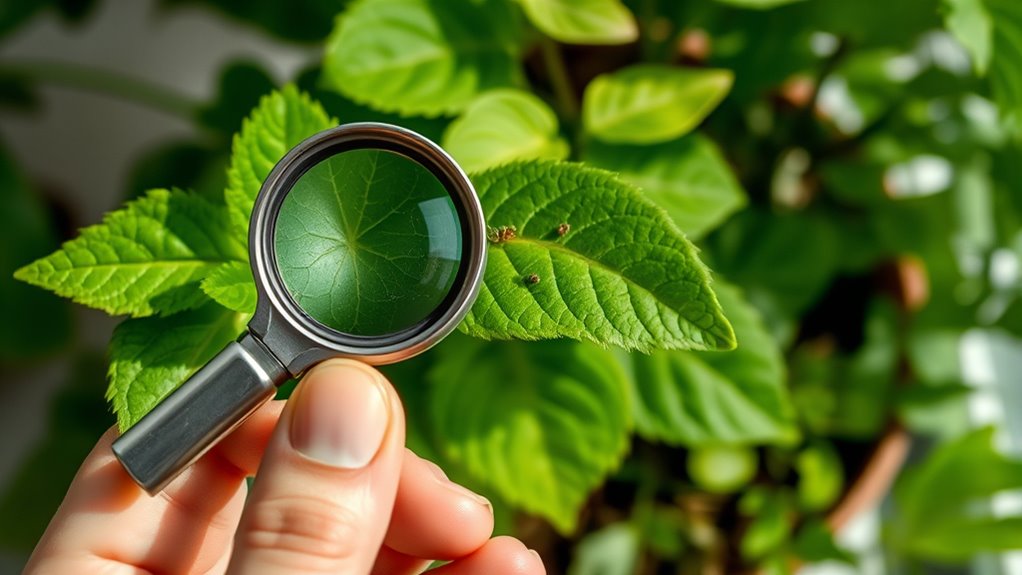
Inspecting your houseplants closely can help you catch problems early and keep them healthy. Using a hand lens makes it easier to see tiny pests and subtle signs of disease that might otherwise go unnoticed. When you’re diligent about pest identification, you can address infestations before they spread, saving your plants from serious damage. Similarly, early disease detection allows you to take targeted action, preventing issues from worsening and protecting your overall plant health.
Start by examining the entire plant, focusing on the leaves, stems, and soil surface. Use your hand lens to scrutinize the undersides of leaves, as many pests, like spider mites or aphids, tend to hide there. Look for tiny moving specks, webbing, or discolored spots—clear signs of pest activity. For disease detection, observe any unusual discoloration, spots, or soft, rotting areas. The lens helps you spot fungal spores, bacterial infections, or other pathogens that are often too small to see with the naked eye.
Pay special attention to the leaf veins and margins, as pests often congregate in these areas. Check the stems and petioles for any abnormal swelling, discoloration, or sticky residue, which can indicate pest presence or disease. Also, examine the soil surface for signs of pests like fungus gnats or root aphids, which can damage roots and undermine plant health. The hand lens enables you to see the tiny pests or fungal hyphae that cause these issues, helping you pinpoint exactly what’s wrong.
As you inspect, stay systematic. Start at the top of the plant and work your way down, making sure to cover all sides of each leaf and stem. Use the lens to zoom in on suspicious spots, so you don’t miss even the tiniest pest or early signs of disease. If you notice pests, identify their type so you can choose the most effective treatment. For example, spider mites often leave fine webbing, while scale insects look like small bumps attached to stems and leaves.
Consistent inspections with your hand lens will build your confidence in pest identification and disease detection. Over time, you’ll recognize the early symptoms of common issues, allowing you to respond promptly. Remember, catching problems early is key to keeping your houseplants thriving. With a little practice, your careful inspections become a crucial part of your plant care routine, helping you maintain healthy, vibrant plants indoors. Regular plant health checks also support early detection and prevention of common pests and diseases, ensuring your plants remain strong and beautiful.
As an affiliate, we earn on qualifying purchases.
Frequently Asked Questions
What Magnification Level Is Best for Inspecting Houseplants?
You should choose a hand lens with a magnification strength of 10x to 20x for inspecting houseplants. This range offers enough detail to spot pests and diseases without making the view too fuzzy. Make sure to select a lens with good lens quality, as clearer optics help you see tiny issues more easily. A well-made lens at this magnification level helps you keep your plants healthy and pest-free.
How Often Should I Inspect My Houseplants With a Hand Lens?
Think of your houseplants as tiny guardians of your home’s serenity. You should inspect them weekly with a hand lens, like a detective on a mission. Check their soil moisture levels and watering schedule to catch early signs of trouble. Regular inspections help you spot pests or diseases before they spread, ensuring your plants stay healthy and vibrant. Make it a weekly ritual, and your green friends will thank you.
Can a Hand Lens Help Identify All Pests on Houseplants?
A hand lens greatly aids pest identification on your houseplants, but it can’t catch every pest. Some pests, like tiny mites or eggs, are hard to see even with one. Regular inspections with a lens improve your plant health by catching issues early, but for full pest control, combine visual checks with other methods like sticky traps or professional advice. Stay vigilant and keep your plants healthy.
Are There Specific Types of Hand Lenses Recommended for Houseplant Care?
Imagine holding a tiny window into your houseplant’s world; a good hand lens with 10x to 30x magnification clarity makes all the difference. Look for one with durable, scratch-resistant glass or high-quality acrylic for longevity. A lightweight, compact design helps you inspect leaves and stems comfortably, while adjustable focus or built-in LED lights enhance detail. Choose a reliable, sturdy lens to guarantee clear, close-up inspections every time.
How Do I Interpret Signs of Disease or Pest Damage Through a Hand Lens?
When inspecting your houseplants with a hand lens, look for tiny pests like mites, aphids, or scale insects, which often appear as small moving dots or bumps. Use symptom analysis to identify damage, such as discolored, speckled, or chewed leaves. Carefully examine leaf undersides and stems, as pests hide there. Recognizing these signs early helps in pest identification, allowing you to take swift action to keep your plants healthy.
magnifying glass for houseplants
As an affiliate, we earn on qualifying purchases.
As an affiliate, we earn on qualifying purchases.
Conclusion
Now that you know how to inspect your houseplants with a hand lens, you’re practically a detective solving plant mysteries! With just a tiny magnifier, you can spot pests and diseases hiding like secret agents, saving your plants from certain doom. Think of yourself as a botanical superhero wielding a super-powered lens—nothing can escape your eagle eye! Keep inspecting regularly, and you’ll turn your houseplants into unstoppable, thriving green warriors.
As an affiliate, we earn on qualifying purchases.
plant disease diagnosis magnifier
As an affiliate, we earn on qualifying purchases.
As an affiliate, we earn on qualifying purchases.
Fall yard work Picks
leaf blowers
As an affiliate, we earn on qualifying purchases.