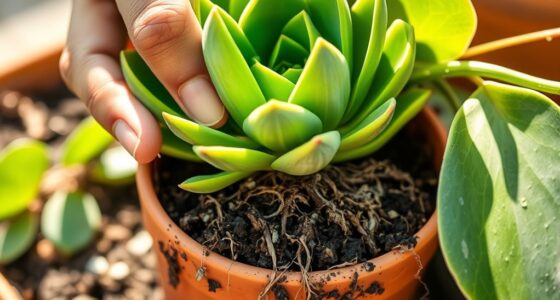

Overwintering outdoor plants indoors gets messy quickly because pests like aphids or spider mites can hitch a ride on your plants, leading to infestations. Debris such as fallen leaves, soil spills, and dead plant material also accumulate, creating clutter and mess. Poor environmental conditions and improper care can weaken plants, making them more susceptible to problems. If you keep going, you’ll discover key tips to manage these issues and keep your indoor garden tidy.

Get garden gear delivered free with Prime
- Fast, free delivery on millions of items
- Prime Video, Amazon Music and more included
- Member-only deals all year
Key Takeaways
- Pests hitch rides on outdoor plants, spreading quickly indoors without natural predators to control them.
- Dead leaves, soil spills, and plant debris accumulate, increasing indoor clutter and mess.
- Insufficient light, humidity, and air circulation stress plants, leading to health decline and potential pest outbreaks.
- Overwatering, improper fertilizing, and soil issues weaken plants and contribute to indoor mess.
- Ongoing maintenance and vigilance are required to manage pests, debris, and environmental conditions indoors.
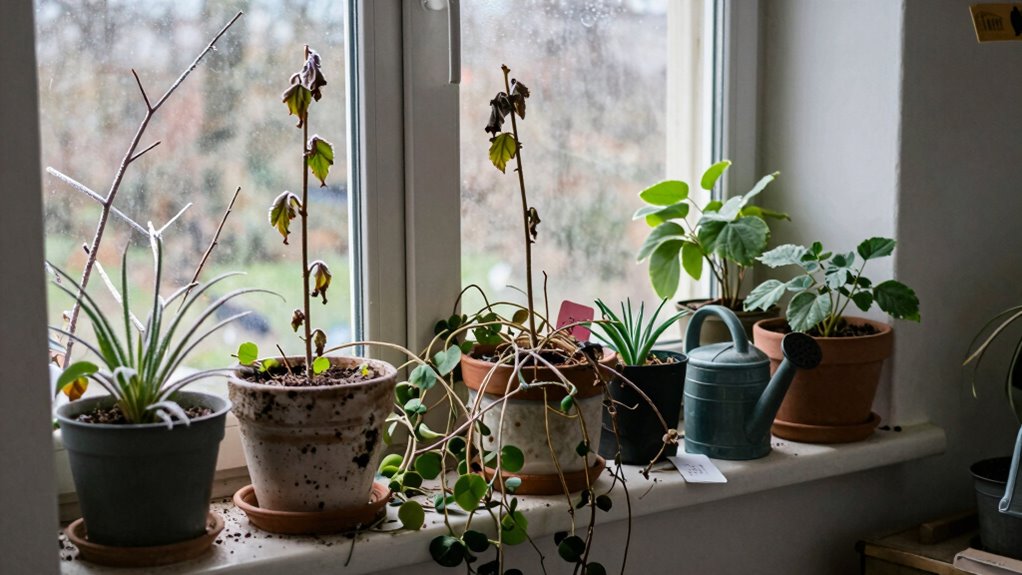
As winter approaches and outdoor temperatures drop, preparing your garden plants for the cold is crucial so they can survive indoors. Overwintering outdoor plants indoors might seem straightforward, but it often turns into a messy process quickly. The main reason is that maintaining plant health and pest control becomes more complex when plants are moved inside. You might start with the best intentions, but without proper planning, things can spiral out of control fast.
Overwintering outdoor plants indoors is simple in theory but quickly becomes messy without proper planning and care.
When you relocate your plants, you bring in more than just greenery—you also bring pests. Tiny insects like aphids, spider mites, or scale insects can hitch a ride on your plants, and once inside, they can quickly multiply and spread. Managing pest control indoors becomes a challenge because the enclosed environment offers little natural predators to keep pests in check. As a result, what began as a simple overwintering project can turn into a full-blown pest infestation that affects not only your plants but other household plants as well. It’s essential to inspect each plant thoroughly before bringing it inside and to quarantine new arrivals until you’re sure they’re pest-free.
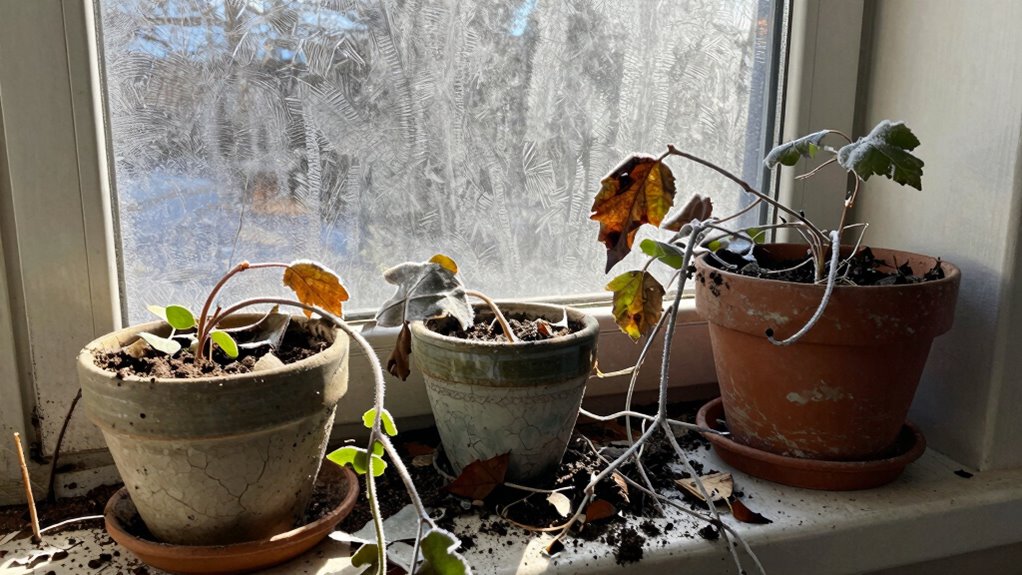
Plant health is another concern that adds to the mess. Indoor environments typically lack the natural conditions plants need, such as adequate light, humidity, and air circulation. If you don’t provide the right conditions, your plants can suffer from stress, leading to weak growth, disease susceptibility, or even death. Proper indoor plant care can help prevent many of these issues from arising. Additionally, understanding the environmental needs of your plants can help you create a more suitable indoor setting. Over time, neglecting these needs causes a decline in plant health, which can make your plants more vulnerable to pests and diseases. It’s tempting to just shove the plants in the corner and forget about them, but neglecting their care only makes the situation worse.
Furthermore, watering and fertilizing habits change dramatically indoors. Overwatering can cause root rot, while underwatering stresses the plant, weakening its immune system. Without proper attention, these issues compound, making plants more prone to pests and disease. The mess isn’t just about pest control and plant health; it’s also about the clutter and potential damage caused by fallen leaves, soil spills, and dead plant material. Keeping the indoor space tidy requires constant effort. Additionally, understanding how to overwinter outdoor plants indoors properly can help mitigate some of these issues from the start. Proper storage conditions are also vital to ensure your plants remain healthy and reduce the risk of pests or diseases infiltrating your indoor garden.
All of these factors contribute to why overwintering outdoor plants indoors can get messy fast. It’s a delicate balancing act that demands vigilance, knowledge, and maintenance. Without careful planning and ongoing care, what should be a simple transition turns into a complicated, sometimes chaotic, process. Staying attentive to plant health and pest control is your best defense against the mess, but it still requires effort and a proactive mindset.
indoor pest control for houseplants
As an affiliate, we earn on qualifying purchases.
As an affiliate, we earn on qualifying purchases.
Frequently Asked Questions
How Do I Prevent Pests When Overwintering Plants Indoors?
To prevent pests indoors when overwintering plants, start with thorough pest prevention by inspecting plants before bringing them in. Maintain cleaning routines by removing fallen leaves and debris regularly, which reduces pest hiding spots. Keep plants healthy with proper watering and airflow, making them less attractive to pests. Quarantine new plants for a week to catch hidden pests. Consistent cleaning and vigilant inspection are your best defenses against infestations.
What Are the Best Lighting Options for Indoor Overwintering?
You can’t rely on natural sunlight alone, especially during winter, so artificial grow lights are your best bet for indoor overwintering. They provide consistent, full-spectrum light that promotes healthy growth. While natural sunlight is ideal, it’s often limited indoors. Combining the two guarantees your plants get enough light, preventing leggy growth and stress. Invest in good-quality grow lights to keep your plants thriving through the season.
How Often Should I Water Indoor Overwintered Plants?
You should water indoor overwintered plants when their soil moisture drops. Generally, check the soil moisture weekly by sticking your finger about an inch into the soil; if it feels dry, it’s time to water. Avoid overwatering, as it can lead to root rot. Adjust the watering frequency based on your plant’s specific needs, the indoor environment, and the season’s cooler temperatures, which require less frequent watering.
Can All Outdoor Plants Be Overwintered Indoors Successfully?
Like trying to fit a square peg in a round hole, not all outdoor plants thrive indoors during dormancy. Some require specific conditions for root protection and may not adapt well to indoor environments. Plants that naturally go dormant, like certain perennials, tend to succeed. However, tropical plants needing constant warmth and humidity often struggle. Assess each plant’s natural cycle and needs before attempting indoor overwintering to guarantee success.
How Do I Manage Humidity Levels for Indoor Plants?
To manage humidity levels for indoor plants, use a humidifier or place a tray of water near your plants to boost humidity through evaporation. Make certain proper air circulation to prevent mold buildup and avoid overly damp conditions. Regularly check for mold signs and adjust humidity control methods accordingly. Keeping humidity balanced helps prevent mold prevention issues and keeps your plants healthy during the winter months.
plant quarantine bags for indoor plants
As an affiliate, we earn on qualifying purchases.
As an affiliate, we earn on qualifying purchases.
Conclusion
Overwintering outdoor plants indoors can quickly turn into a messy ordeal if you’re not prepared. The clutter from pots, soil, and debris can take over your space, making cleanup a challenge. But with some organization and regular maintenance, you can keep it manageable. After all, isn’t a cozy indoor garden worth the effort? Just remember, a little planning now can save you from a chaotic mess later—so why not make it easier on yourself from the start?
As an affiliate, we earn on qualifying purchases.
As an affiliate, we earn on qualifying purchases.
Halloween Picks
halloween
As an affiliate, we earn on qualifying purchases.