TL;DR
A gardening report highlights three items that may already be at home—used CDs, plastic bottles and chicken wire—as ways to deter squirrels from garden plants. The methods rely on visual disturbance or physical barriers; the report does not establish how reliably they work or how long any effect lasts.
Used CDs, empty plastic bottles and chicken wire are three items gardeners may be able to reuse to help protect plants from squirrels, according to a gardening report. The suggested approaches range from hanging reflective discs to covering young plants and pots with barriers, offering low-cost options for gardeners whose bulbs or seedlings are being disturbed.

Get garden gear delivered free with Prime
- Fast, free delivery on millions of items
- Prime Video, Amazon Music and more included
- Member-only deals all year
The report says old CDs can be hung from trees, pergolas or fences. Julian Palphramand, head of plants at British Garden Centres, said their movement and reflected light in the wind may deter squirrels. The article also notes they can be used as a possible deterrent to birds around vegetable plots; it does not provide test results or quantify their effectiveness.
Plastic bottles cut in half can be placed over young plants as small cloches, Palphramand said, to protect them from digging. The article also describes chicken wire fitted over a plant pot as a physical barrier against squirrels digging up planted bulbs or other contents. It says the wire should be cut to fit, secured around the rim and finished with sharp ends tucked away.
The wire method was featured in an Instagram reel posted by Westland Horticulture. The company described it in the caption as a way to stop squirrels digging up newly planted bulbs. The report recommends gloves when handling wire and pliers to twist it into place, pointing to the risk of sharp edges. Ready-made wire cloches are another option for people without chicken wire.
Three household squirrel deterrents for vulnerable plants
Used CDs, plastic bottles and chicken wire may help protect bulbs and young plants. The report offers practical suggestions, but no proof of how reliably they work.
Three ways to protect plants
Each household item works differently: movement and light, or a physical cover.
Hang used CDs
Hang them where wind can move them and reflect light around plants.
Reuse bottles
Cut plastic bottles in half to make mini cloches for young plants.
Fit chicken wire
Secure cut wire over a pot to block digging around bulbs or other contents.
Choose a cover for the job
The report describes two ways to physically cover vulnerable plants.
- Placed over young plants
- May help protect against digging
- Cut to fit and secure around the rim
- Keep sharp ends tucked away
Use and check barriers safely
Start with bulbs or seedlings most at risk and monitor them as they grow.
Choose a bottle cloche for young plants or wire for a pot.
Use gloves and pliers, and tuck away sharp ends.
Adjust or remove covers if they interfere with growth.
What the report cannot confirm
- No independent trials or success rates are provided.
- How long any deterrent works is unclear.
- Monitor covered plants and make sure barriers remain secure.
Low-Cost Barriers for Vulnerable Plants
Squirrels digging in borders and pots can disturb newly planted bulbs and young plants, particularly during seasonal planting. Reusing household materials may give gardeners a simple way to cover vulnerable areas without immediately buying specialist equipment. The approaches also differ: a hanging CD is intended to deter through movement and light, while a bottle or wire cover physically limits access to soil and plants.
These ideas are practical suggestions, not a guarantee of squirrel-proof protection. The report offers no comparative trials, success rates or information about how squirrels respond over time. Gardeners may need to check that covers remain secure and do not damage plants, and to decide whether a temporary or more robust barrier suits their garden.
Products Worth Considering

Orbit B-hyve XR 8-Zone Indoor/Outdoor Smart Sprinkler Controller

Husqvarna 542i XP 16-Inch Battery-Powered Chainsaw

Greenworks 24V Cordless Brushless Leaf Blower, 515 CFM, 130 MPH, with 5.0Ah Battery and Charger
As an affiliate, we earn on qualifying purchases.
Protecting Bulbs and New Growth
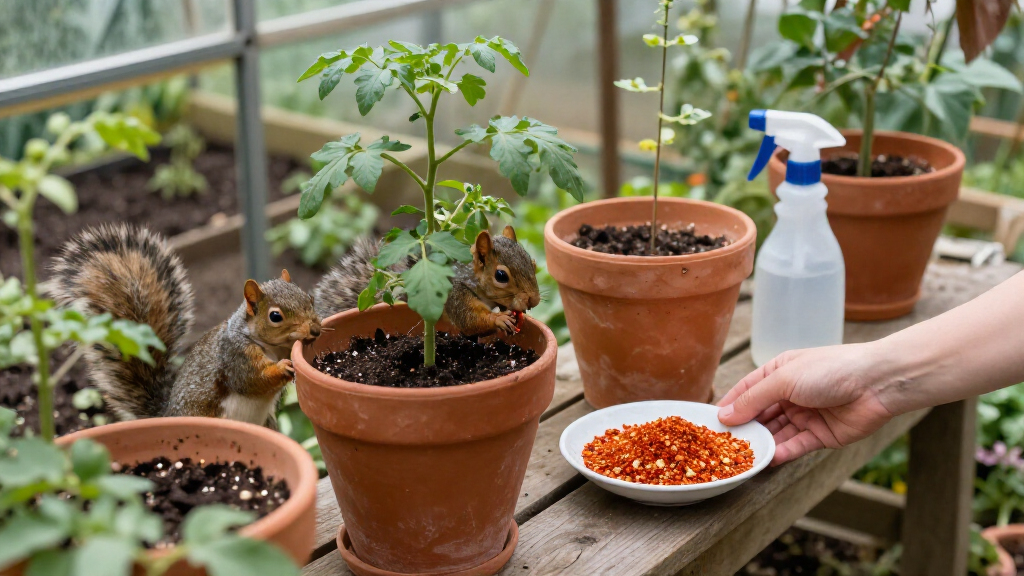
The report focuses on common garden problems: squirrels may dig in borders and pots, eat plants or disturb freshly planted spring bulbs. Its recommendations are framed as safe, humane deterrents that can be assembled from items found around the home or shed, rather than methods intended to harm or trap animals.
For pots, the article’s featured chicken-wire technique uses a sheet cut slightly larger than the container, then bent around its rim. The report advises keeping sharp wire ends tucked away and using gardening gloves and pliers. It also mentions pre-formed cloches and squirrel baffles or squirrel-resistant bird feeders as alternative products, but the three household-item ideas are the central focus.
“This can help to deter the squirrels that come into your garden through the movement and light they give off as they move in the wind.”
— Julian Palphramand, head of plants at British Garden Centres
How Reliable Are These Deterrents?
The report does not provide independent testing, success rates or a comparison among the three methods. It is not clear how consistently reflective CDs deter squirrels, whether animals become accustomed to them, or how well a bottle or wire cover works in different garden settings. The suggested techniques should be read as practical tips rather than proven guarantees.
Details about durability are also absent: the article does not say how often a barrier needs checking, how long a cover can remain in place, or whether particular plants could be affected by reduced light or airflow under a bottle. Gardeners should monitor covered plants and make sure barriers are stable, safe to handle and not restricting growth.
Check Covers as Plants Grow
Gardeners trying the suggestions can begin with the plants most at risk, such as newly planted bulbs or seedlings, and check the setup regularly. A bottle cloche or wire cover should be adjusted or removed if it starts to interfere with plant growth; wire should be secured without exposed sharp ends. The report does not announce a formal trial or further results, so whether these methods work in an individual garden will need to be judged by observation.
Source: rss
Key Questions
What household items does the report suggest for deterring squirrels?
It suggests used CDs, empty plastic bottles and chicken wire. CDs are hung where they can move in the wind, while bottles and wire are used as covers or barriers around plants and pots.
How are old CDs meant to deter squirrels?
Julian Palphramand of British Garden Centres said the movement and reflected light from CDs hanging in the wind may deter squirrels. The report does not give a measured success rate.
Can a plastic bottle protect newly planted bulbs?
The article describes cut plastic bottles as mini cloches for young plants and says they may help guard against digging. It does not establish how effective they are for bulbs or in every garden.
How can chicken wire be used safely around a plant pot?
Cut a piece to fit over the pot, secure it around the rim and tuck away sharp ends. The report recommends gloves and pliers when handling and fastening the wire.
Are these methods proven to keep squirrels away?
The report presents them as suggested deterrents but provides no testing data or guarantee. Their effectiveness and how long they work remain unclear.
Source: idealhome.co.uk