
TL;DR
A gardening and birding guide explains how to make yards more useful to woodpeckers by offering suitable food and preserving or creating habitat. Experts cited in the guide recommend foods such as suet, sunflower seeds and peanuts, along with native plants, safe standing deadwood and, for some species, nest boxes.
A published guide on attracting woodpeckers to yards recommends offering high-energy foods and maintaining habitat that supplies insects and nesting places. Bird experts quoted in the guide say feeders can help, but native plants, suitable trees and safe deadwood can also provide food and shelter for woodpeckers and other wildlife.

Get garden gear delivered free with Prime
- Fast, free delivery on millions of items
- Prime Video, Amazon Music and more included
- Member-only deals all year
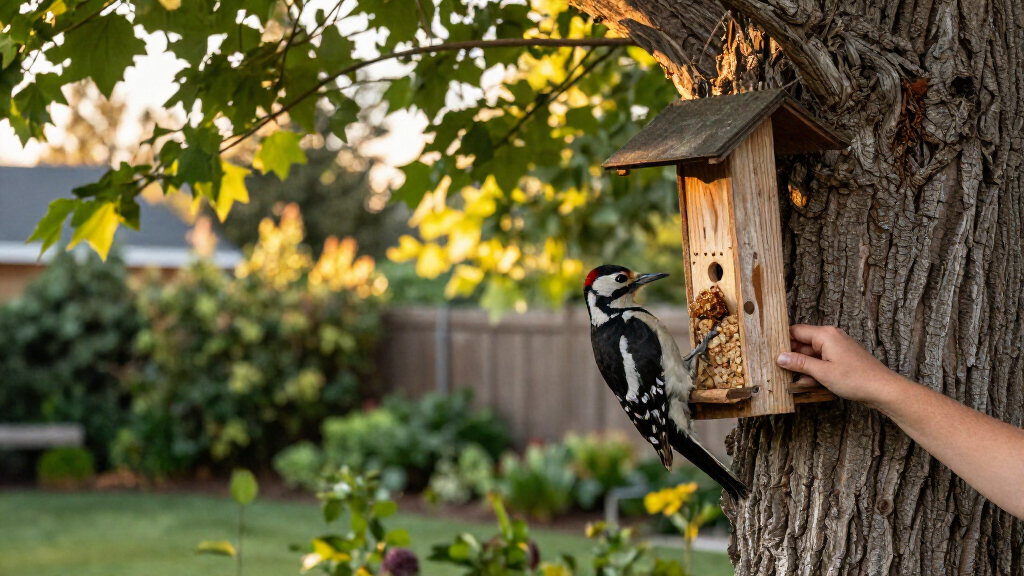
Woodpeckers are likely to eat sunflower seeds, peanuts and suet, according to Holly Grant, a project assistant at NestWatch at the Cornell Lab of Ornithology. Some may also take cracked corn, safflower seeds, mealworms, orange halves or nectar. Grant says feeders stocked mostly with thistle, millet, milo or oats are less likely to draw them.
A feeder that lets birds cling vertically can suit woodpeckers, and Jayme Strange of the American Bird Conservancy recommends placing a suet feeder near a forested edge. The guide does not promise that a particular feeder or food will attract birds to every yard; visits depend on local species and conditions.
Habitat recommendations include planting native shrubs that support insects and, when a tree must be cut and it is safe to do so, leaving a 10- to 12-foot stump. Grant says insects use decaying wood, which can then provide foraging opportunities and nesting habitat. Some species, including northern flickers, may use nest boxes. Grant says flicker boxes should be filled with wood shavings so the birds can excavate a cavity.
Want Woodpeckers in Your Yard? Offer Food and Shelter
Suet, seeds and suitable habitat can make a yard more useful to woodpeckers. Local species and conditions shape which birds visit.
Foods to offer
Choose high-energy foods woodpeckers are likely to eat.
Suet, peanuts and sunflower seeds
These are among the foods experts cited in the guide recommend.
Mealworms, safflower or fruit
Some woodpeckers may also take cracked corn, orange halves or nectar.
Make habitat useful
Food and shelter can come from the yard itself, not only from feeders.
They support insects that birds eat, particularly during nesting season.
Decaying wood can host insects and provide foraging and nesting habitat.
Some species, including northern flickers, may use boxes filled with wood shavings.
Why cavities matter
Woodpecker habitat can benefit other wildlife too.
- Excavate cavities while foraging and nesting.
- Use trees and deadwood for food and shelter.
- Wrens, nuthatches, bluebirds and chickadees may use abandoned cavities.
- Squirrels may also use them.
Food and Cavities Support Wildlife
Attracting woodpeckers can benefit more than the birds themselves. Woodpeckers excavate cavities that may later be used by wrens, nuthatches, bluebirds, chickadees and squirrels, according to Strange. The guide describes them as important cavity makers: the shelter they create can remain useful after the woodpeckers leave.
Providing food and habitat also shifts the focus beyond feeders. Native plants can support insects that birds eat, particularly during nesting season, while standing deadwood can offer both insects and potential nesting sites. These measures may make a yard more useful to wildlife, though the guide does not quantify how much they increase woodpecker visits or guarantee that a particular species will appear.
Products Worth Considering

Greenworks 24V Cordless Brushless Leaf Blower, 515 CFM, 130 MPH, with 5.0Ah Battery and Charger

Greenworks 40V Cordless Chainsaw Kit with 12-Inch Bar, 2Ah Battery and Charger

Orbit B-hyve XR 16-Zone Indoor/Outdoor Smart Sprinkler Controller
As an affiliate, we earn on qualifying purchases.
Woodpecker Habits Shape Yard Advice
The guide says woodpeckers forage for insects in trees and use their bills to excavate cavities. Grant notes that their tongues can reach into holes to retrieve prey, and their muscles extend around the back of the head, helping cushion the brain during hammering.
Most woodpeckers are residents or short-distance migrants, rather than long-distance travelers, Grant says. Northern flickers and red-headed woodpeckers may move south in fall and winter to find food. The guide identifies downy woodpeckers, hairy woodpeckers and northern flickers among the species a U.S. homeowner may commonly encounter, while stressing that sightings vary by location.
Food preferences differ by species. Strange describes the yellow-bellied sapsucker as a bird that makes shallow rows of holes, called sapwells, and drinks the sap. Those openings can also be used by ruby-throated hummingbirds. Black-backed woodpeckers, meanwhile, are associated with recently burned forests, where beetles feed on dead or fire-killed trees.
Local Sightings Are Not Guaranteed
The source provides general recommendations, not results from a measured trial. It does not say how many birds a yard should expect, how quickly they might arrive, or which combination of food and habitat works best in a specific region. Species and visits will vary by location, season and available habitat.
The guide also does not provide a publication date or identify a specific local project or policy change. Its advice about leaving a stump is conditional: homeowners should do so only when it is safe and feasible. Woodpecker activity on buildings can have different causes, including feeding on insects inside siding, and the source recommends consulting a pest-control professional when that appears to be the issue.
Choose Habitat for Local Birds
Homeowners interested in trying the recommendations can start by identifying which woodpecker species occur locally, then choose food and habitat suited to those birds. The guide suggests offering suet, peanuts or sunflower seeds, planting native shrubs and considering a correctly prepared nest box where appropriate. Any tree work should be assessed for safety before a stump or deadwood is retained.
The source does not announce a follow-up study or a scheduled next development. Whether the measures draw woodpeckers can be judged through ongoing observation, with attention to local species, season and signs of feeding or nesting.
Key Questions
What food can attract woodpeckers to a yard?
The guide lists suet, peanuts and sunflower seeds as high-energy foods woodpeckers like. Some may also eat safflower, cracked corn, mealworms, orange halves or nectar. The source says foods made mostly of thistle, millet, milo or oats are less likely to attract them.
What type of feeder should I use?
A feeder that lets birds cling vertically may suit woodpeckers. Jayme Strange recommends placing a suet feeder near a forested edge, though the guide does not guarantee birds will visit every feeder.
Can a yard provide woodpecker shelter?
Native shrubs can support insects, and safe standing deadwood may supply both insects and nesting habitat. Some species, including northern flickers, may use nest boxes; the guide says flicker boxes should be filled with wood shavings.
Why might woodpeckers hammer on a house?
The guide gives several possible reasons: calling or marking territory, excavating a nest or roost cavity, feeding on insects inside siding, or storing food. If birds appear to be feeding within the structure, it recommends consulting a pest-control professional to identify the source.
Source: countryliving.com