
TL;DR
Squirrels are digging in November gardens mainly to bury food for winter, and may disturb newly planted bulbs while searching in soft soil. Wildlife experts recommend physical barriers such as mesh, firming and tidying soil, and reducing food attractants; pepper-based deterrents need frequent reapplication and are temporary.
November squirrel digging can disturb newly planted bulbs and other garden plants as squirrels bury food for winter, according to wildlife and horticulture experts. They recommend protecting beds with wire mesh, tidying freshly worked soil and reducing food attractants rather than trying to harm the animals.

Get garden gear delivered free with Prime
- Fast, free delivery on millions of items
- Prime Video, Amazon Music and more included
- Member-only deals all year
Squirrels commonly store nuts and seeds in multiple locations, a behavior known as scatter hoarding. Braelei Hardt, an assistant naturalist with the National Wildlife Federation, said eastern gray and fox squirrels bury food in separate caches and return during winter to retrieve it. Soft soil in recently planted beds can make those locations appealing for digging.
Bulbs are most vulnerable soon after planting, when the soil has been disturbed. Squirrels may uncover them while making food caches, or investigate because freshly turned earth can suggest that food has been buried there. Plant debris left at the site may also attract attention, Hardt said.
Rebecca McMackin, an ecological horticulturist and lead horticulturalist at the American Horticultural Society, said squirrels observe people and other animals as they hide food. A squirrel that appears to bury a nut may instead carry it away in its mouth and conceal it elsewhere, she said. Gardeners working in a bed can also prompt squirrels to inspect the newly disturbed area.
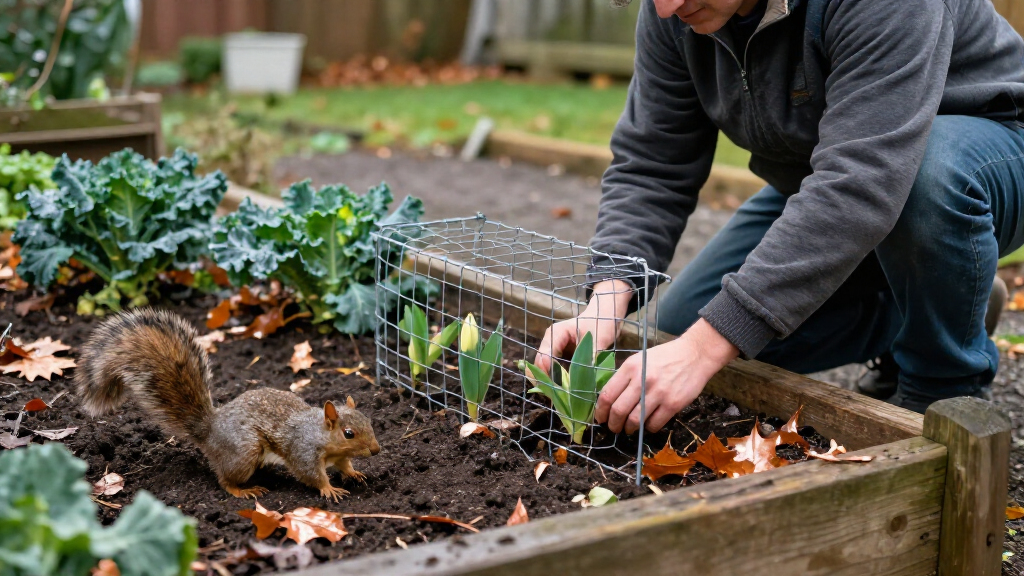
For direct protection, both experts recommend wire mesh over bulb plantings. It can be placed just below the soil surface or laid across the bed, secured with pins or stones. Bulb shoots can grow through the openings; mesh laid on top should be removed before shoots emerge in spring. McMackin said large sheets of copper chicken wire can suit formal bulb displays.
Protect bulbs from November digging
Squirrels bury food for winter, and freshly worked soil can invite digging. Humane barriers and a tidy bed help protect new plantings.
Why beds attract digging
Soft, disturbed soil can look like a place to hide food or search for a cache.
- Bury nuts and seeds in separate caches
- Return to dig for stored food
- Newly planted bulbs may be uncovered
- Plant debris and loose soil draw attention
Protect vulnerable bulbs
Experts recommend a physical barrier over or just below the soil surface.
Lay wire mesh over bulb plantings or just beneath the soil.
Use pins or stones to hold it in place.
Remove surface mesh before bulb shoots emerge.
Make the yard less inviting
Firm and rake soil
Blend the bed with its surroundings so freshly worked earth is less conspicuous.
Remove plant debris
Clear leftover material that may attract squirrels to the planting area.
Tidy up nearby food
Clean spilled bird seed and keep pet food indoors.
Pepper is temporary
Red pepper or cayenne may deter squirrels, but it is not lasting bulb protection.
Protecting Newly Planted Bulbs
Fall planting leaves bulbs exposed at a time when squirrels are actively storing food and the earth is easy to dig. A disturbed bulb bed may be searched repeatedly, potentially leaving bulbs displaced or plants damaged. A physical barrier addresses the digging itself while allowing plants to grow, making it a practical option for gardeners who want to protect spring flowers without harming wildlife.
Gardeners can also reduce cues that draw squirrels to a bed. Firm the soil after planting, rake it so it blends with the surrounding area and clear away plant debris, Hardt advised. These steps do not guarantee squirrels will stay away, but they make the planting area less conspicuous and reduce loose food sources nearby.
Food management matters beyond the flower bed. Hardt recommends cleaning up spilled bird seed and keeping pet food indoors. Those steps can limit easy pickings around the yard, though the source material does not quantify how much they reduce digging or how reliably they work on their own.
Products Worth Considering
Greenworks 40V 16-Inch Brushless Cordless Chainsaw Kit with 4.0Ah Battery and Charger

Blackstone 2363 20 x 14-Inch Camping Griddle

EGO Power+ LV5000 Cordless Leaf Vacuum, Mulcher, and Blower
As an affiliate, we earn on qualifying purchases.
Why Fall Soil Attracts Squirrels
The digging described here is generally tied to food storage, not an effort to eat or deliberately destroy garden plants. Squirrels distribute food among many hiding places, reducing the risk of losing an entire store if another animal finds one cache. They may later dig in several locations as they search for what they buried.
Recently cultivated beds can be vulnerable both because the soil is easier to work and because squirrels may infer that disturbed ground contains food. Containers can also attract digging, McMackin said, because squirrels use them as places to bury or search for caches. The advice in the source focuses on humane prevention, not removal or lethal control.
Some gardeners use red pepper or cayenne powder as a temporary deterrent. Hardt said the capsaicin irritates mammals’ taste buds and nasal passages without causing physical harm, while birds cannot taste it. She cautioned that it needs to be reapplied every few days and after rain. It should be treated as a short-lived measure rather than a substitute for protecting bulbs with mesh.
“If they see you planting a perennial, they’re going to assume that you’re placing a bunch of acorns underneath it, and will go inspect, digging up your precious plant in the process.”
— Rebecca McMackin, ecological horticulturist and lead horticulturalist at the American Horticultural Society
Limits of Squirrel Deterrents
The source does not provide trial data comparing mesh, soil firming, food cleanup or scent deterrents, so their effectiveness cannot be ranked beyond the experts’ statements. Hardt describes physical barriers as the approach that most consistently works, while pepper is explicitly a temporary deterrent requiring repeat application.
It is also not possible to know whether a particular squirrel will dig because it is caching food, searching for an existing cache or investigating disturbed ground. The guidance is general seasonal advice, not a guarantee that any measure will prevent all digging. The source does not specify mesh dimensions or give detailed instructions for different bulb varieties.
Steps for Gardeners This Month
Gardeners planting bulbs in November can place mesh over vulnerable beds, secure it if it sits on the surface and remove it in spring before shoots emerge. After planting, firm and rake the soil and clear away debris. Around the yard, clean up spilled bird seed and keep pet food indoors.
Those choosing pepper-based products should expect to reapply them every few days and after rain, as Hardt advises, and should not rely on them as permanent protection. The source provides no further scheduled update or formal testing; the practical next step is to monitor beds through winter and check that barriers remain in place.
Key Questions
Why are squirrels digging in my garden in November?
Squirrels bury nuts and seeds in separate locations to retrieve later, including during winter. They may dig in soft, freshly worked soil while hiding food or searching for a cache.
How can I protect newly planted bulbs?
Wildlife and horticulture experts recommend laying wire mesh over or just below the soil. Secure surface mesh with pins or stones, and remove it in spring before shoots emerge.
Does cayenne pepper keep squirrels away?
Hardt says cayenne and red pepper can act as temporary humane deterrents. They need to be reapplied every few days and after rain, so they are not a lasting replacement for a physical barrier.
What else can I do to make my yard less attractive to digging squirrels?
Firm and rake soil after planting, clear away plant debris, clean up spilled bird seed and keep pet food indoors. These steps reduce visible disturbance and nearby food sources, though they are not guaranteed to stop digging.
Source: homesandgardens.com