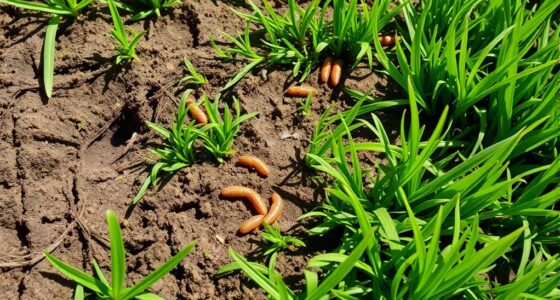
Lawns that are stressed, thin, or poorly maintained attract chinch bugs because weak turf is easier for them to settle and reproduce. Improper watering, nutrient deficiencies, compacted soil, and shaded areas make your grass more susceptible. When your lawn isn’t healthy, pests see it as an easy target. Keeping your grass vigorous and well-cared for discourages chinch bugs from settling in. To find out how to protect your lawn, explore these tips further.

Get garden gear delivered free with Prime
- Fast, free delivery on millions of items
- Prime Video, Amazon Music and more included
- Member-only deals all year
Key Takeaways
- Poorly maintained or stressed lawns weaken grass, making them more attractive to chinch bugs.
- Thin, patchy, or uneven turf provides ideal breeding grounds for pests.
- Shaded, poorly drained areas create conditions that favor chinch bug colonization.
- Imbalanced or excessive fertilization can weaken grass, increasing vulnerability to pests.
- Environmental stressors like drought or soil compaction reduce turf resilience, inviting chinch bugs.

Have you noticed brown patches appearing suddenly in your lush lawn? If so, you might be dealing with chinch bugs, tiny pests that can wreak havoc on your turf. But have you ever wondered why some lawns seem to attract chinch bugs more than others? The answer often lies in the overall health of your lawn and the environment you’ve created. Lawns that aren’t well-maintained or are stressed due to improper watering, nutrient deficiencies, or poor soil conditions become more inviting to chinch bugs. These pests prefer to settle where they can easily find food and shelter, which is why pest prevention starts with maintaining healthy turf. A robust, healthy lawn can resist chinch bug infestations better because strong grass blades are more resilient and less attractive to pests. When your grass is thriving, it’s less likely to be weakened by disease or drought stress, making it a less appealing target for chinch bugs.
Another key factor is the type of grass you have. Certain grass varieties are more susceptible to chinch bug infestation, especially if they’re already under stress. Lawns with thin or patchy areas, often caused by improper watering or soil compaction, create ideal conditions for chinch bugs to multiply. These pests tend to congregate where they can find easy access to food sources—mainly the sap of weakened grass blades. So, ensuring your lawn has good coverage and density can *considerably* reduce the chances of chinch bugs establishing a foothold. Proper lawn care practices, including aeration and overseeding, help improve lawn health and make it less hospitable to pests. Additionally, understanding the importance of lawn resilience and how stress factors weaken grass can further assist in pest prevention. Maintaining proper soil conditions and avoiding over-fertilization are also crucial in reducing stress on your turf. A balanced soil environment supports healthy root development and discourages pest invasions. Furthermore, promoting soil health through organic amendments can help strengthen your lawn’s natural defenses against pests.
Environmental factors also play a role. Lawns located in shaded areas or with poor drainage are more prone to pest problems because these conditions favor the growth of fungi and other stressors that weaken grass. When your lawn is in poor shape, chinch bugs find it easier to settle and reproduce. To prevent this, you should regularly inspect your yard for early signs of damage and address issues promptly. Consistent watering—deep but infrequent—encourages strong root growth, reducing stress and making your lawn less attractive to pests. Applying balanced fertilizers also supports lawn health, ensuring grass remains vigorous and better equipped to fend off chinch bugs. Recognizing and correcting environmental stressors can significantly improve your lawn’s resilience against pests. An environment that promotes healthy growth naturally deters pest colonization and spread. By creating optimal conditions, you make it more difficult for chinch bugs to establish and thrive in your yard.
In essence, the more you focus on pest prevention through proper lawn care, the *more* chinch bugs will invade your yard. A healthy, resilient lawn not only looks better but also creates an environment that pests find less appealing. By understanding what makes your lawn more inviting to chinch bugs and taking proactive steps, you can protect your turf and enjoy a green, lush space free of those pesky brown patches.
As an affiliate, we earn on qualifying purchases.
Frequently Asked Questions
How Do Chinch Bugs Detect Healthy Lawns to Infest?
Chinch bugs detect healthy lawns by sensing soil moisture and lawn density. They’re attracted to areas with lush, dense grass that offers ample moisture and food. When your soil is moist and your lawn feels thick and vigorous, it signals to chinch bugs that this is an ideal spot for infestation. They thrive in these conditions because they can easily access plant sap, making healthy lawns prime targets.
Are Certain Grass Types More Attractive to Chinch Bugs?
Yes, certain grass types attract chinch bugs more. They prefer warm, lush, and healthy grass with ideal soil moisture, which provides perfect conditions for their survival. Lawns with dense, well-watered grass are more inviting, especially if the grass type is susceptible, like St. Augustine or centipede grass. Maintaining proper grass health and soil moisture levels can help deter chinch bugs from infesting your lawn.
Do Lawn Fertilizers Influence Chinch Bug Populations?
Lawn fertilizers can definitely influence chinch bug populations. For example, a homeowner using high-nitrogen fertilizer on a lawn with neutral soil pH might unknowingly encourage chinch bugs. Fertilizer composition, especially excessive nitrogen, promotes lush, tender grass that attracts pests. Additionally, soil pH levels affect nutrient absorption and grass health, making lawns more or less attractive to chinch bugs. Proper fertilization tailored to soil conditions helps reduce pest susceptibility.
Can Chinch Bugs Survive Winter in Colder Climates?
Chinch bugs can survive winter in colder climates by using winter survival strategies like burrowing into thatch or soil, where they stay protected from the cold. During their lifecycle, they often enter dormancy, making it harder to eliminate them. If you want to prevent infestations, you should focus on lawn health, removing thatch, and avoiding overwatering, which can help reduce their winter survival chances.
What Natural Predators Help Control Chinch Bug Infestations?
Nature’s got your back when it comes to pest control. Natural predators like big-eyed pirate bugs, parasitic wasps, and lady beetles help keep chinch bug populations in check. These beneficial insects hunt and feed on chinch bugs, reducing their numbers naturally. To invite these helpful predators, avoid broad-spectrum insecticides that kill them off. Supporting a balanced ecosystem guarantees your lawn stays healthy without relying solely on chemical solutions—sometimes, nature’s own army is all you require.
As an affiliate, we earn on qualifying purchases.
Conclusion
Your lawn is like a canvas, and chinch bugs are the unwelcome pests that threaten its beauty. By understanding what makes your grass inviting—weak spots, lush growth, or poor health—you can shield it from these tiny invaders. Think of your lawn as a fortress, where strong, healthy grass stands tall, repelling the bugs like a vigilant guardian. Keep it vibrant and resilient, and chinch bugs won’t find their way in.
As an affiliate, we earn on qualifying purchases.
As an affiliate, we earn on qualifying purchases.
Evergreen bestsellers Picks
bestsellers
As an affiliate, we earn on qualifying purchases.