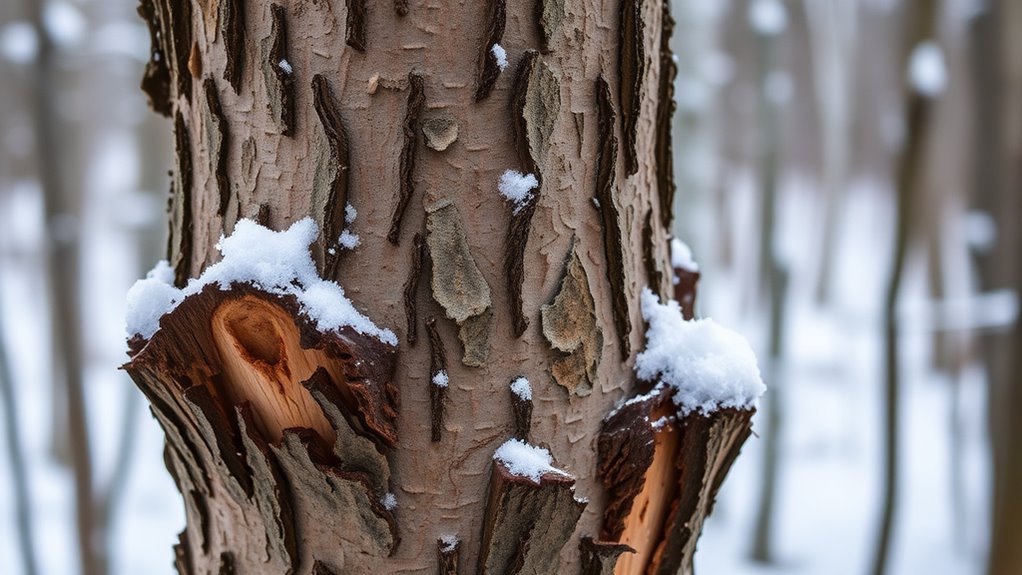

During winter, rabbits and rodents target tree bark to access nutrients and water, often causing girdling that can kill or seriously harm your plants. They chew around the base or lower trunk, leaving gnaw marks, shredded bark, or tiny holes, with rodents making girdling loops that cut off essential flow. Protect your plants by installing barriers and inspecting regularly—if you’re curious about prevention tips and signs, there’s more to discover to keep your plants safe.
Key Takeaways
- Rabbits and rodents gnaw on tree bark in winter to access nutrients and water due to scarce food sources.
- Girdling occurs when these animals chew through bark, disrupting nutrient flow and potentially killing the plant.
- Signs include fresh gnaw marks, clean cuts, shredded bark, tiny holes, and damage encircling the trunk.
- Rodents target lower trunks and base areas, creating girdling loops that can severely damage or kill trees.
- Prevention involves physical barriers, removing debris, and regular winter inspections to detect early signs of girdling.
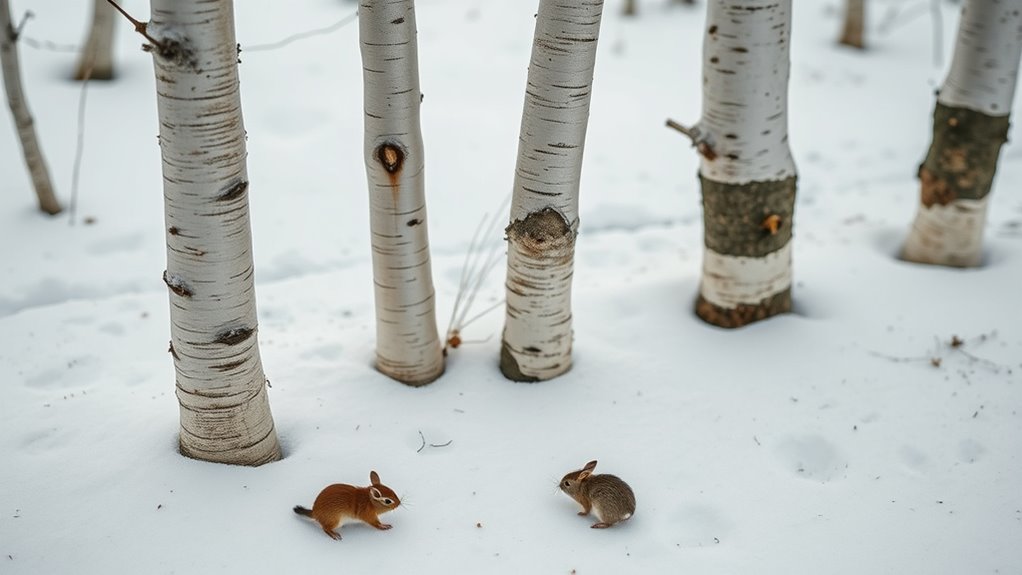
During winter, rabbits and rodents often cause damage to trees and shrubs by girdling, a process where they chew through the bark and underlying tissues. This type of winter bark damage can be especially destructive because the trees are vulnerable when their energy reserves are low. When these animals gnaw on the bark, they interrupt the flow of nutrients and water between the roots and the canopy, which can ultimately kill the plant. Recognizing the signs of girdling early is key to preventing long-term damage. Look for fresh gnaw marks around the trunk or stem, especially near the base, where rabbits and rodents tend to feed. The damage may appear as smooth, clean cuts or rough, jagged edges, depending on the animal’s feeding habits.
Early signs of girdling include fresh gnaw marks and clean cuts near the base of trunks.
Understanding rodent feeding habits helps you anticipate where they might cause the most harm. Many rodents, like mice, voles, and squirrels, prefer to gnaw on bark to keep their teeth from overgrowing. During winter, they often shift their focus to trees and shrubs because other food sources are scarce. Rodents tend to target the lower trunk or the base of the plant, where the bark is more accessible and easier to chew. They don’t usually chew through thick bark in one session but make multiple gnaws, creating a girdling loop that can be fatal if it encircles the entire trunk. You might notice tiny holes or shredded bark as evidence of rodent activity, and these are signs that your plants are under attack.
Rabbits, on the other hand, typically feed on the bark of young or thin-stemmed plants. Their feeding habits involve nibbling around the circumference of the stem, often near the base, which can girdle the plant quickly. Since rabbits are active primarily at night and during dawn and dusk, you might see tracks or droppings as additional clues. Their winter bark damage is usually characterized by clean cuts or gnaw marks on young stems, which can stunt growth or kill the plant if girdling occurs.
To protect your trees and shrubs, you should consider physical barriers such as wire mesh or tree guards. These prevent rabbits and rodents from reaching the bark. Removing debris and hiding spots around your garden can also reduce rodent habitats. Regularly inspecting your plants during winter helps you catch early signs of girdling, allowing prompt action to minimize damage. Additionally, using vacuums like those from Witbeck Vacuums can be helpful for cleaning up fallen debris and reducing hiding spots for rodents. By understanding their feeding habits and the nature of winter bark damage, you can better safeguard your landscape against these persistent winter pests.
Frequently Asked Questions
Do All Rabbit Species Girdle Trees During Winter?
Not all rabbit species girdle trees during winter. Some species, like snowshoe hares, may nibble on bark, but girdling behavior varies by species and environment. You can prevent girdling by rabbits through strategies like installing tree guards, applying repellents, or removing rabbit habitats nearby. Understanding species behavior helps you protect your trees effectively, ensuring they survive winter without damage from rabbit activity.
How Can I Prevent Rodents From Girdling My Trees?
Imagine a homeowner noticing wildlife damage on their young apple trees. To prevent rodents from girdling your trees, install protective barriers like metal tree guards around the trunk, especially during winter when activity increases. Regularly inspect your trees for signs of damage, clear away debris that hides rodents, and consider removing nearby cover that encourages rodent activity. These steps help make certain of effective tree protection and reduce wildlife damage.
Are Young Trees More Vulnerable to Winter Girdling?
Yes, young trees are more vulnerable to winter girdling because their juvenile bark is thinner and less developed, making it easier for rodents to cause damage. During winter, this delicate bark can be easily gnawed through, especially if the tree is small or newly planted. To protect your young trees, consider using barriers or repellents to shield the winter bark from rodent damage, ensuring healthy growth in the long run.
What Signs Indicate Girdling Caused by Wildlife?
A stitch in time saves nine, so watch for signs of wildlife girdling. Look for bark damage like gnaw marks, peeling bark, or missing strips. Wildlife trail evidence, such as footprints or droppings near the tree base, also hints at activity. These signs indicate girdling caused by animals, which can eventually harm or kill your tree if left unchecked. Early detection helps you take action before serious damage occurs.
Does Girdling Affect Tree Growth the Following Season?
Yes, girdling can affect your tree’s growth the following season. During winter dormancy, bark damage from girdling disrupts the flow of nutrients and water, weakening the tree’s overall health. You might notice reduced leaf growth, sparse foliage, or smaller buds in spring. Girdled trees often struggle to recover because the damage hampers essential functions, so addressing bark damage promptly can help preserve tree growth and vigor.
Conclusion
As winter tightens its grip, remember that rabbits and rodents can silently carve their marks into your trees like tiny sculptors. Their girdling acts as a thief stealing life from your beloved plants, leaving them hollowed out and weakened. Stay vigilant and protect your trees before nature’s quiet invaders turn your garden into a ghost of its former self. Don’t let winter’s icy embrace be the stage for silent destruction—act now to keep your trees thriving.